
Tensioned screen cloths for industrial screening machines
Industrial tensioned screen cloths, screen panels and screen decks for accurate separation, high capacity and reliable installation in vibrating screens, shaking screens and heavy-duty screening installations.
- industrial screen panels according to standard dimensions or fully custom-made
- suitable for vibrating screens, shaking screens and heavy-duty screening installations
- finished with hooks, tension edges and fastening details according to your machine
Tensioned screen cloths and screen panels
Tensioned screen cloths and screen panels are used in industrial screening machines to sort, classify, dewater or separate materials by particle size. The correct screen panel directly determines the capacity, separation accuracy, service life and reliability of the screening process.
Omnimesh supplies industrial screen panels and tensioned screen cloths according to standard dimensions or fully custom-made for your machine. Depending on the material, load and required fraction, we select the right screening medium, opening, wire diameter, hook finish and tensioning direction.
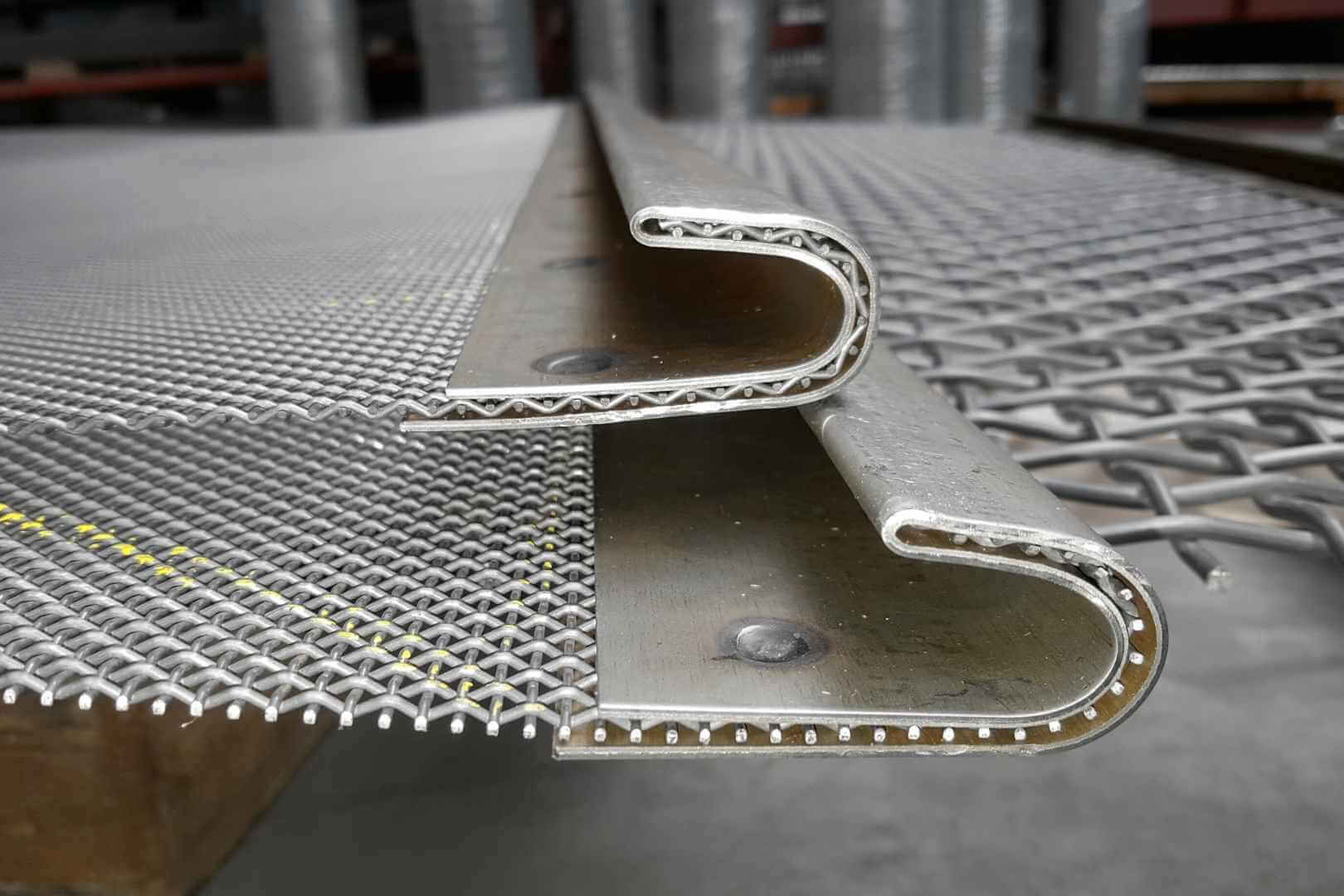
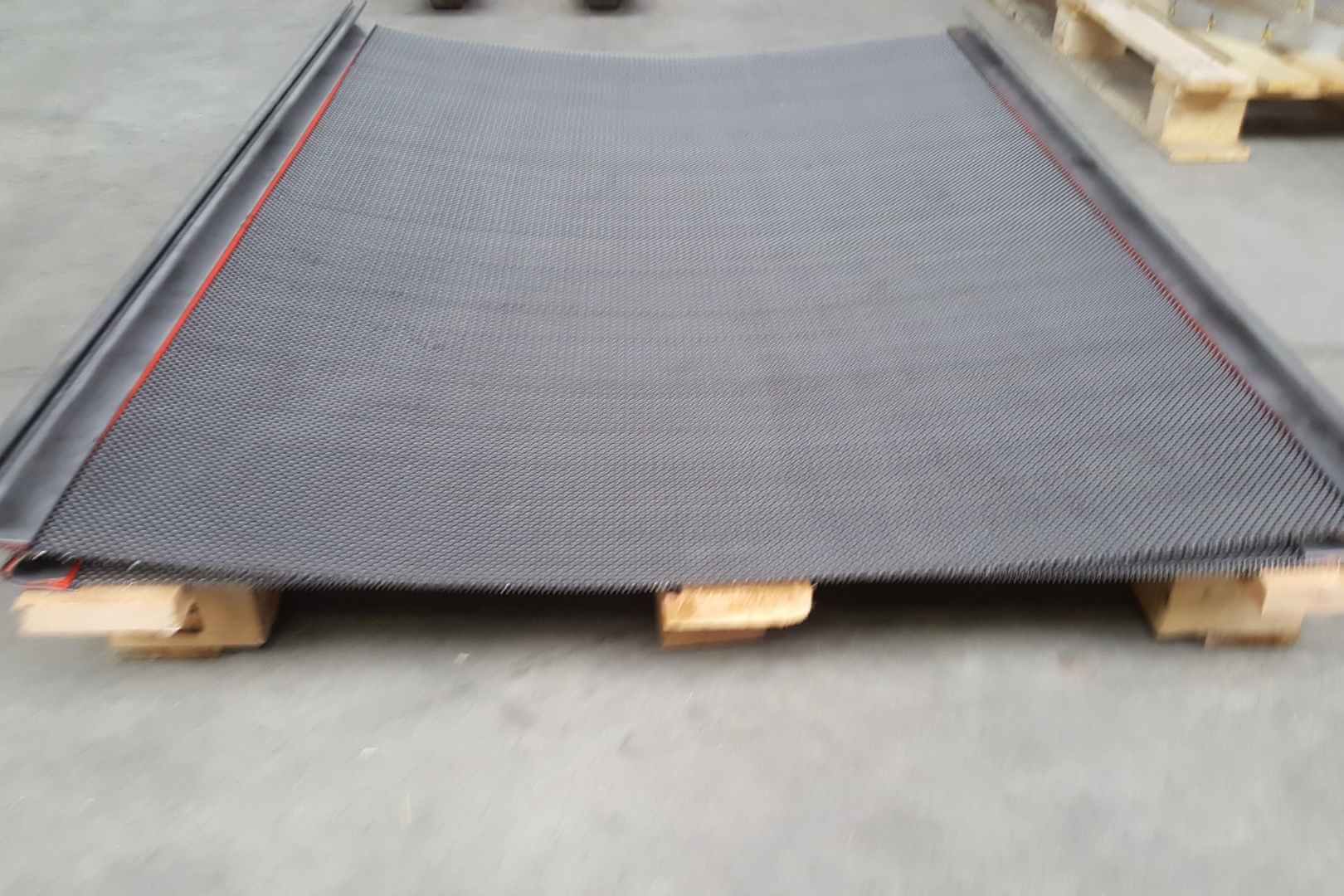
Screen panels designed for capacity, wear resistance and accurate separation
A good screen panel must withstand impact, wear, vibration and continuous load. At the same time, it must separate the required fraction accurately and maintain enough open screening area to support the capacity of the machine.
That is why we do not only look at the mesh opening. We also consider the wire thickness, opening shape, material choice, tensioning direction, hook type, edge finish, machine load and the risk of blinding or clogging.
What is a screen deck or tensioned screen cloth?
A screen deck is the active screening surface inside a screening machine. The material to be screened moves over the deck, while smaller particles pass through the openings and larger particles are carried further along the screen.
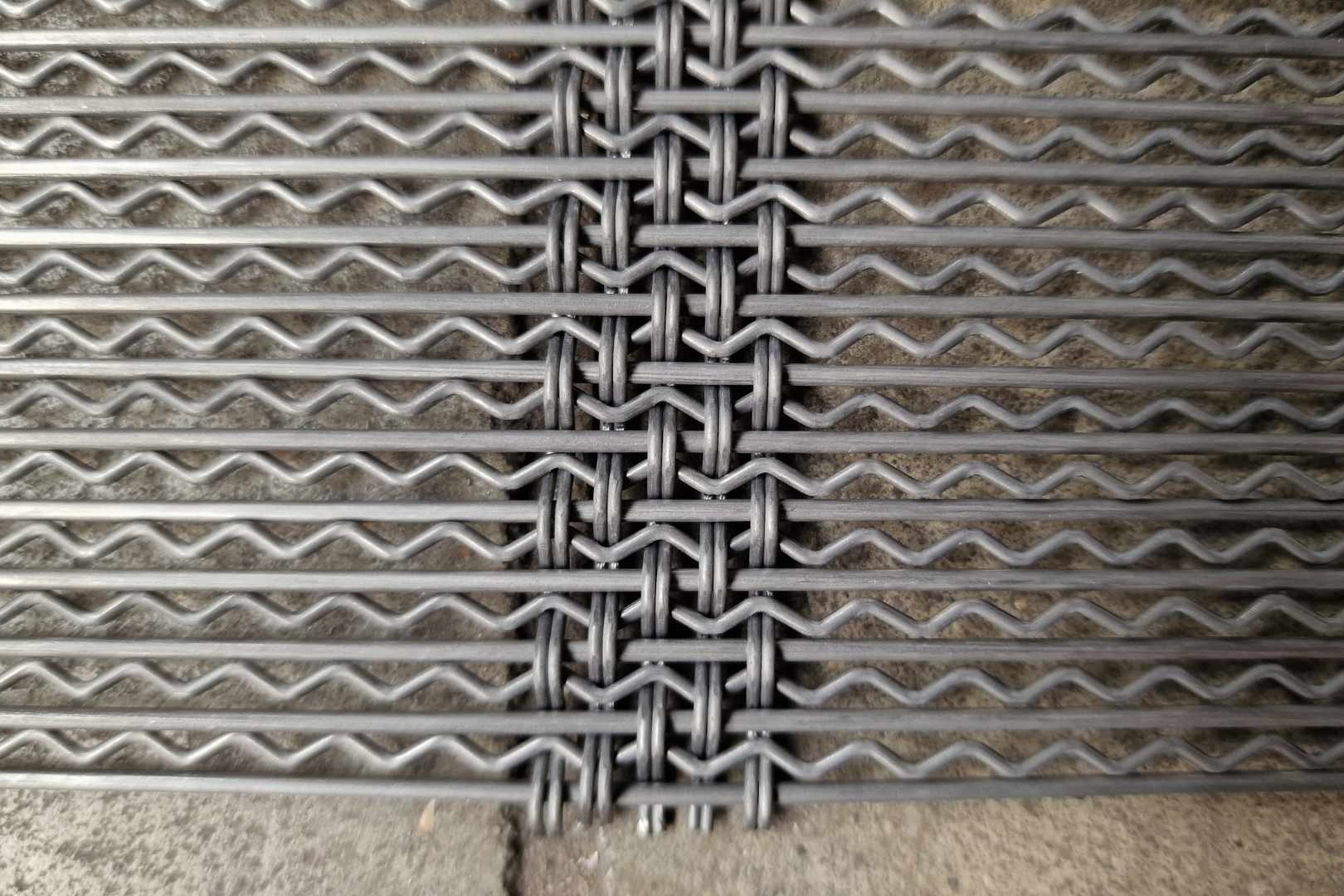
Screen panels can be made from woven wire mesh, welded wire mesh, flat top screen mesh, slotted mesh, piano wire, self-cleaning mesh, perforated plate or other metal screening media.
The right choice depends on:
- the material to be screened
- the required fraction
- the moisture content or stickiness of the product
- the impact load
- the wear sensitivity
- the required capacity
- the available space inside the screen box
- the tensioning direction of the machine
- the type of hook or tension edge
- the required service life
Which types of screen panels do we supply?
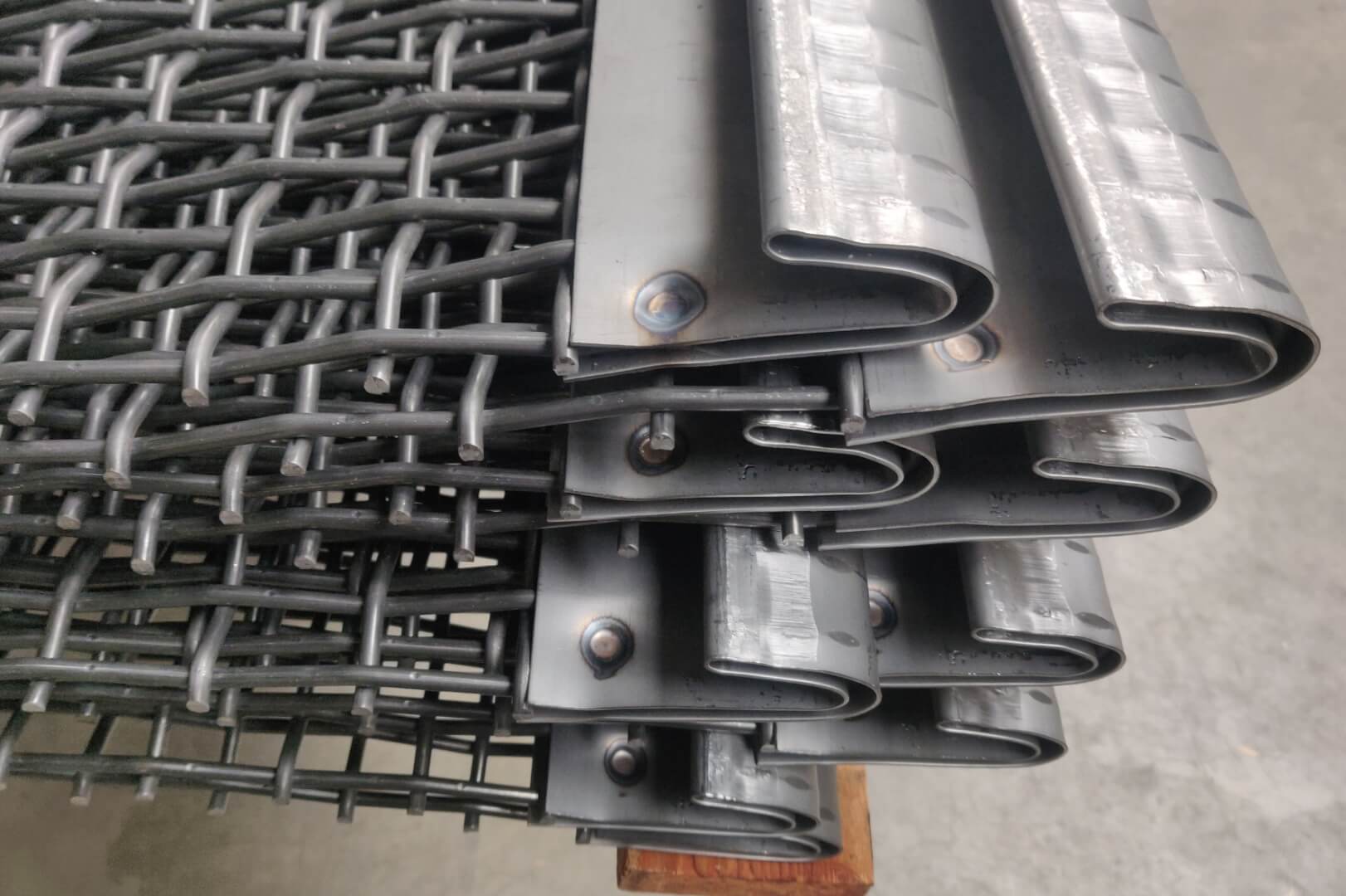
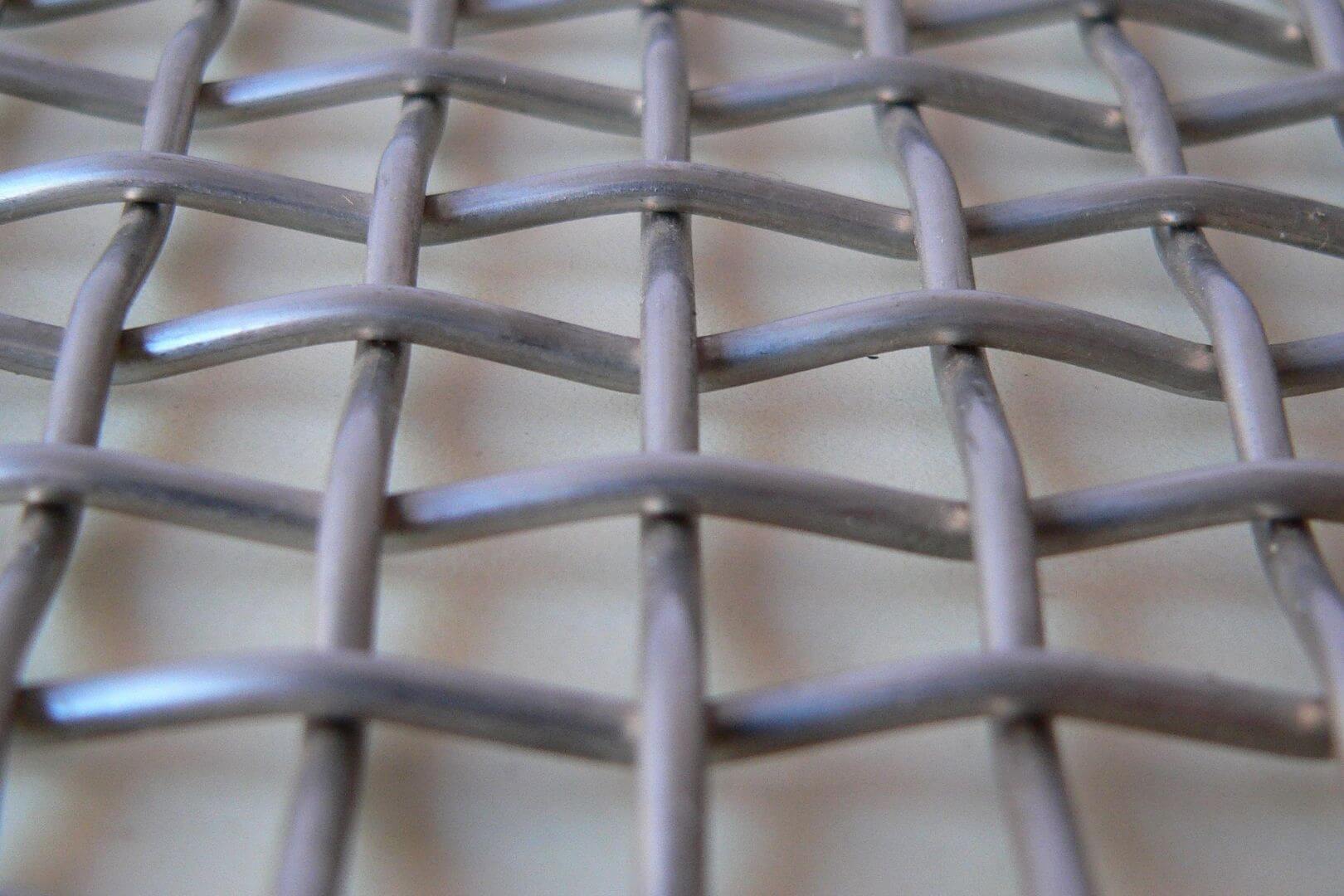
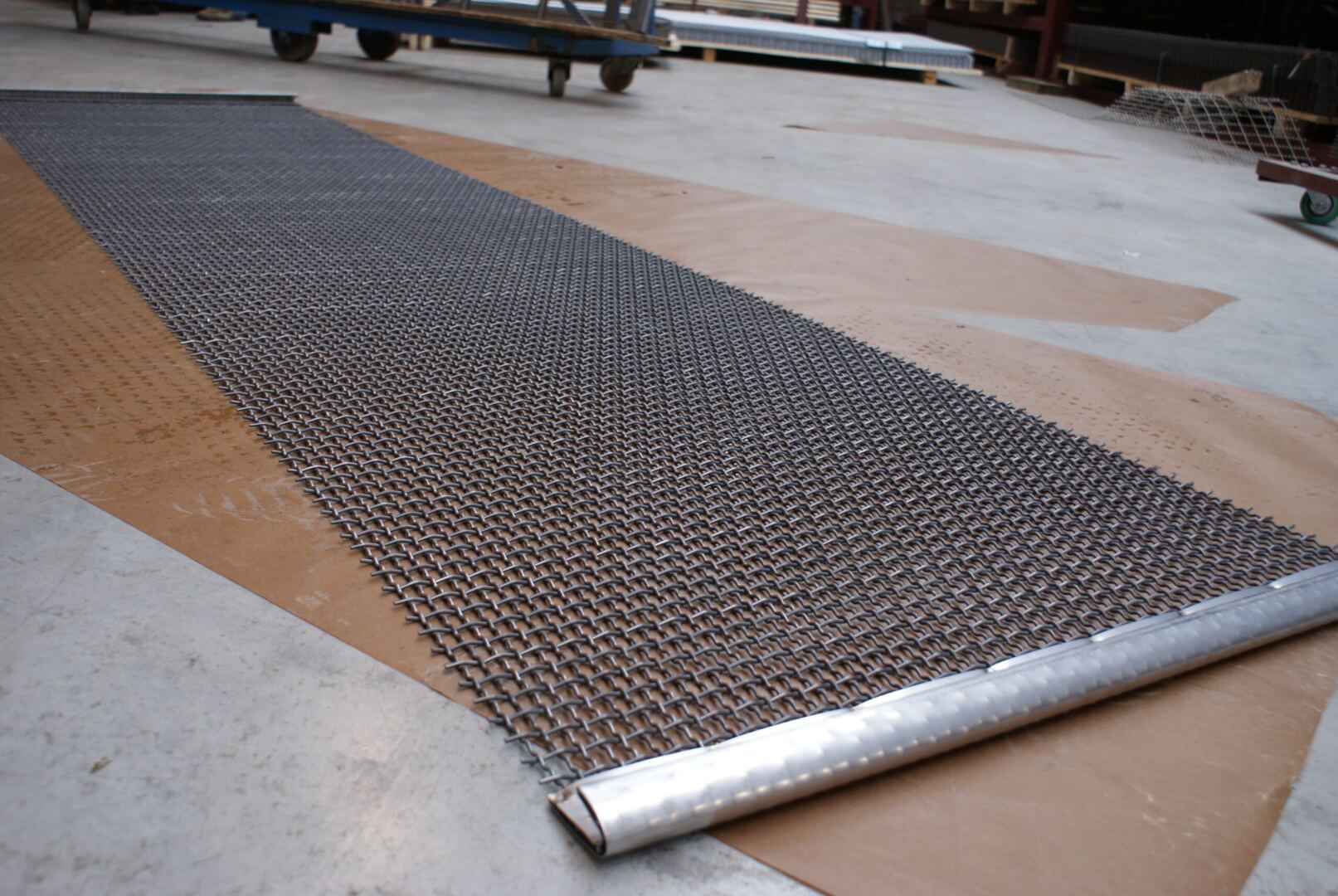
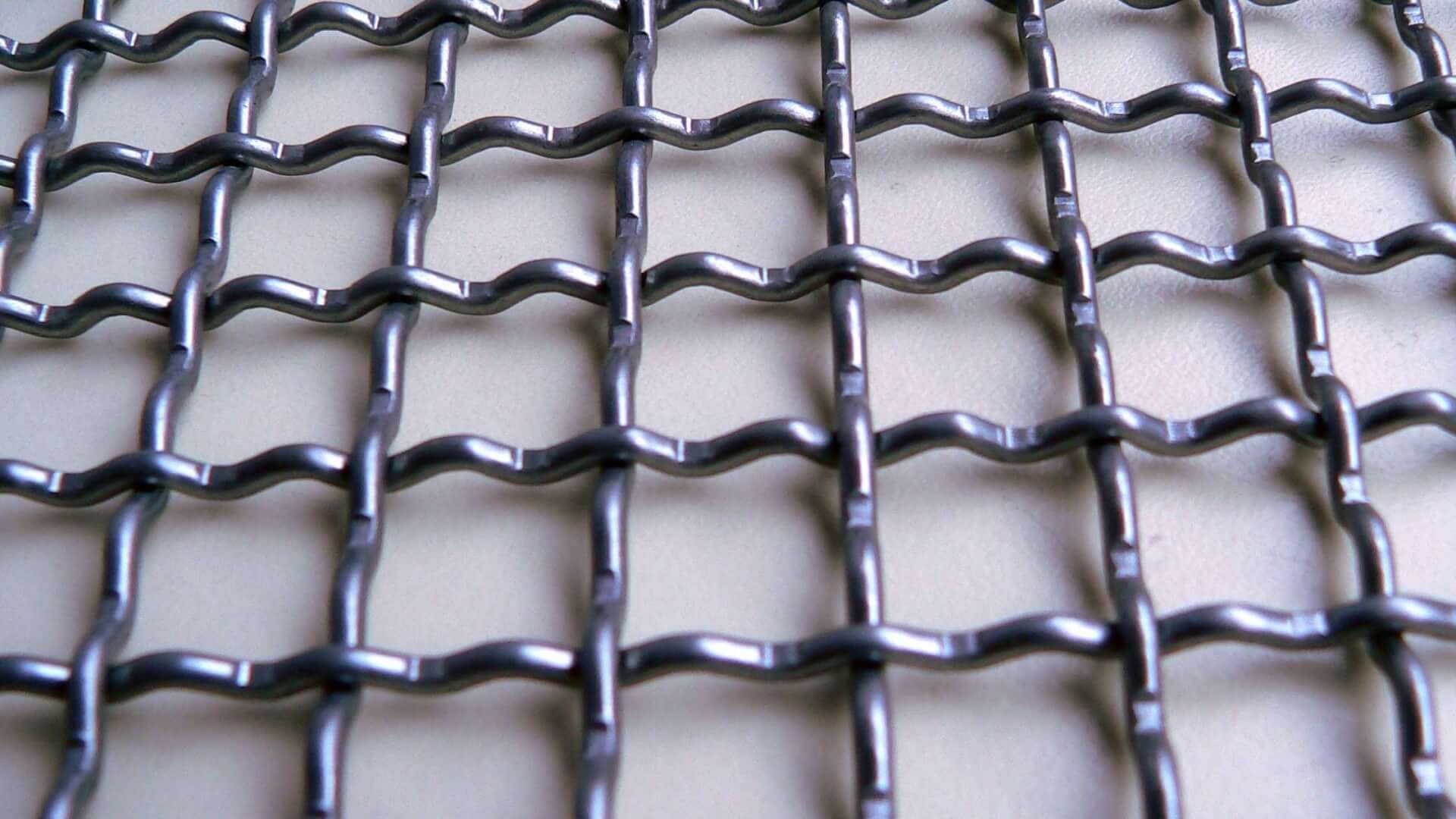
Double crimped screen cloth
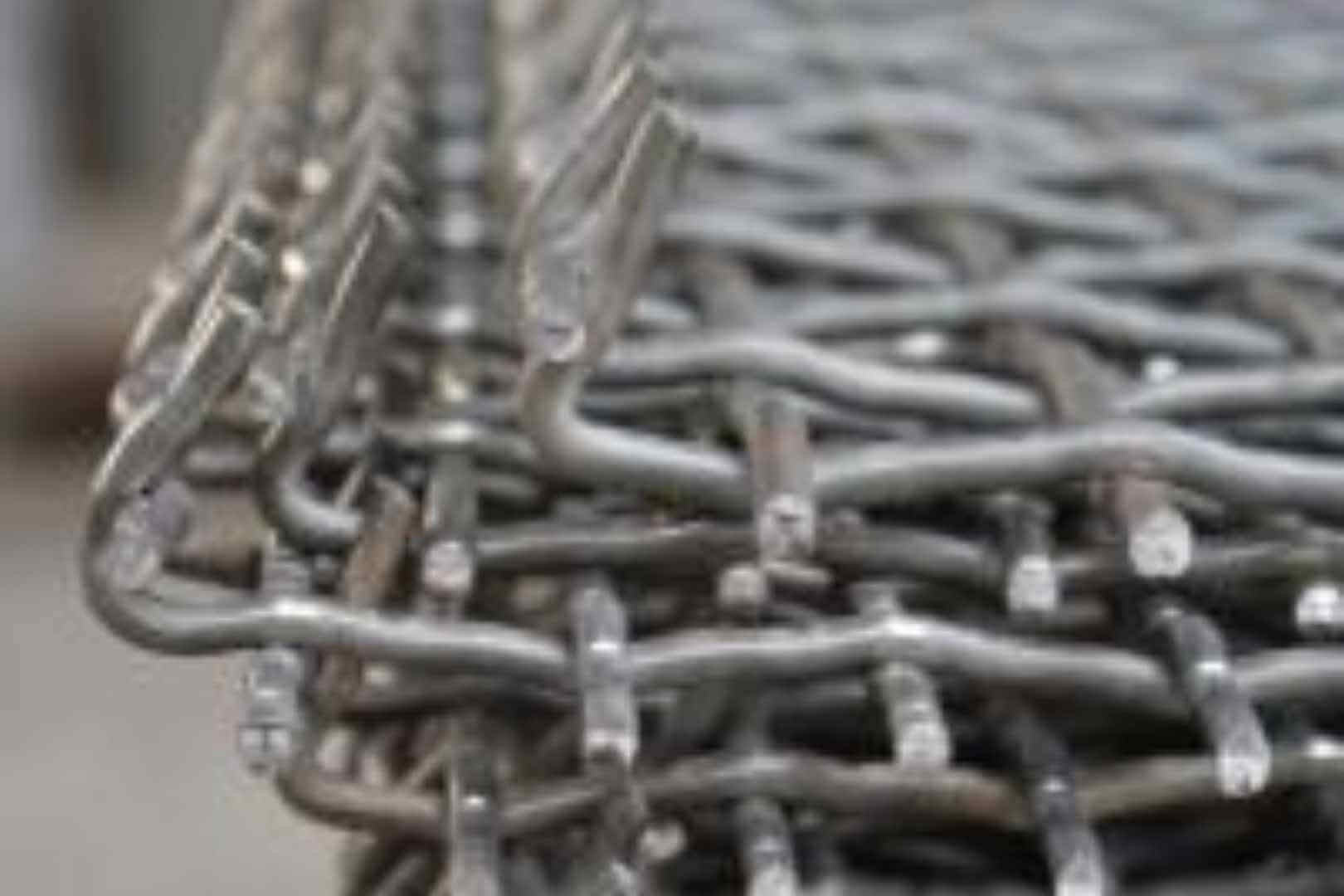
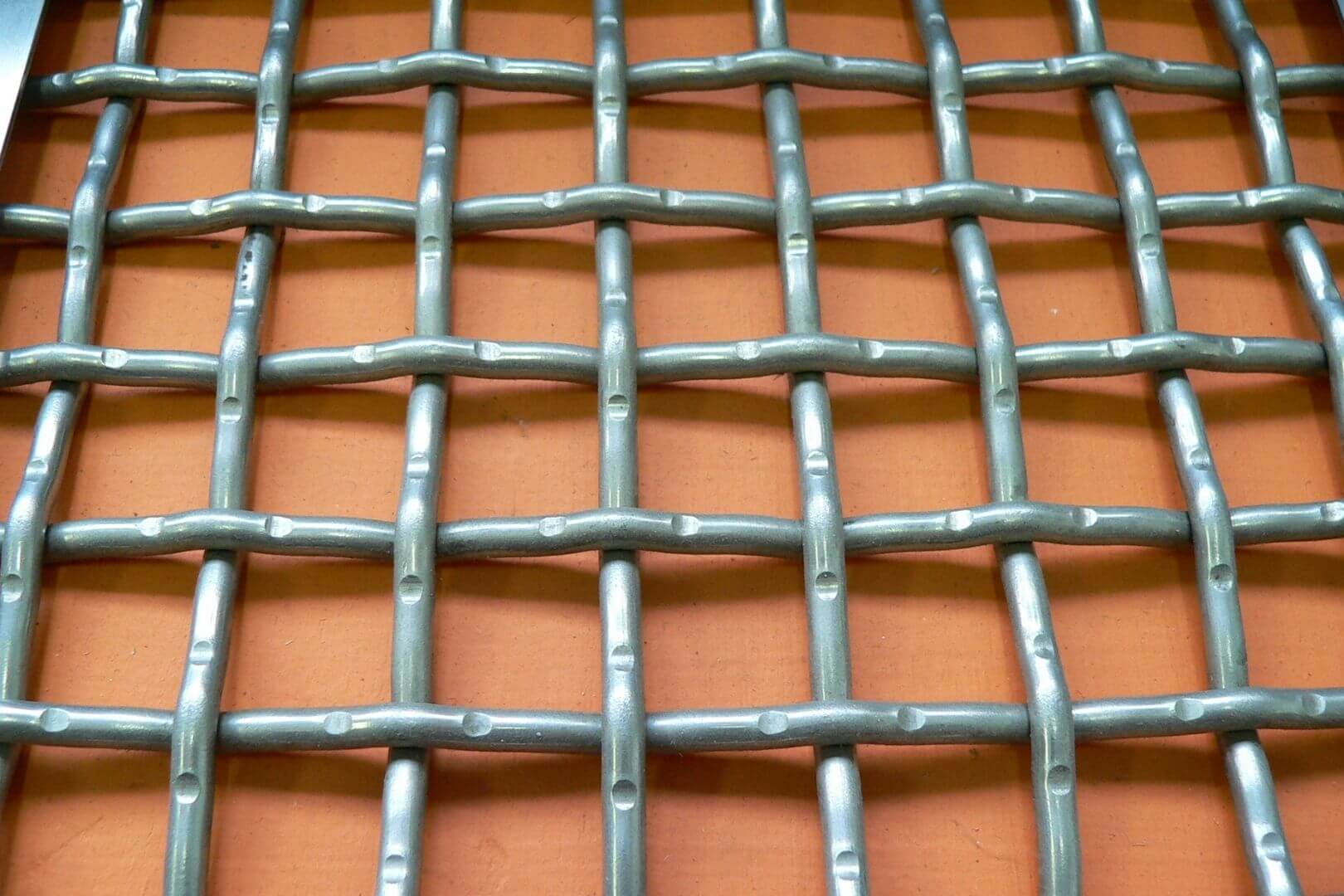
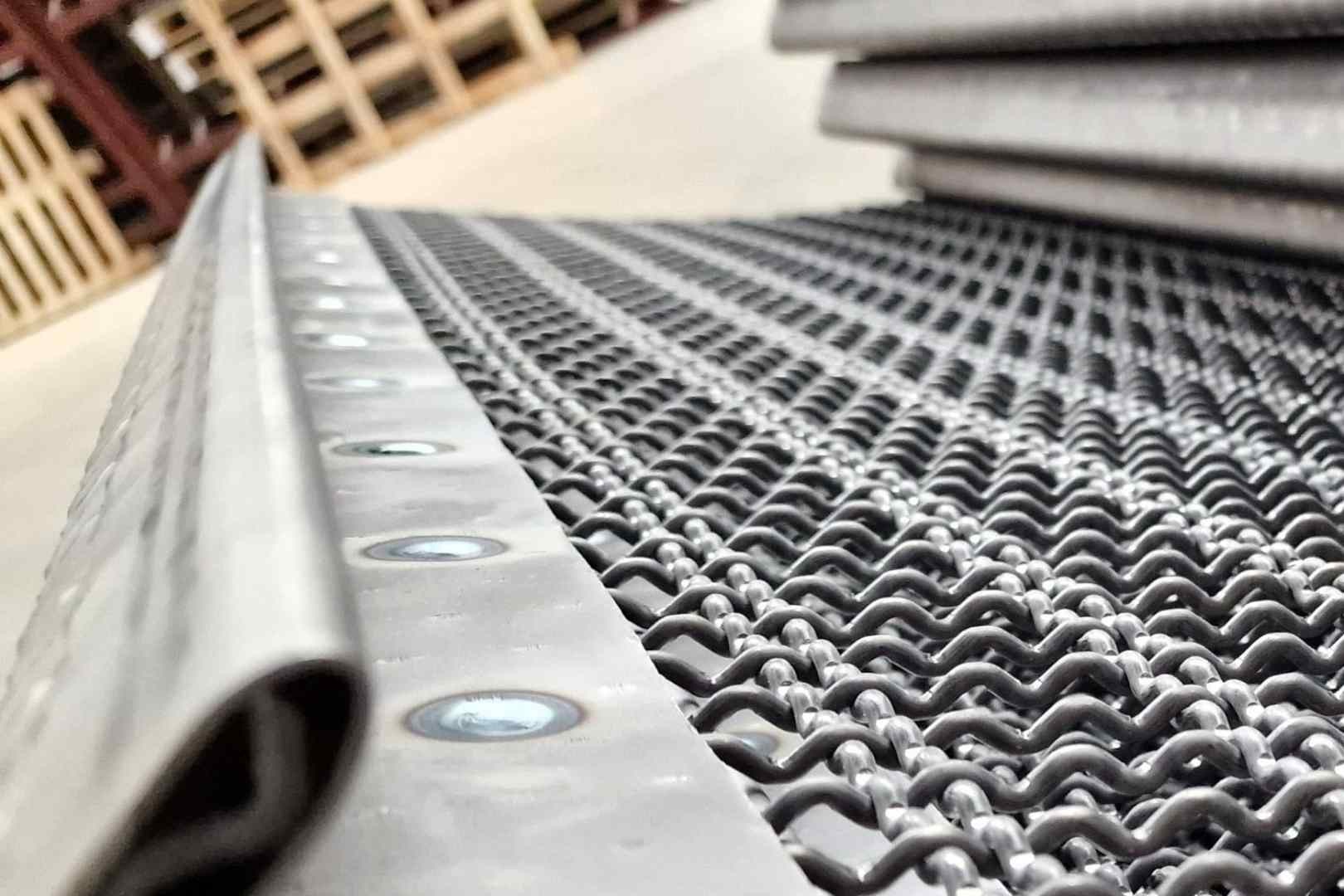
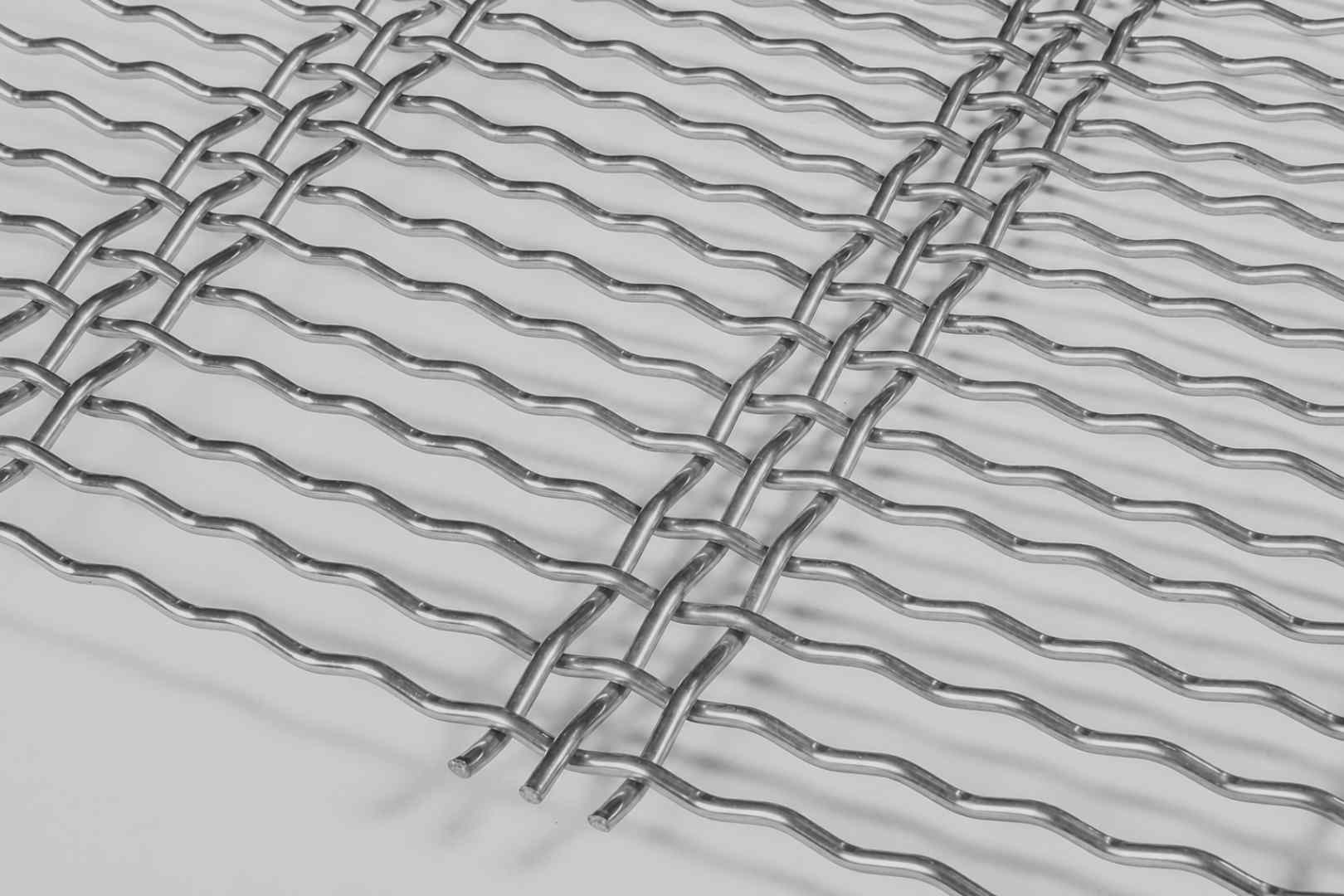
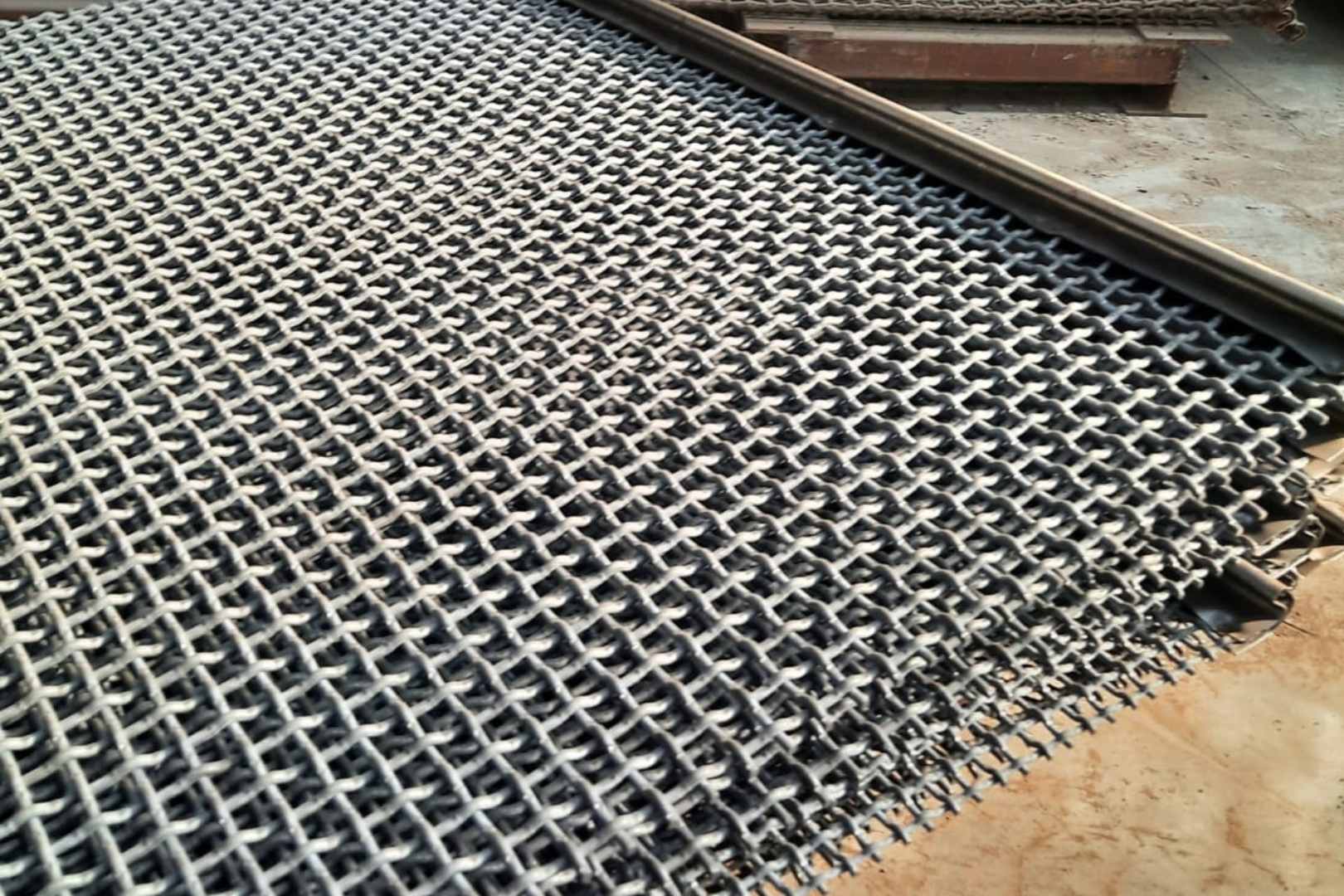
Double crimped screen panels are robust woven screen panels in which the pre-crimped wires lock firmly into each other. This keeps the mesh openings stable and allows the screen panel to perform reliably under vibration, impact and industrial material separation.
Intermediate crimped screen cloth
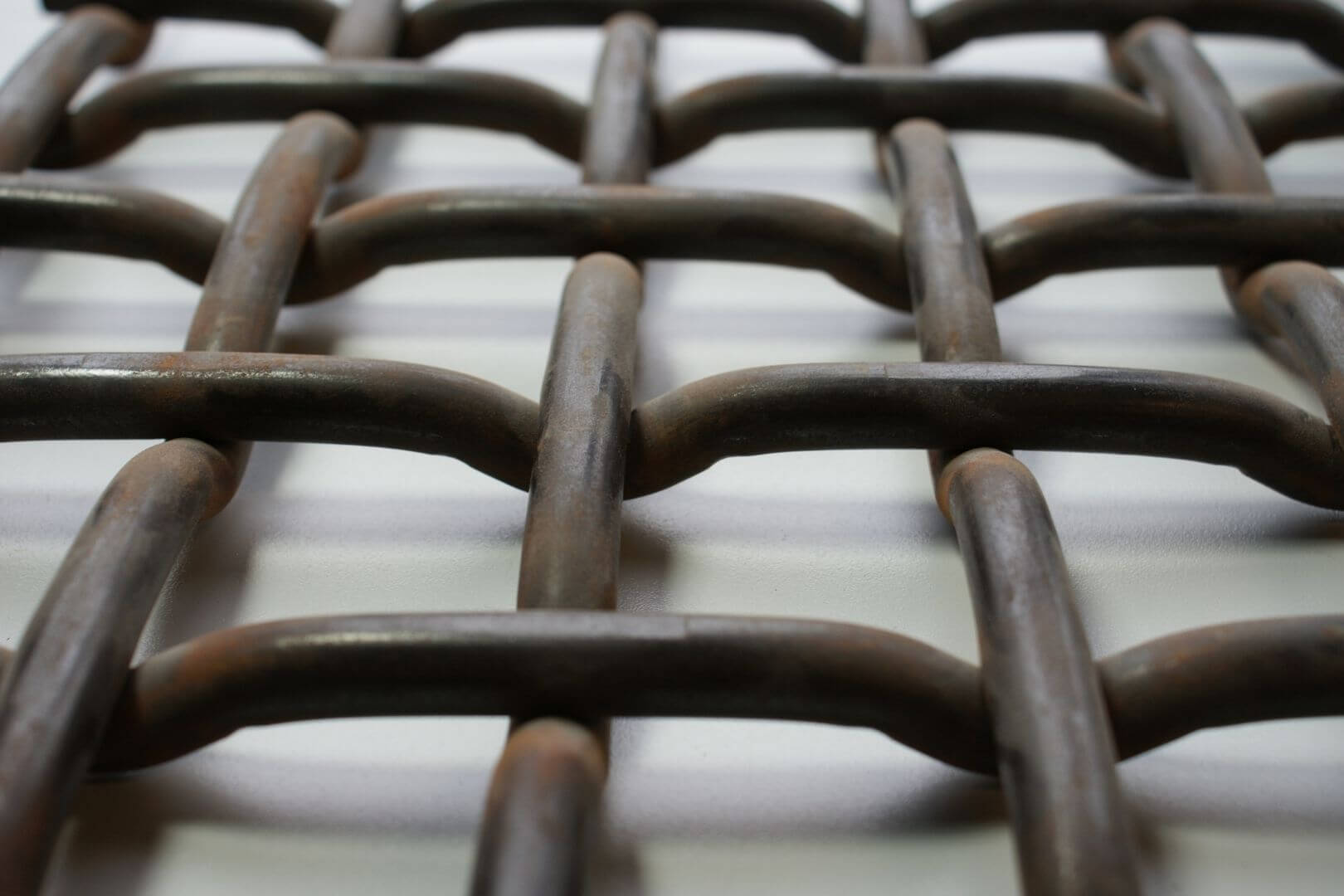
Intermediate crimped screen panels have additional crimps between the wire intersections. This improves the locking of light to medium-heavy wires, keeps the mesh opening stable and gives the screen panel more rigidity and dimensional stability in industrial screening processes.
Flat top screen cloth
Flat top screen panels have a flat upper surface, with the wire crossings positioned below the running surface. This allows material to move more smoothly over the screen panel, distributes wear more evenly and increases service life in coarse and medium-duty screening processes.
Lock crimped screen cloth
Lock crimped screen panels have tightly locked wire crossings. This keeps the mesh openings very stable and makes this type of screen panel particularly suitable for heavy vibration, impact loading and accurate industrial classification.
Welded wire screen panel
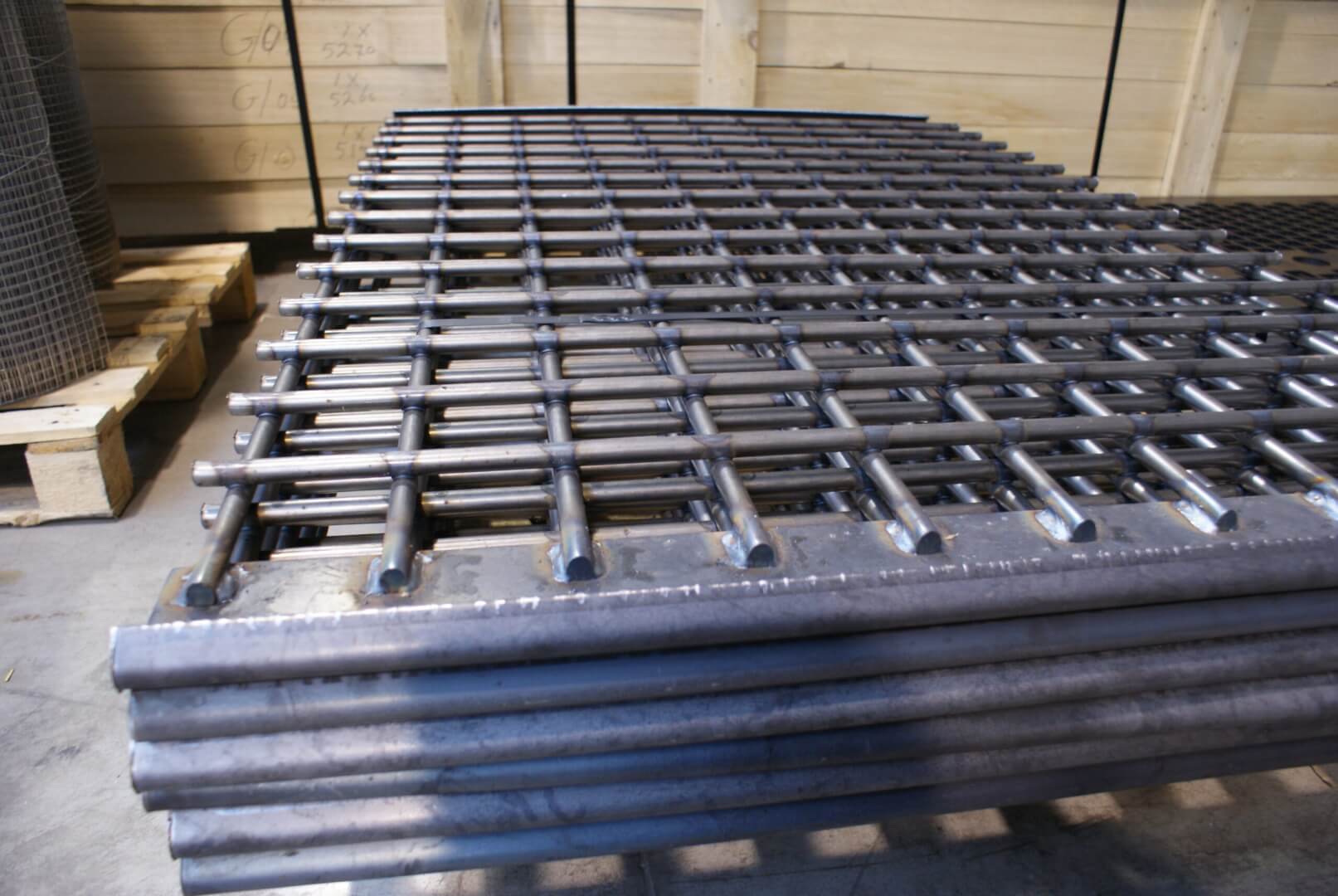
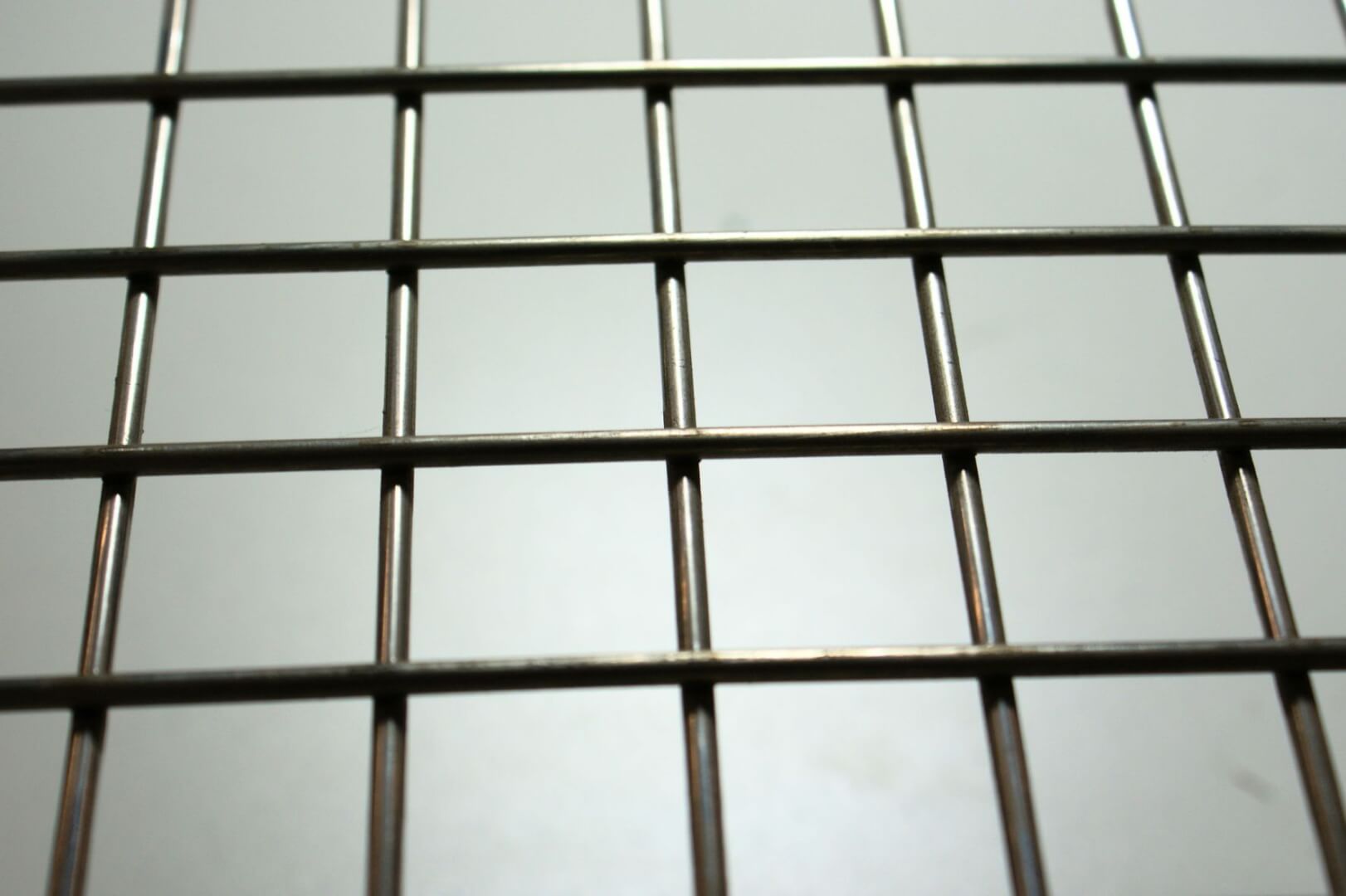
Welded wire screen panels have fixed welded joints at every wire intersection. This creates a strong, stable and dimensionally accurate screening structure for coarse fractions, heavy loads and industrial applications where dimensional stability and wear resistance are essential.
Woven screen cloth with slotted openings
Woven screen panels with slotted openings have elongated openings instead of square meshes. This creates a larger open screening area and allows material to pass through the screen panel more quickly.
This version is suitable when more capacity is required, when the product tends to hang up or when an elongated fraction opening is better suited to the screening process.
Piano wire screen cloth
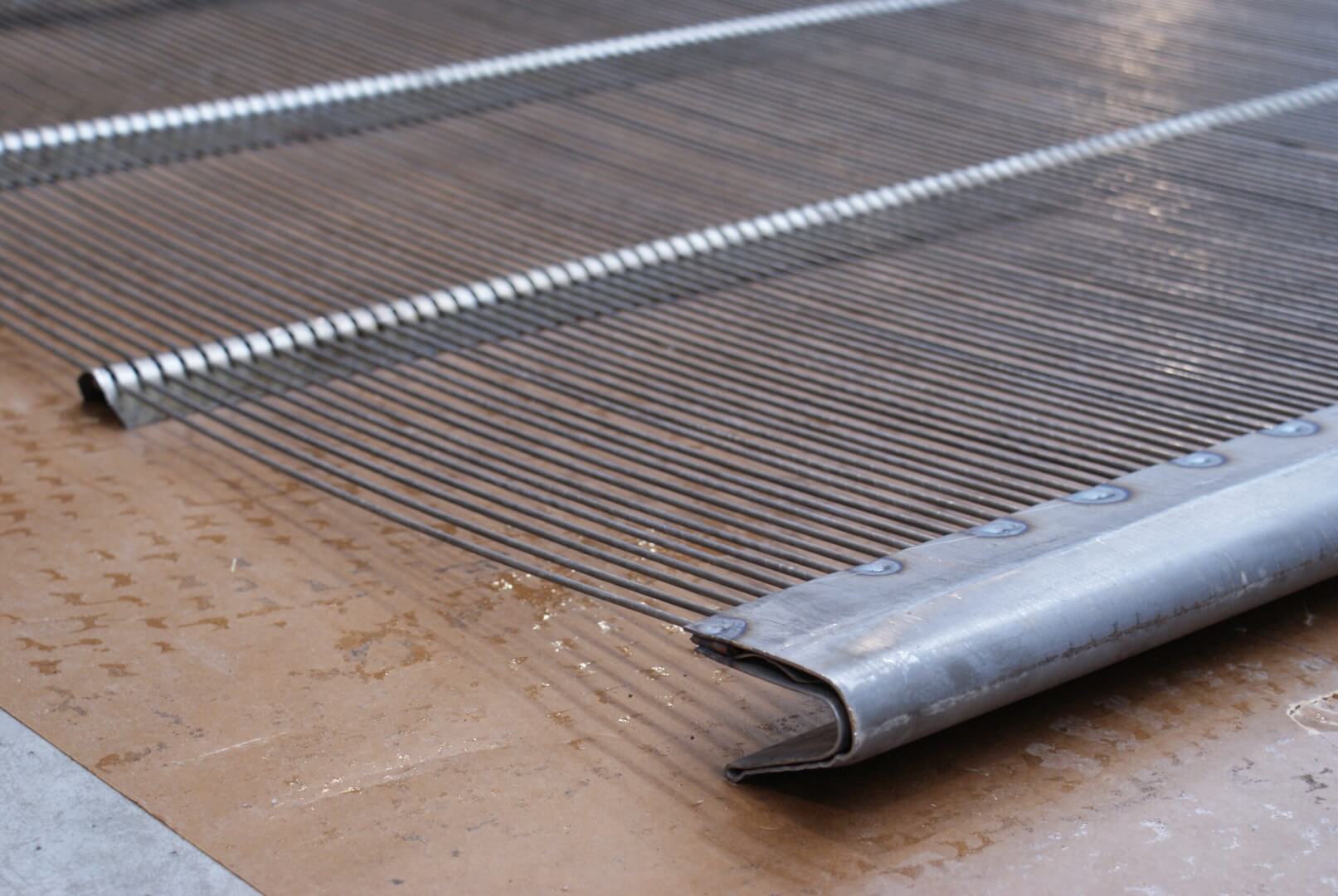
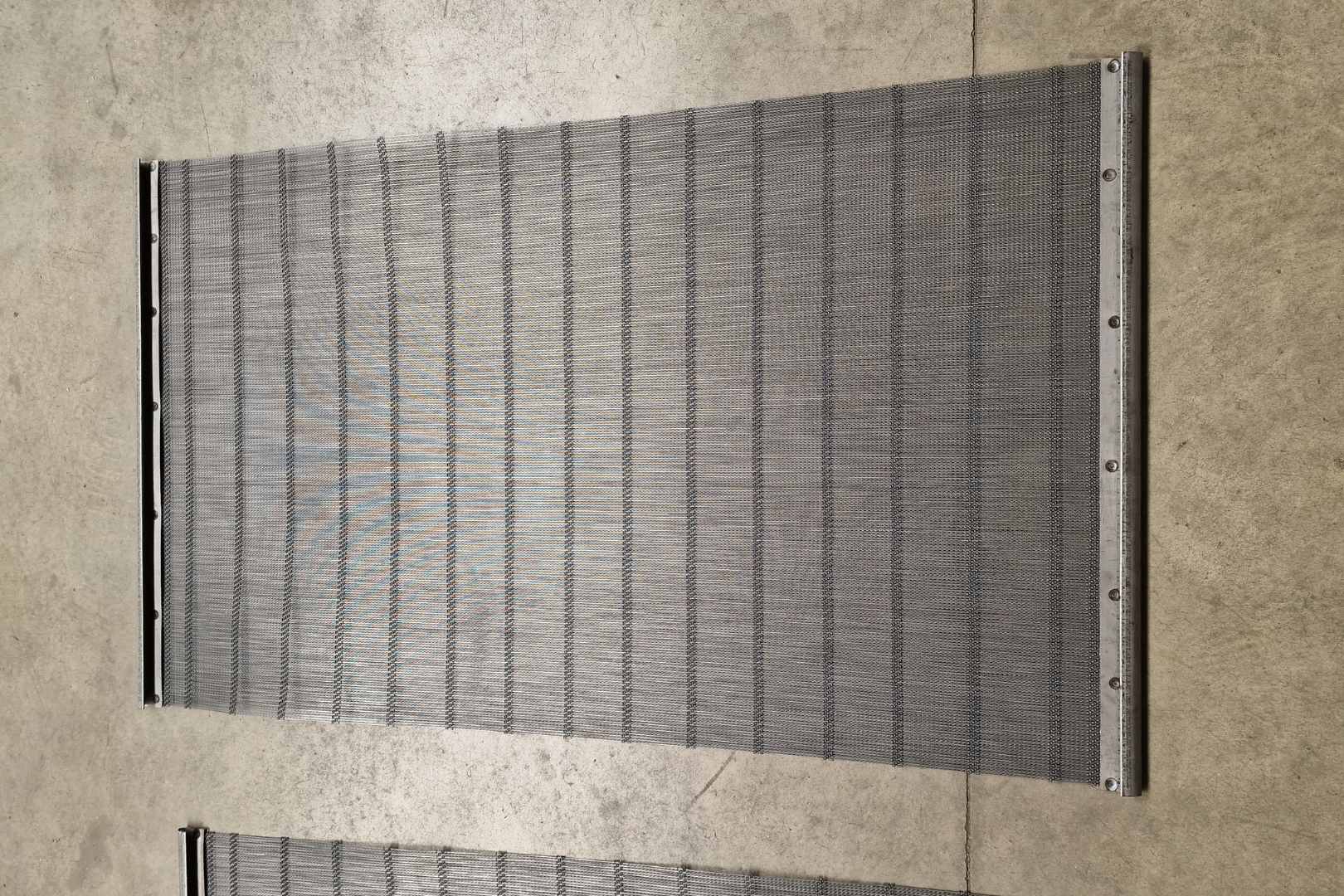
Piano wire screen panels consist of long, flexible wires with minimal cross connections. This provides a large open screening area, high capacity and a self-cleaning effect for wet, sticky or difficult-to-screen materials.
Screen cloth with hemmed edge and eyelets
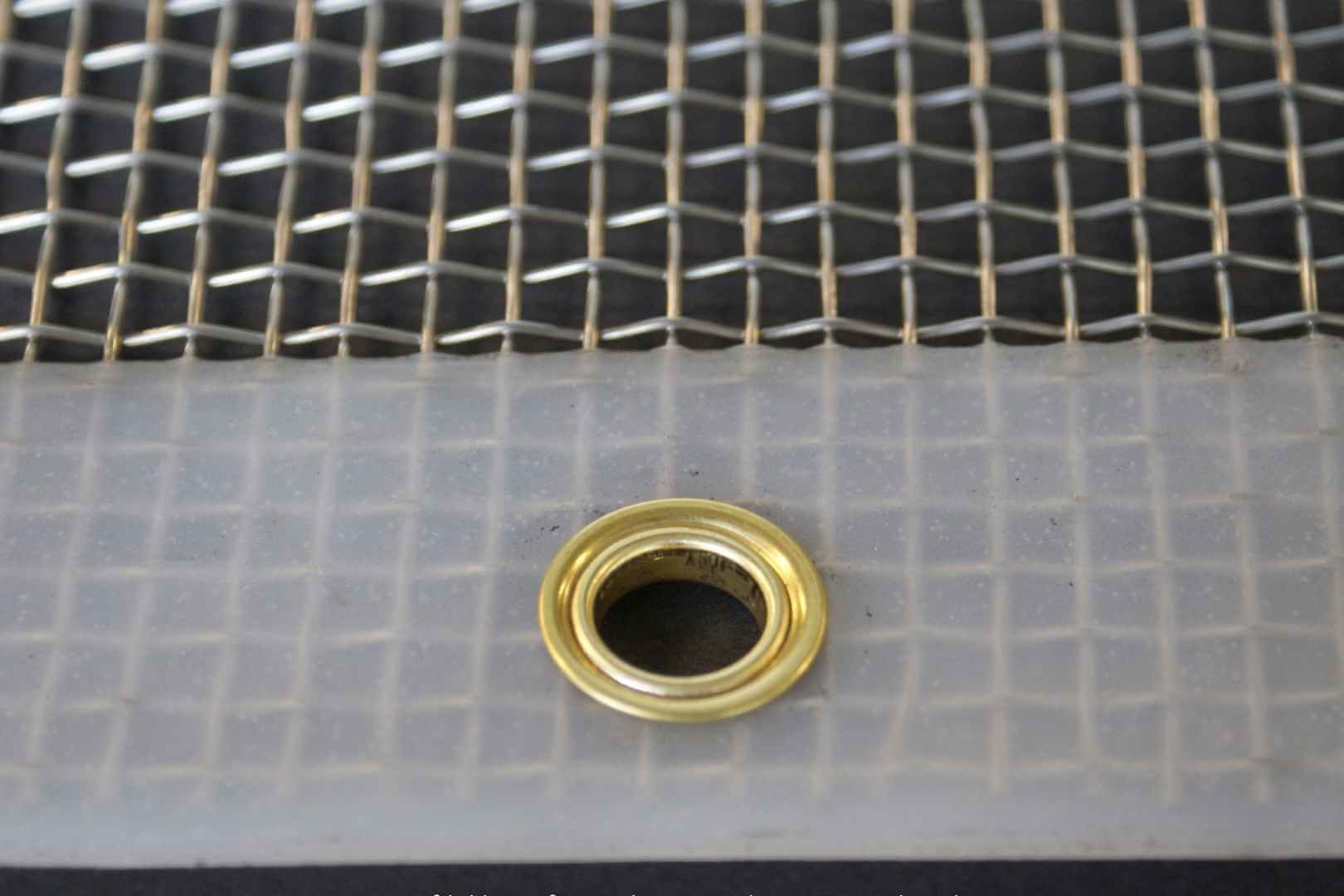
Screen cloths with a hemmed edge and eyelets are flexible finished screen cloths for rectangular or box-type screening machines. A canvas, heat-resistant fabric or PVC edge finish provides firm installation, even tension and protection against wear.
Screen panels with hooks for vibrating screens
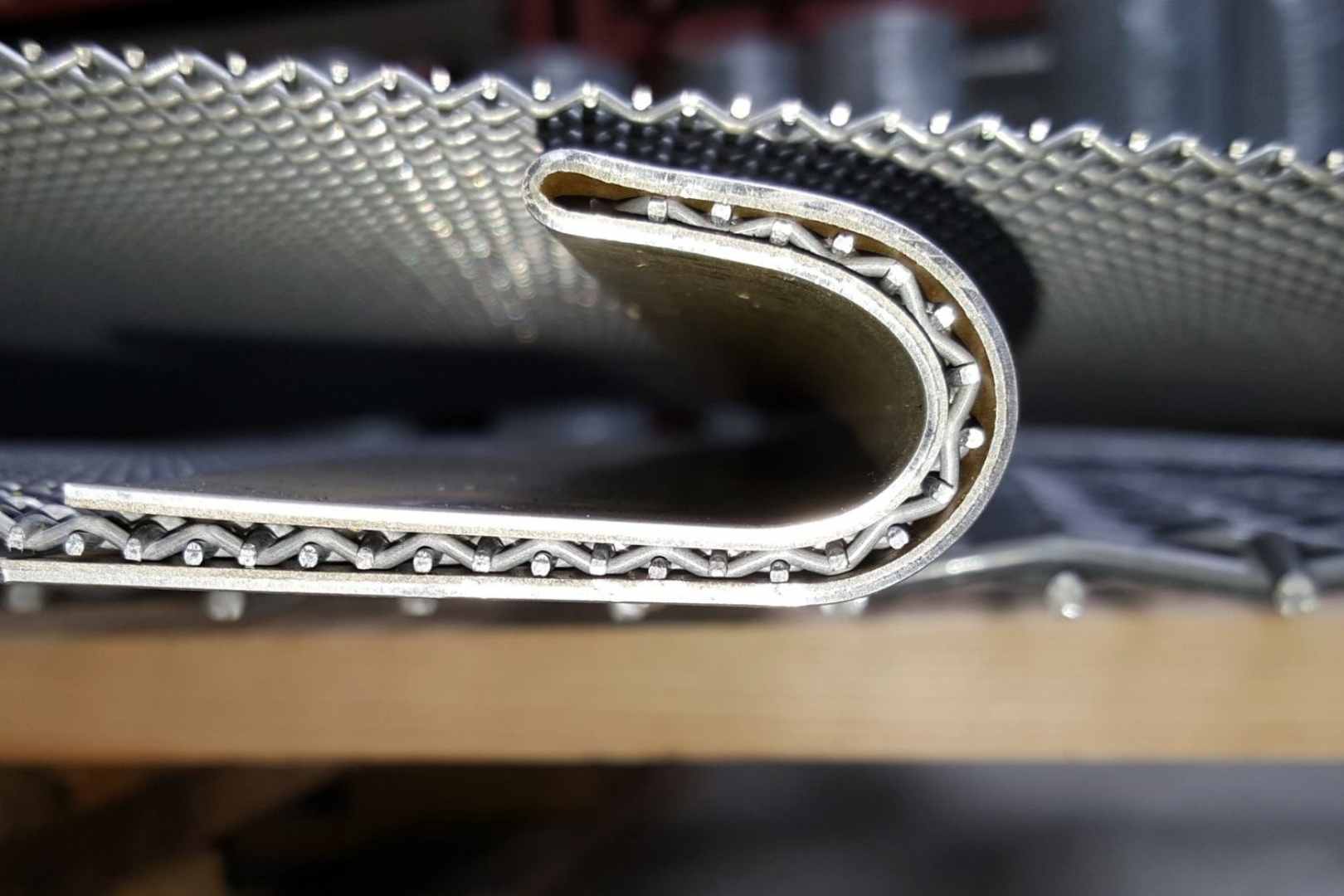
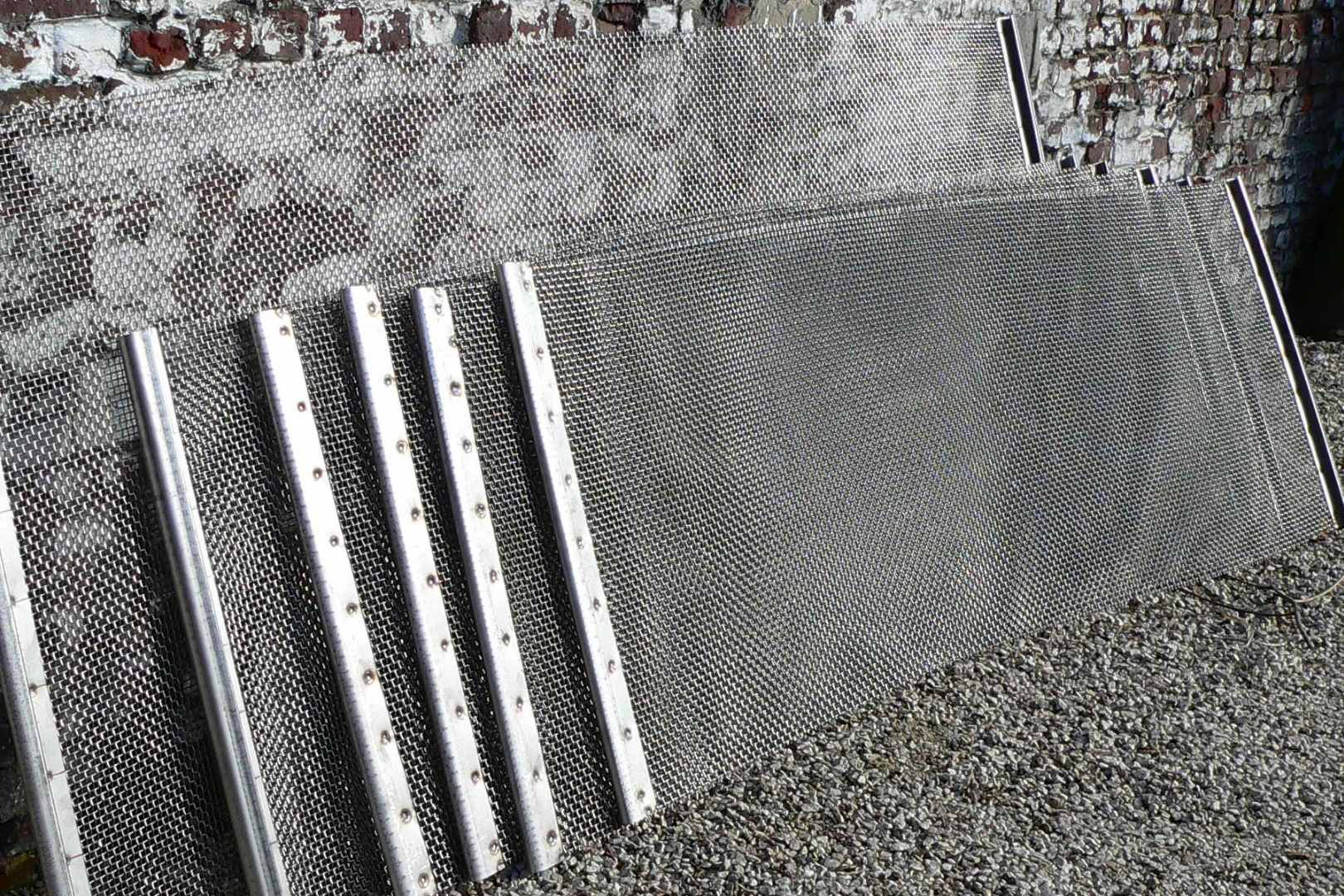
Screen panels with hooks are used in vibrating screens, scalpers, trommel screens and other industrial screening machines where the screen cloth must be mounted tightly and evenly under tension. The hook is fitted along the edge of the screen panel and engages with the tension clamps or tension rails of the machine.
Correct tension is important for the service life of the screen panel, the separation accuracy and the capacity of the installation. If a screen panel is too loose, it can flap, tear more quickly or screen inaccurately. That is why the hook type, tension edge and edge finish must always match the machine and the application.
Screen panels with hooks are widely used for sand, gravel, minerals, recycling, agricultural products, quarries and other processes where material needs to be screened, classified or dewatered.
Depending on the application, different versions can be made:
- single screening layer
- double layer with coarser support mesh
- multilayer construction for specific applications
- galvanized hooks
- stainless steel hooks
- edge sealing or overlap to prevent material loss
- special hook profiles according to the machine
- length-tensioned or cross-tensioned version
The correct hook finish
The correct hook finish depends on the wire diameter, mesh opening, tensioning direction and machine construction. Possible versions include wire hooks bent from the screen mesh itself, reinforced steel tension edges, single or double folded hooks, welded hooks and special profiles with bolt holes or 90° folded edges.
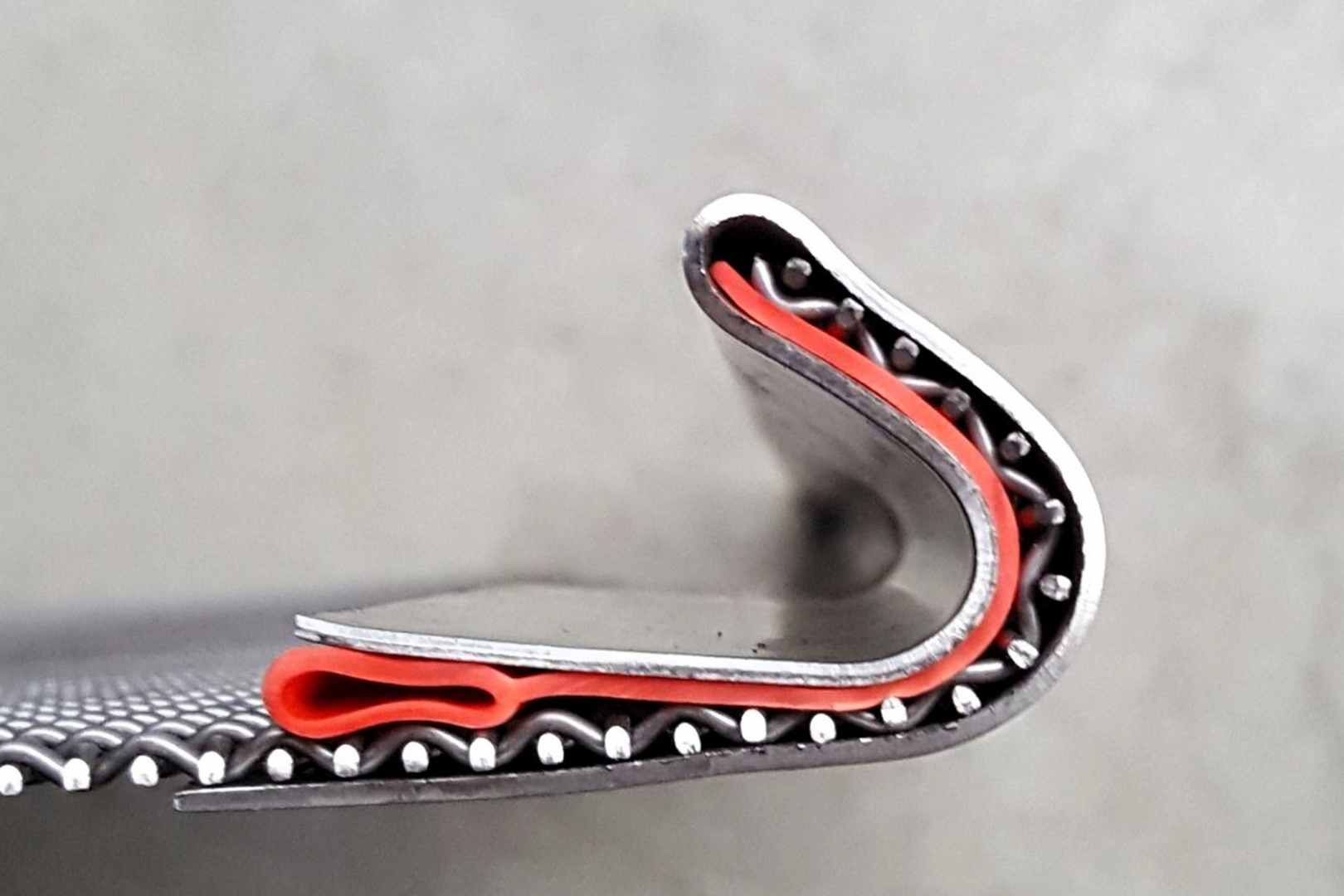
For fine-mesh screen panels, canvas strips, edge inserts or wear zones can be added to reduce metal-to-metal contact. This protects the mesh during installation, use and cleaning and helps prevent premature wear.
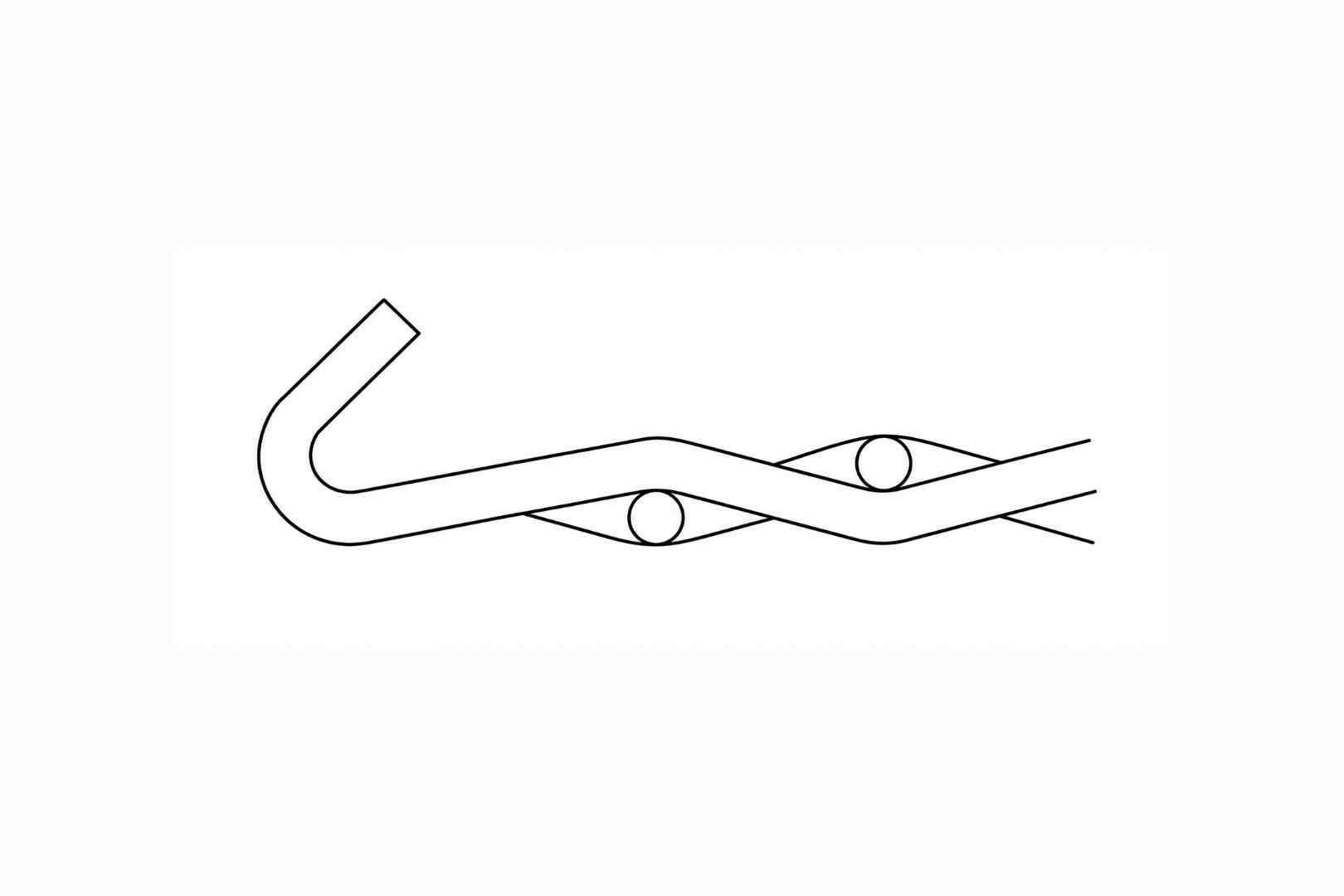
A simple bent wire hook. The wires of the screen mesh itself are folded into a hook shape, without an additional plate or reinforcement.
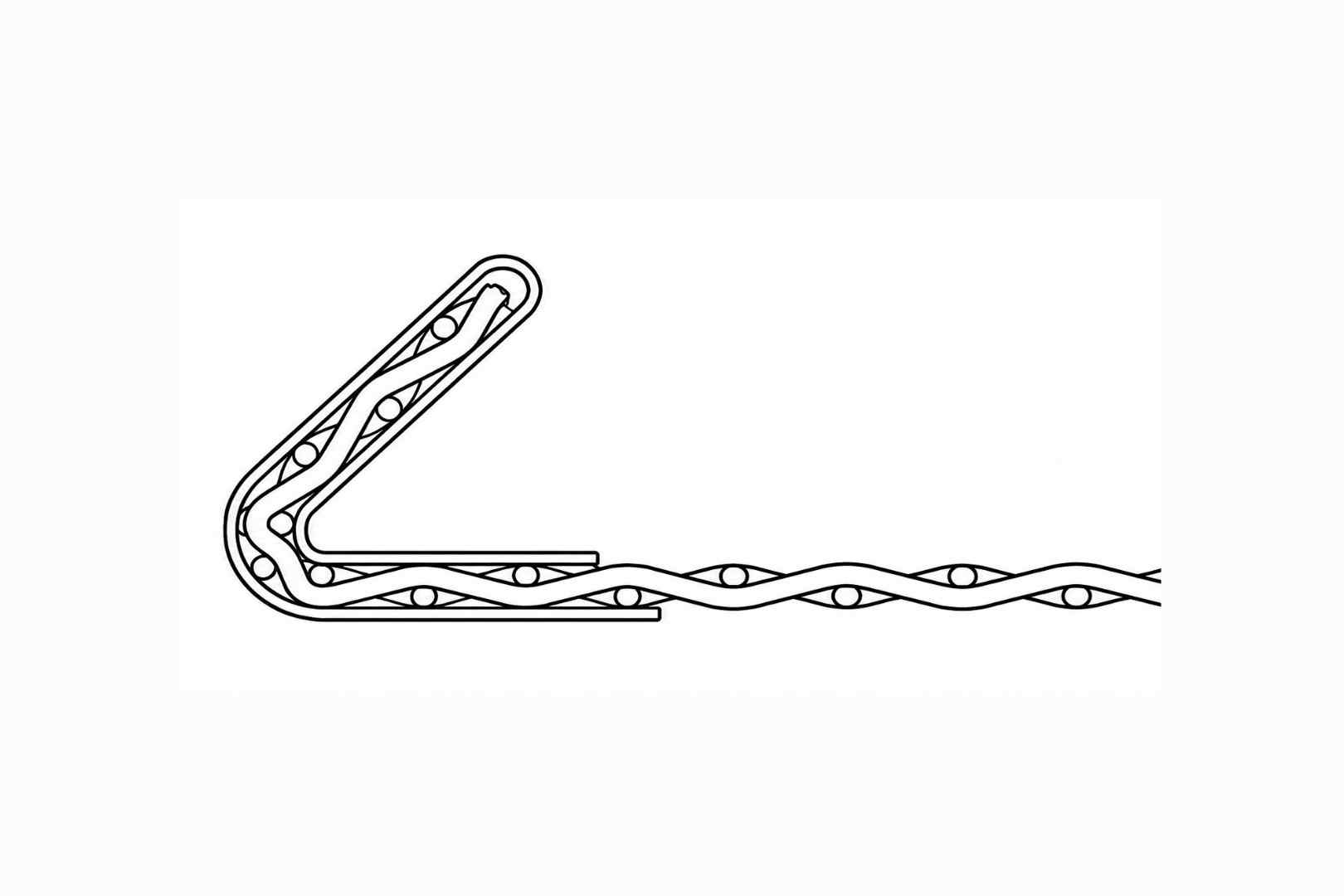
A hook where the screen mesh is held in a folded or formed plate/edge. The plate wraps around the wires and provides more support and protection in the hook zone.
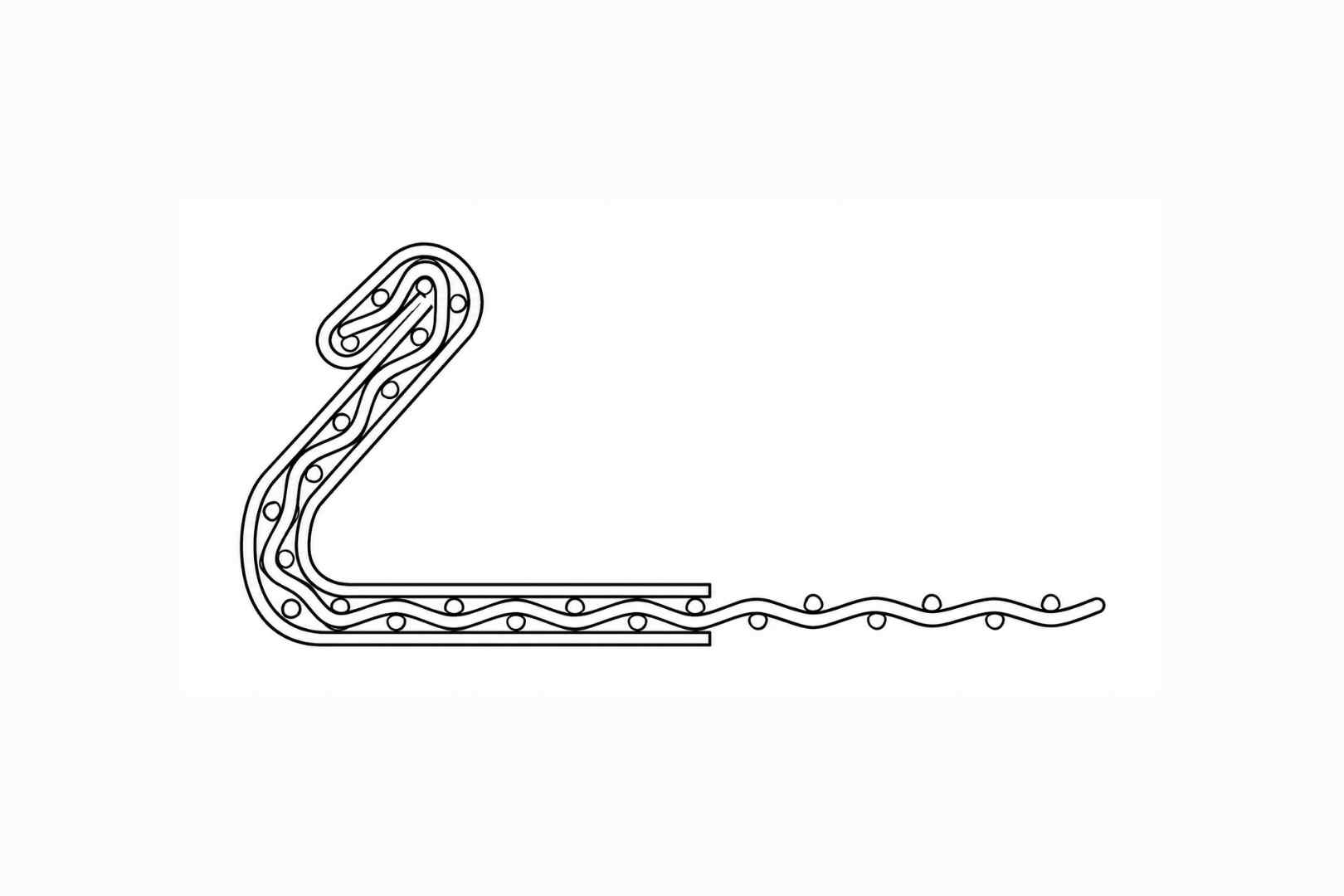
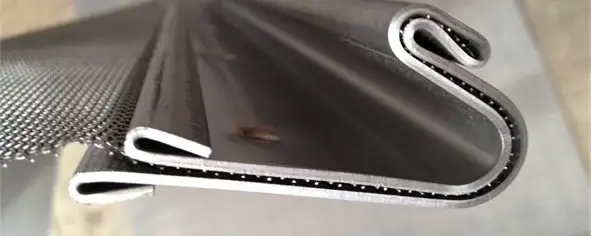
Double folded hook strip for fine-mesh screen panels. The rounded folds protect the screen mesh against cutting or breaking.
Cross-member rubber / cover rubber and support
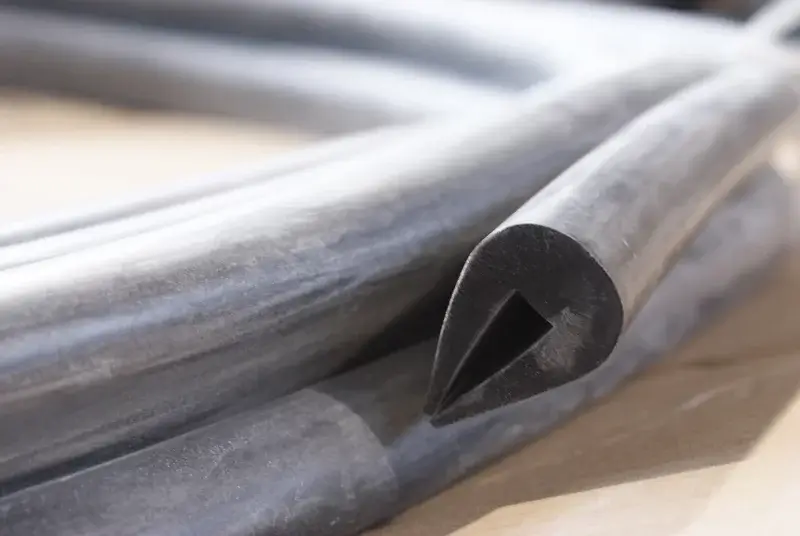
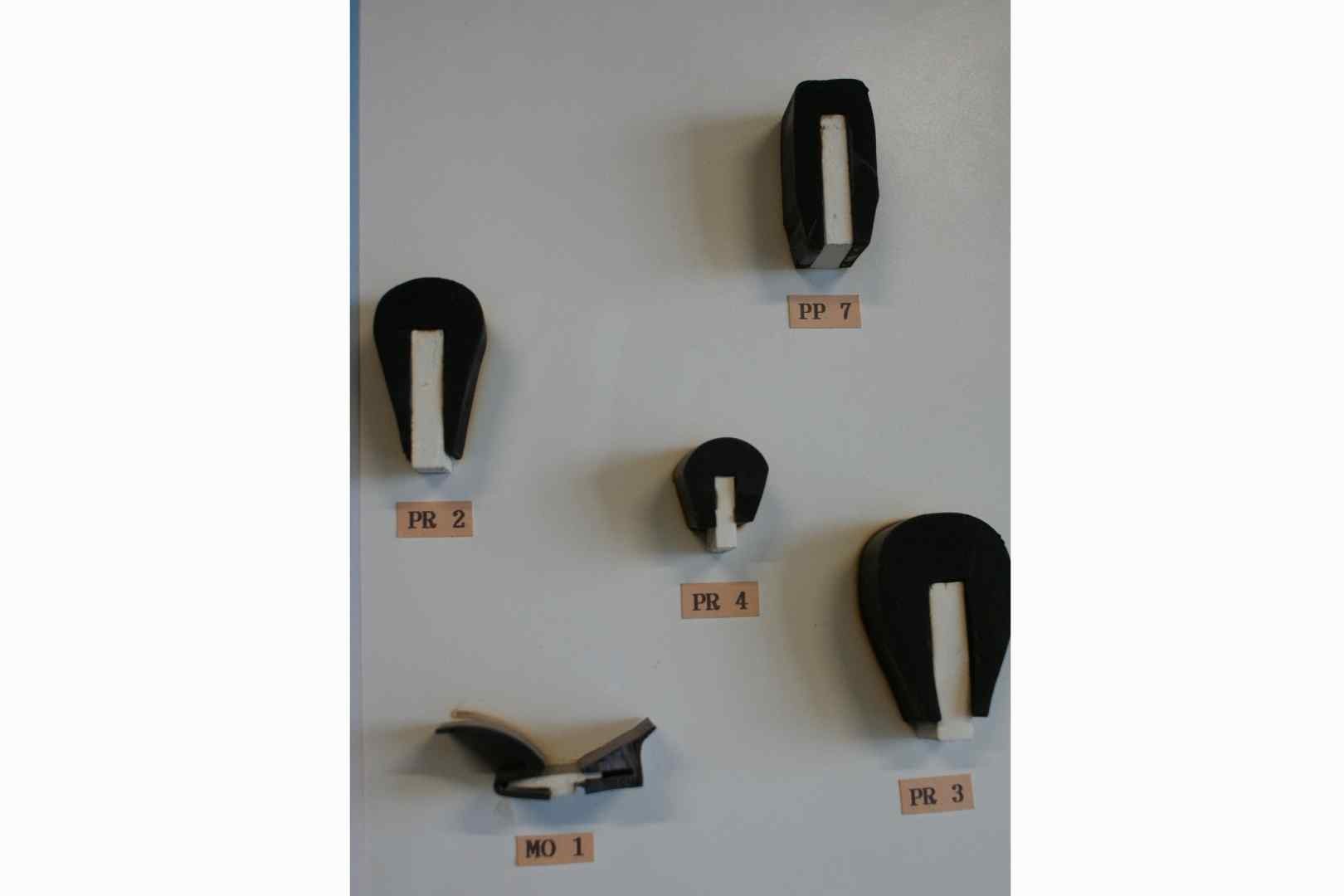
Cross-member rubber, also called cover rubber, protects the support bars underneath the screen panel. It prevents direct metal-to-metal contact and helps reduce cracking, wear-through and breakage of the screen panel.
Worn cross-member rubber can significantly reduce the service life of a screen panel. It is therefore important to check the support bars before installing a new screen panel.
Cross-member rubber helps with:
- protection of screen support bars
- reduction of contact wear
- better distribution of vibrations
- protection against cracking
- longer service life of the screen panel
Open screening area and screening efficiency
The open screening area is the percentage of the screen panel that consists of openings. The larger the open area, the more material can pass through the screen panel.
However, a larger open area is not always automatically better. A thinner wire provides more throughput and higher capacity, but less wear resistance and lower stiffness. A thicker wire provides more strength and a longer service life, but reduces the open screening area.
The right choice is a balance between:
- capacity
- throughput
- opening accuracy
- wear resistance
- opening stiffness
- service life
- product type
- moisture and contamination
- required final fraction
Blinding and clogging of screen panels
Blinding or clogging means that part of the screening surface no longer works actively. As a result, capacity decreases, separation quality is reduced and the risk of downtime increases.
Common causes include:
- wet or sticky material
- opening too small
- wrong opening shape
- wire too thick for the product
- too low or too high load
- insufficient material stratification
- incorrect vibration setting
- contamination of the screening surface
Possible solutions include:
- larger open screening area
- slotted openings instead of square openings
- self-cleaning screen mesh
- piano wire screens
- thinner wire where technically possible
- adapted opening
- stainless material for specific products
- checking the machine setting and load
Materials for screen panels
Screen panels can be produced in different materials, depending on wear, corrosion, impact and the process environment.
Commonly used materials include:
- spring steel
- manganese steel
- stainless steel 304
- stainless steel 316
- stainless and acid-resistant steel
- perforated steel plate
- plastic or polyurethane for specific applications
- rubber or PU components where needed
- special alloys on request
The material choice is matched to the screened product, the machine, the environment, the cleaning method and the required service life.
Reproducing or improving an existing screen panel
Do you have an existing screen panel that is worn or does not perform properly? We can reproduce it based on the existing model. If needed, we also check whether another wire, opening, hook, edge finish or screen structure could give better results.
Possible improvements include:
- higher capacity
- less blinding
- longer service life
- better opening stiffness
- better separation accuracy
- adapted hooks
- additional edge sealing
- different material choice
- better installation in the machine