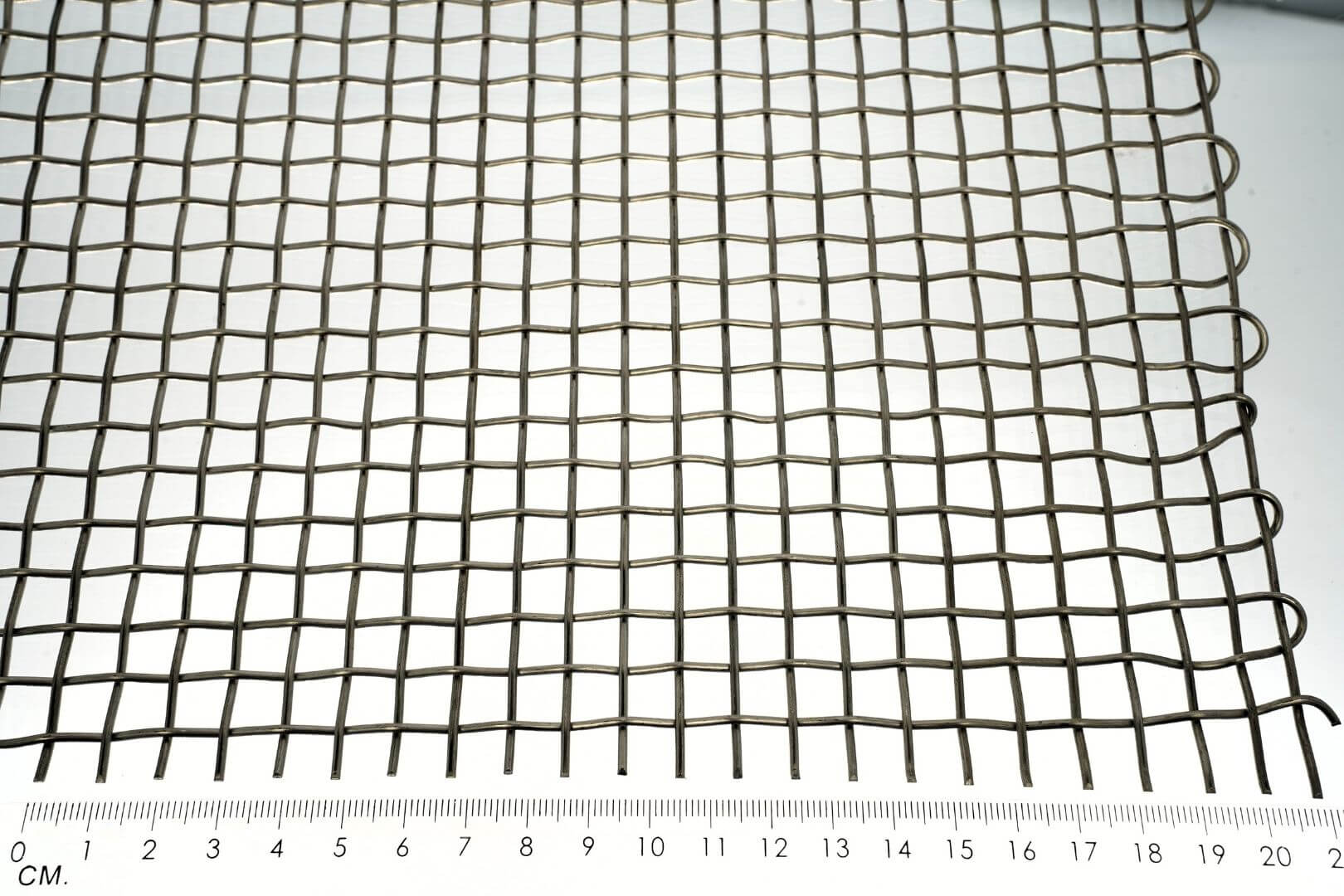
Crimped metal mesh – panels
Thanks to the internal tension and pre-formed wires, the crossing points remain firmly connected. The panel is designed to withstand impact and remain dimensionally stable.
- High mechanical durability for long-term industrial use
- Square or rectangular mesh openings with accurately controlled dimensions
- Suitable for heavy, vibrating and dynamically loaded applications
- Available in stainless steel, galvanised steel and other metal alloys
Crimped metal mesh – panels
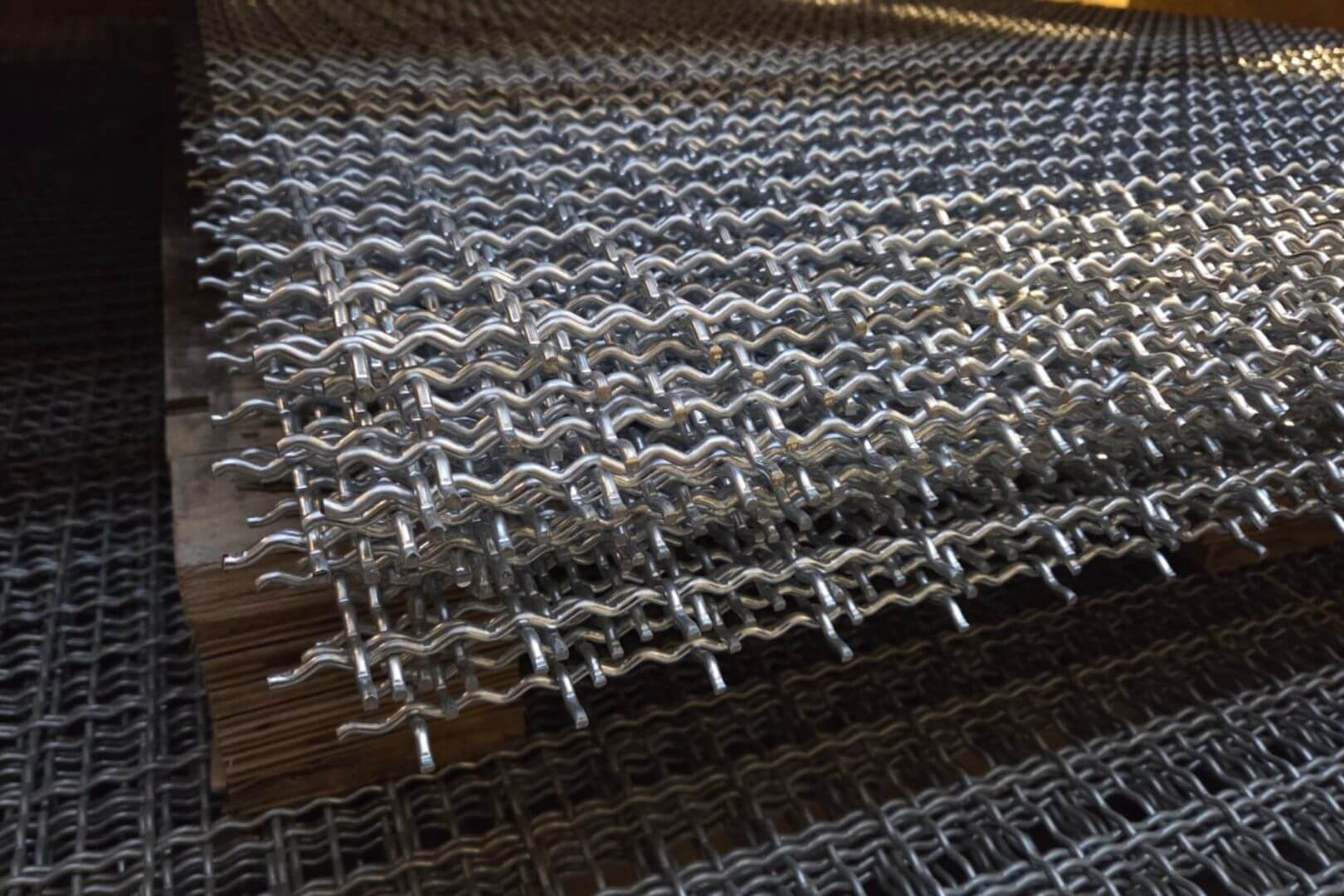
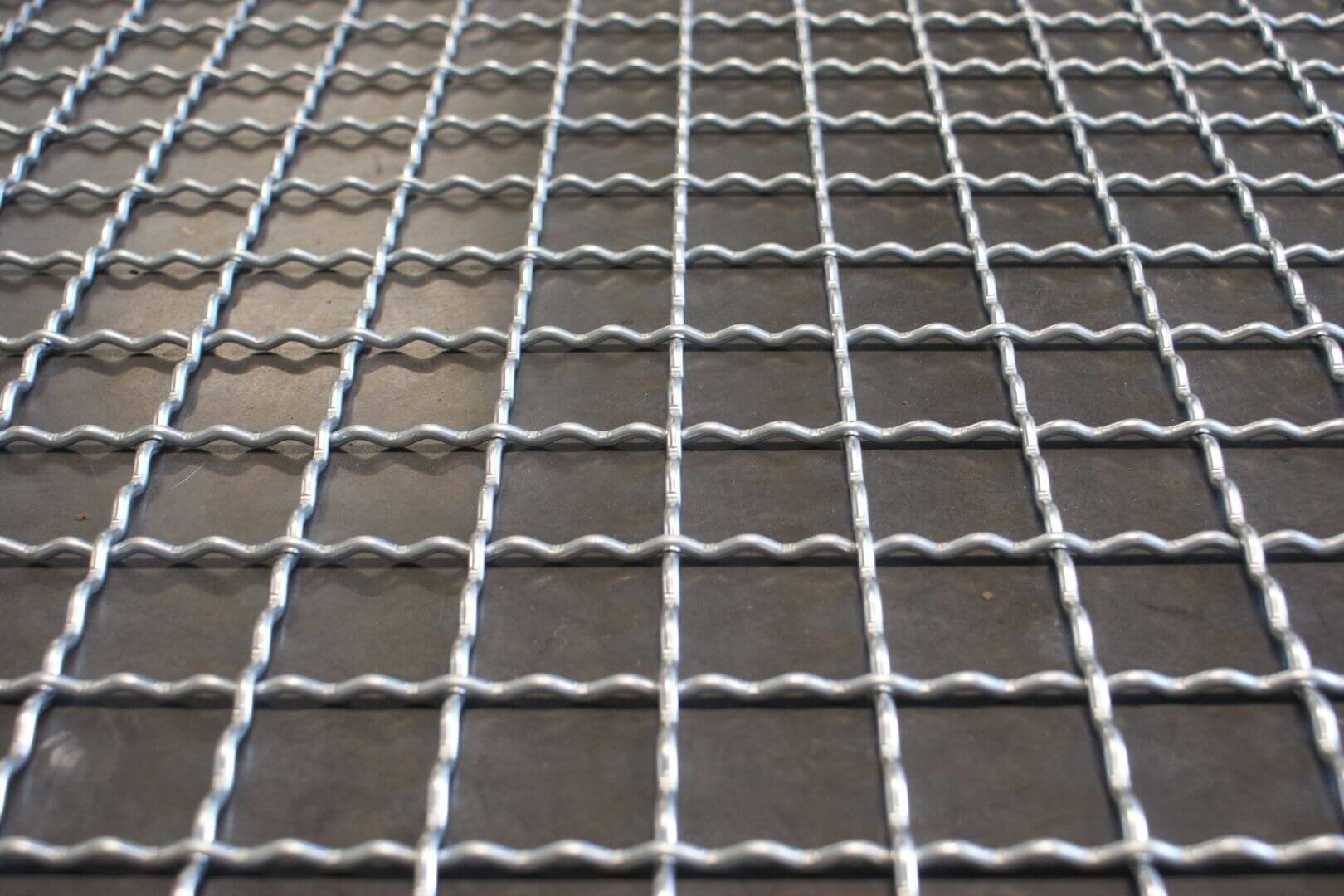
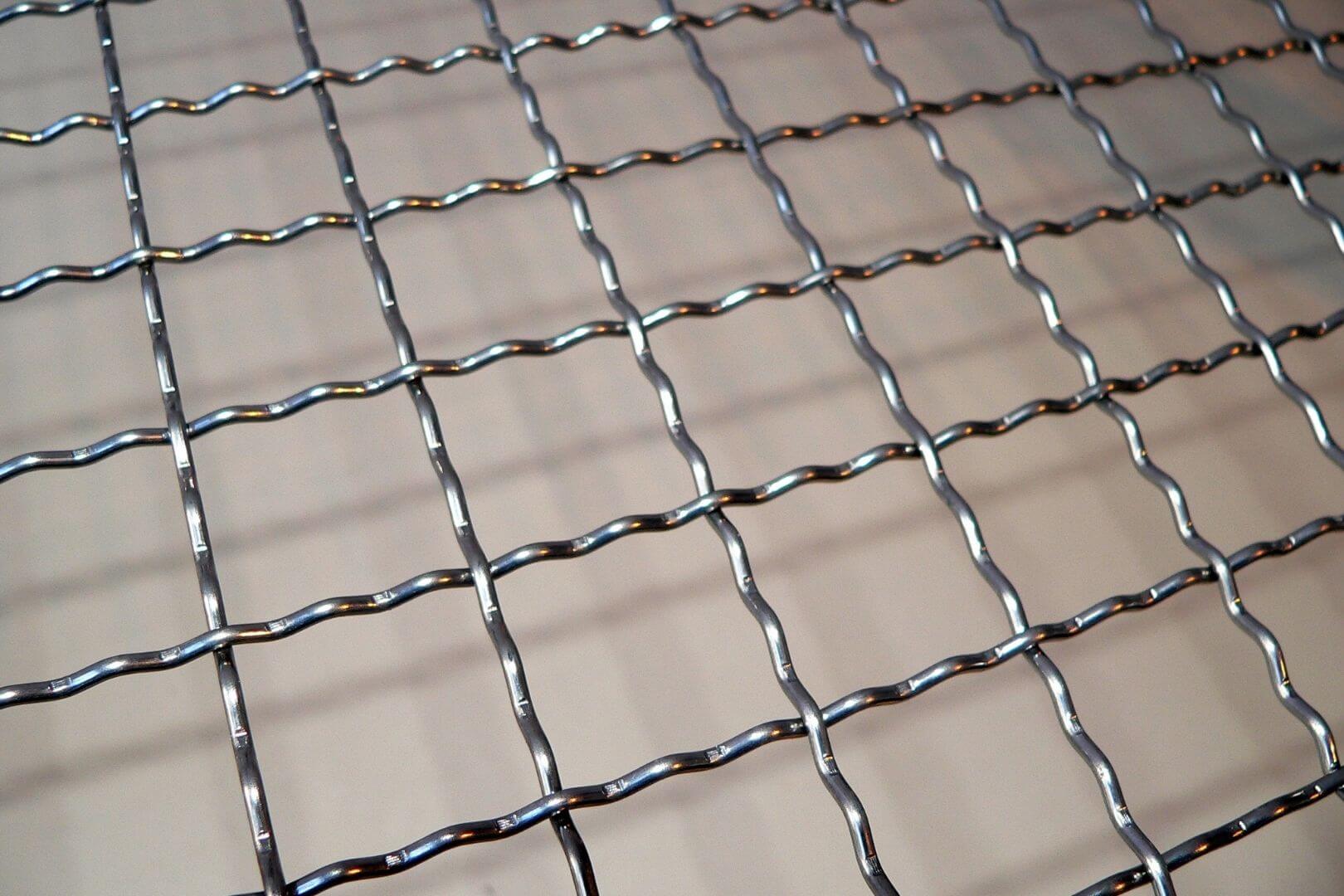
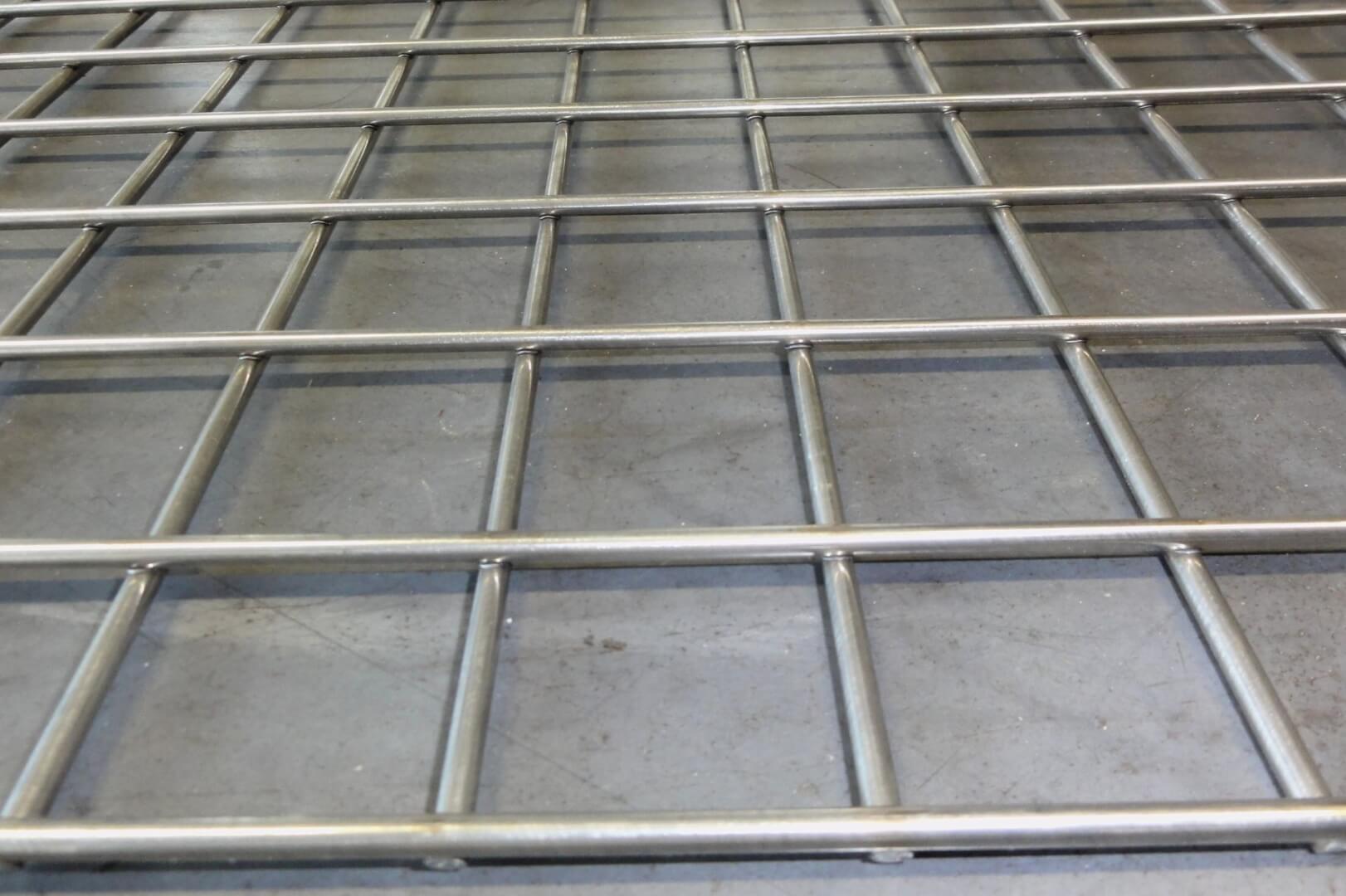
Crimped mesh panels are manufactured from pre-formed metal wires that are mechanically woven together into a strong and flexible panel structure. Thanks to the internal tension and shape of the wires, the crossing points mechanically lock into each other without weld points.
The result is a durable, dimensionally stable metal panel that can withstand impact and is suitable for demanding industrial applications.
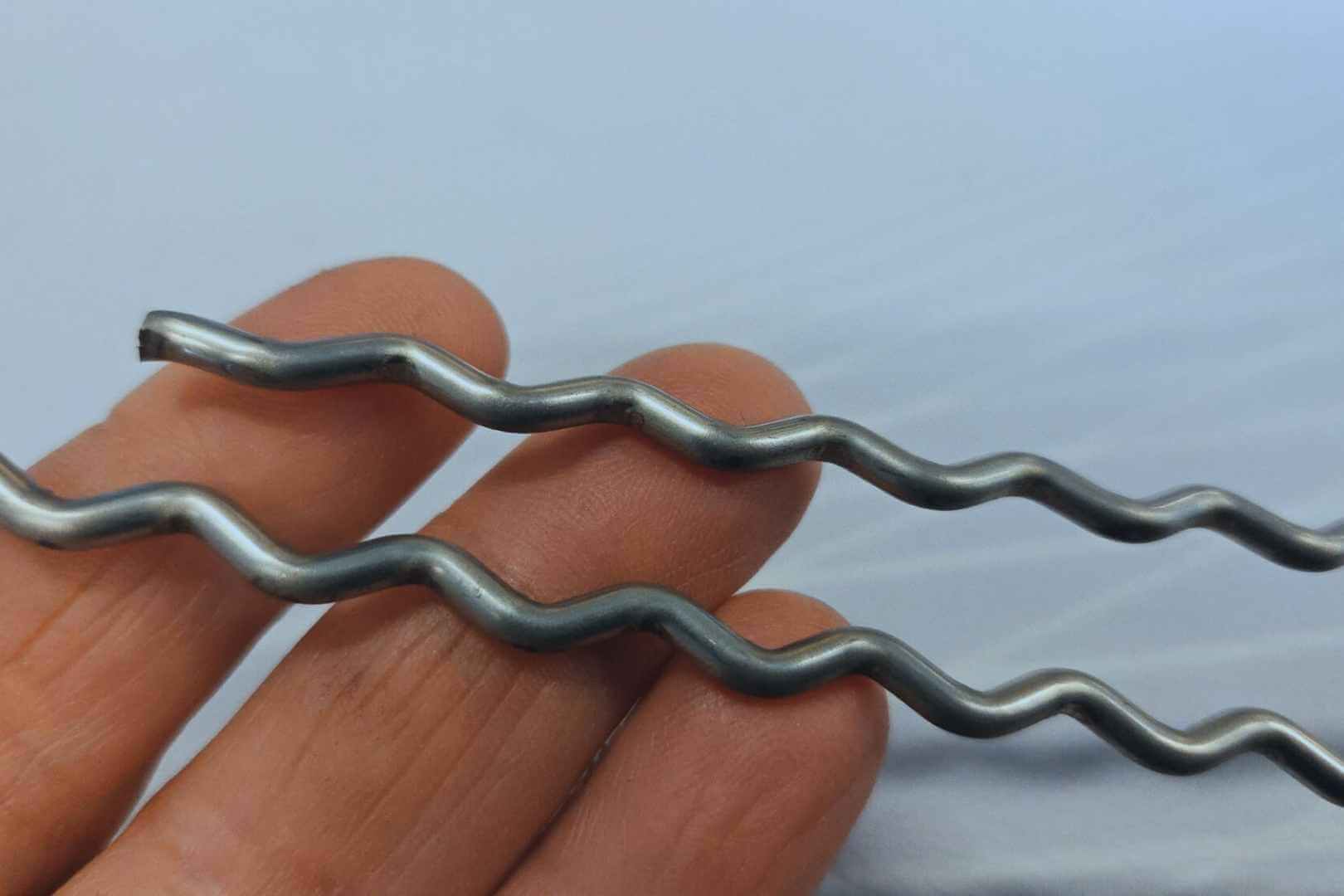
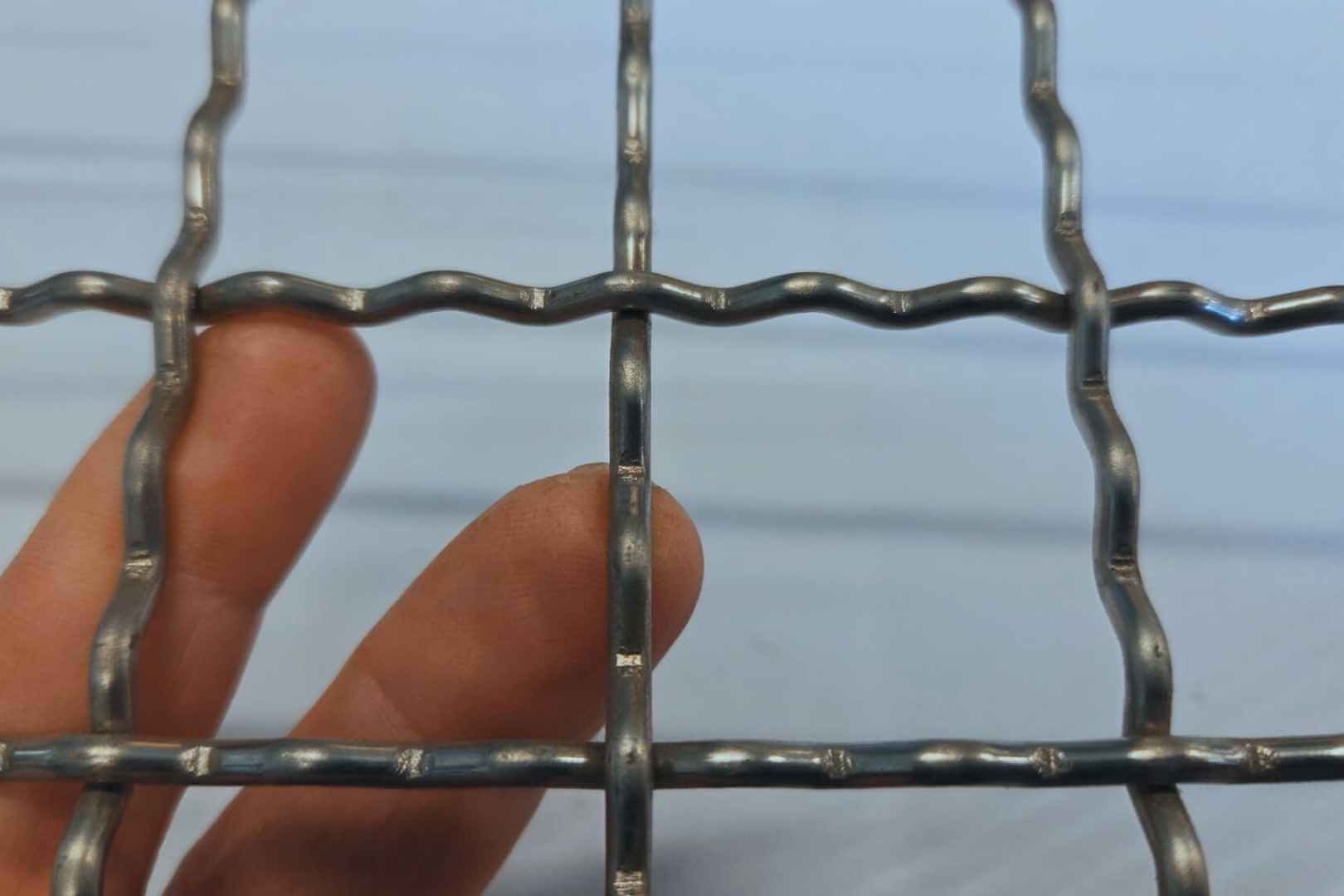
Types of crimped metal mesh and panels for industrial applications
We supply different types of crimped metal mesh panels, each with its own crimp structure and specific mechanical behaviour. These include standard crimp, intercrimp, plain crimp, flat top, lock crimp and architectural metal mesh.
Thanks to these variants, you can always choose the right panel according to load, flatness, mesh stability and application.
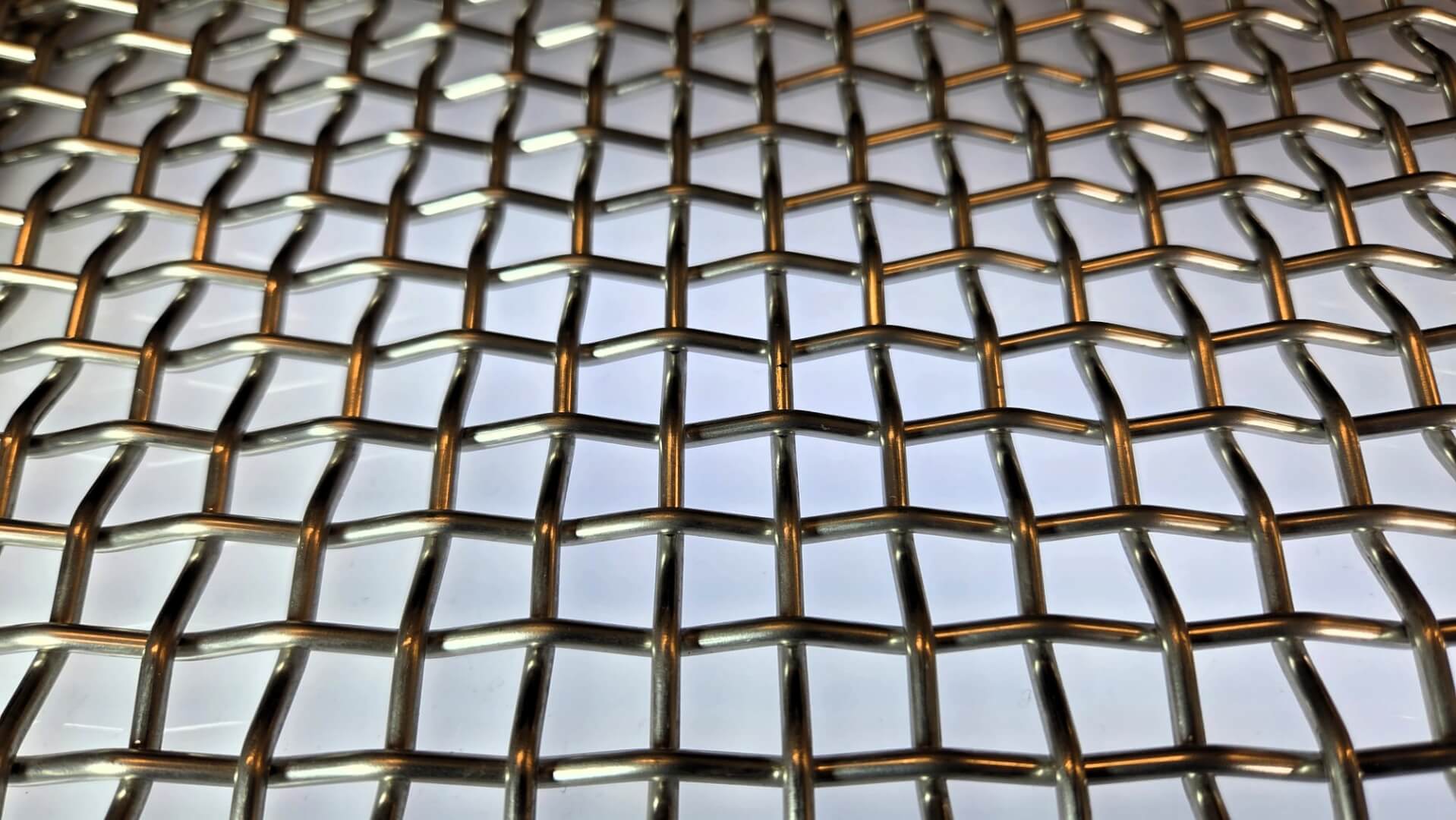
Use double crimp when:
- Small to medium mesh openings are required
- Standard industrial screening panels are needed
- Filtration or separation is important
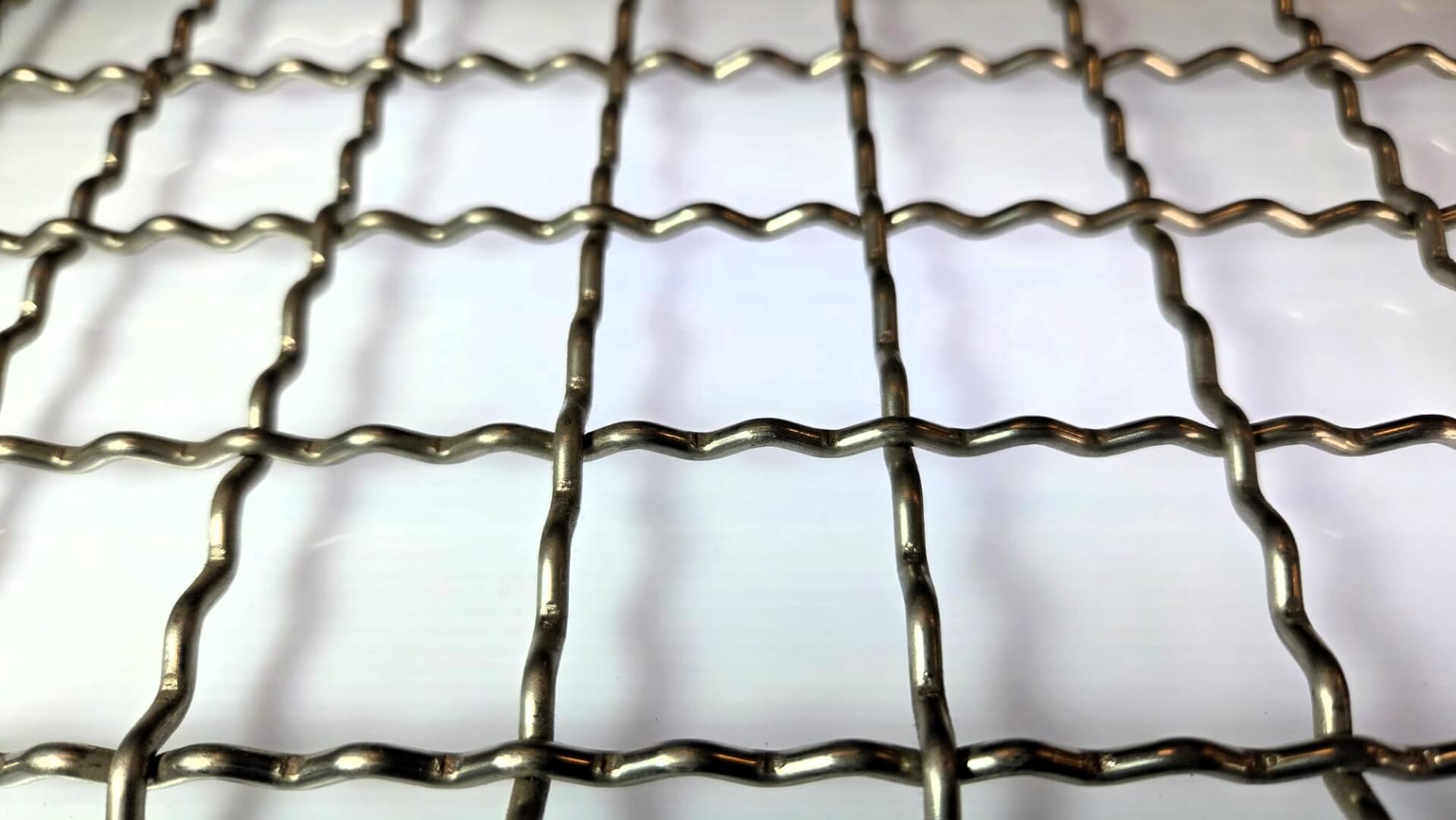
Double crimped wire mesh
- Each wire has a simple crimp in both the warp and weft direction.
- The wires follow a classic over-under pattern, with each crossing positioned on a crimp.
- It is often called double crimp because both directions are crimped. This is the standard crimp for many general applications.
Use intermediate crimp when:
- Larger mesh openings are required
- Thin wires still need to remain stable
- Architectural or light industrial applications are involved
Intermediate crimped metal mesh
- Intermediate crimped mesh is a variant of double crimped mesh in which the wires are locked at fixed intervals, for example every 3rd, 5th or 7th crossing, to stabilise larger mesh openings.
- The crimp is relatively light and mainly serves to position the wires, not to fully lock them as in lock crimp mesh.
- It is suitable for larger meshes or applications with lower mechanical load where both stability and a large open area are required.

Use flat top when:
- High wear occurs
- Material needs to slide over the surface
- Vibrating screens are used with abrasive materials
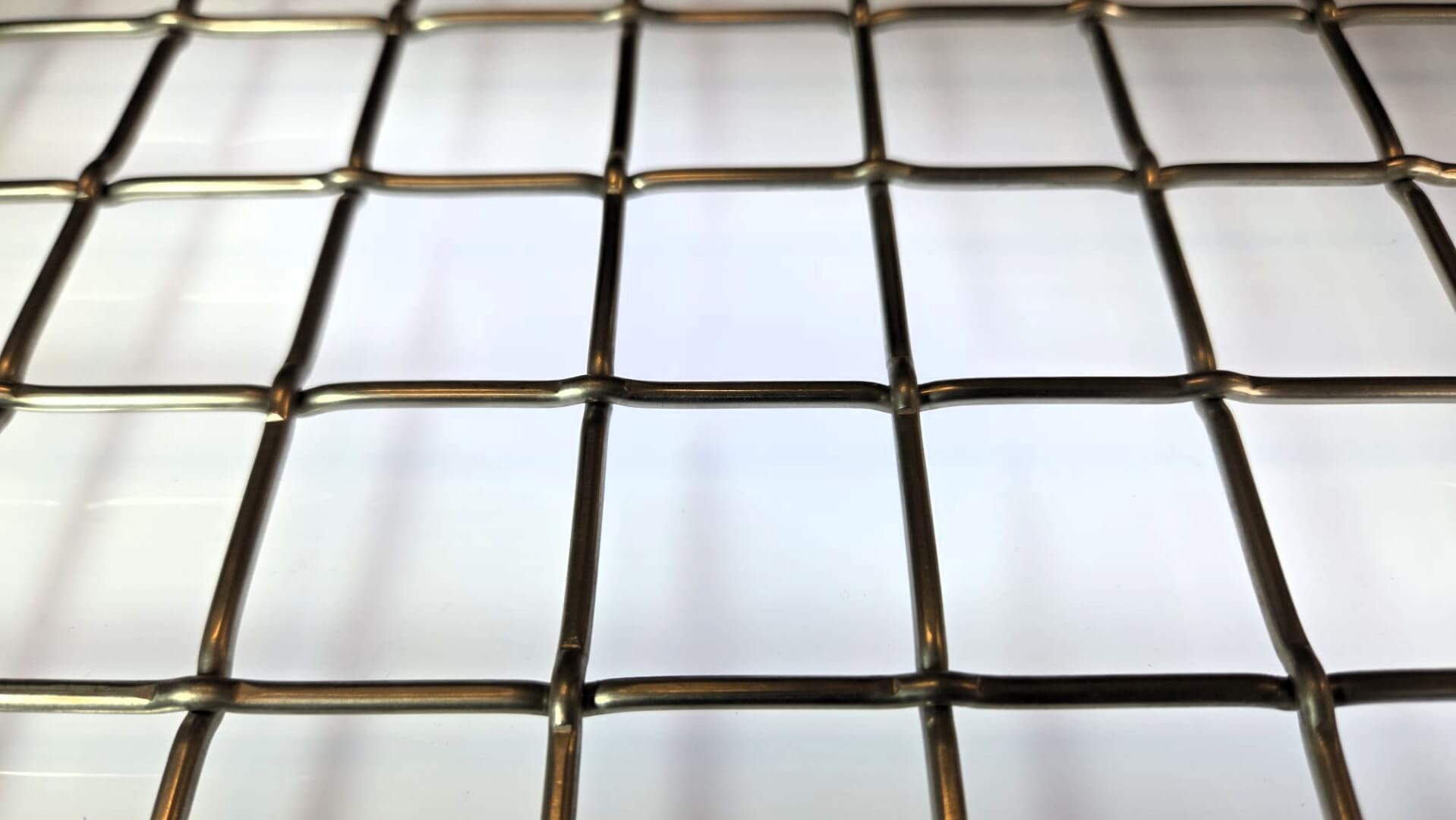
Flat Top Pre-Crimped Mesh
- On one side, the wires are almost flat because the crimps are “hidden” on the other side.
- This provides a relatively flat running or visible surface, with fewer protruding wires, which is beneficial for wear resistance, cleaning and aesthetics.
- It is often used as a flat panel or in architecture where a flat visible side is desired.
Use lock crimp when:
- Heavy industrial load is present
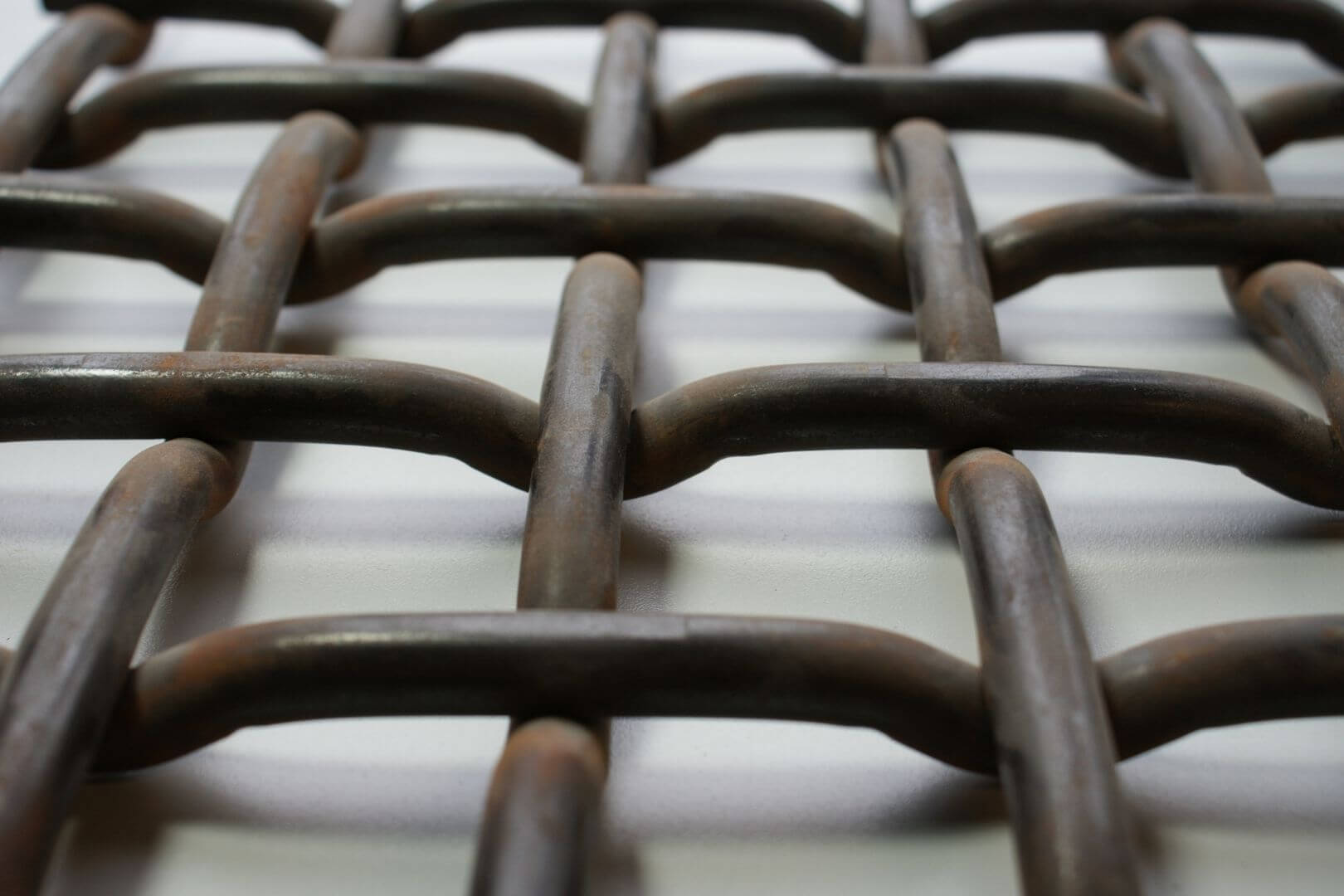
- Large mesh openings and thick wires are required
- Maximum structural stability is required
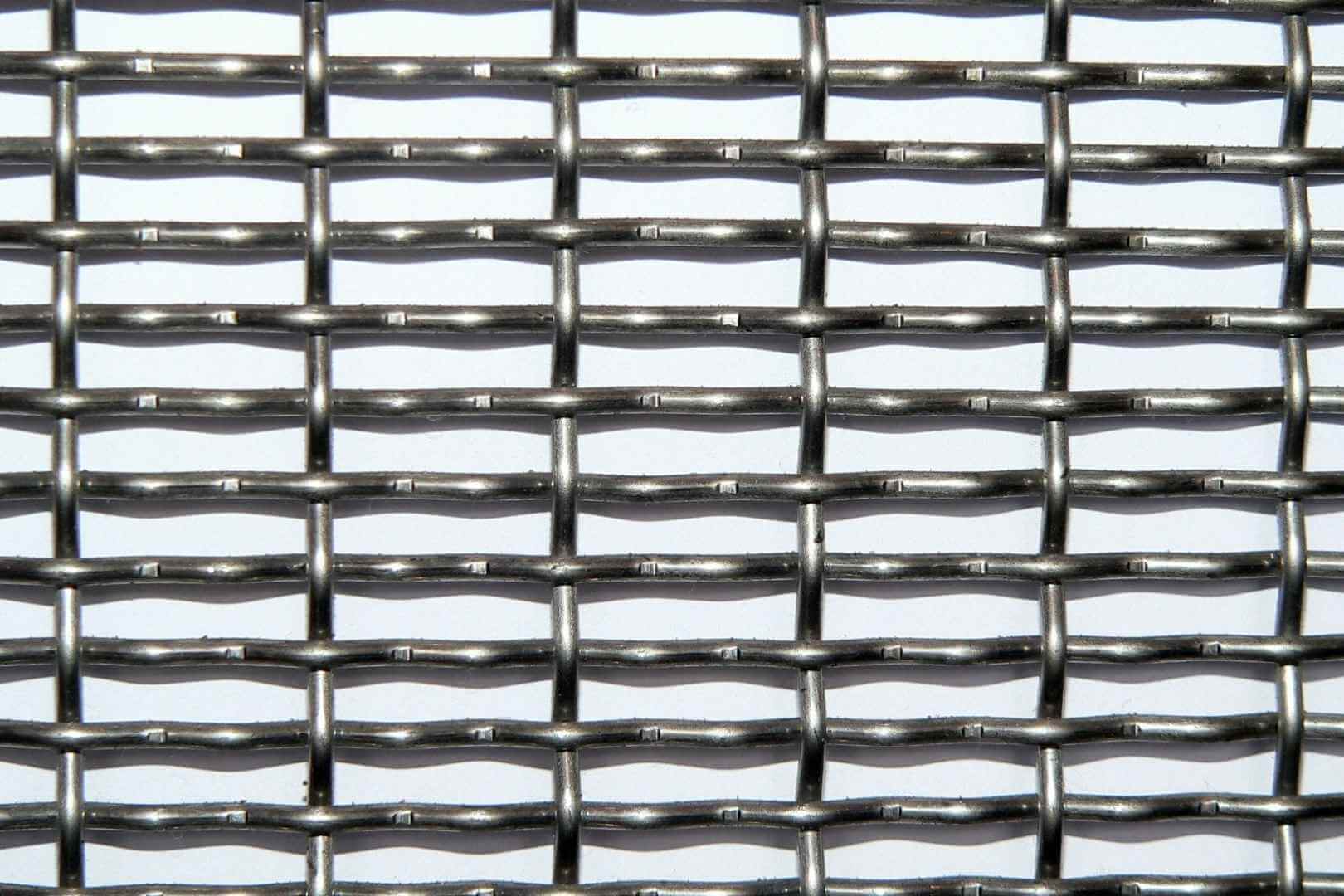
Lock crimped metal mesh
- The wires are pre-formed so that the crimp matches exactly at the crossing points, locking the wires into place.
- The result is a very rigid, dimensionally stable mesh in which the openings can hardly shift.
- It is typically used for heavy screening, load-bearing panels or architectural applications where tight dimensional tolerances are required.
Architecturaal gevlochten metaalgaas
Architecturaal gevlochten metaalgaas combineert design, transparantie en structurele sterkte in één veelzijdig materiaal. De productieprocessen zijn gebaseerd op die van klassiek gevlochten metaalgaas, waarbij de draden vooraf worden gecrimpt om stabiliteit, maatvastheid en een uniforme maasstructuur te garanderen.
Why is a crimped mesh panel so strong and durable?
Thanks to this production method, a crimped mesh panel combines high dimensional stability with resilience. Where a welded mesh panel may plastically deform more quickly under impact, a crimped mesh panel has the ability to spring back towards its original shape, as long as the load remains within the design limits.
The forces are evenly distributed across the entire panel, resulting in high mechanical durability and a long service life, even under dynamic or shock loads.
Applications of crimped mesh panels
Thanks to their combination of strength, flexibility and dimensional stability, crimped mesh panels are widely used in environments where reliability is crucial, such as:
- Protection and safety panels
- Screening and industrial filtration applications
- Construction and industrial applications with vibration, shocks or variable loads
How do I choose the right mesh opening?
Choosing the right mesh opening and wire diameter depends entirely on the function of the mesh. By clearly defining in advance what you want to retain or allow through, which strength is required and in which environment the panel will be used, you make a correct and durable material choice.
Define the function
First determine the application: fencing, safety, filtration, screening, ventilation or decorative use. The function indicates what should take priority: maximum permeability, mechanical strength or precise filtration quality.
Define the mesh opening
Choose a mesh opening that is small enough to retain animals, objects or particles. For technical filtration, a precisely defined mesh opening is crucial for constant and reliable performance.
Choose the wire diameter
A thicker wire provides more rigidity, load-bearing capacity and pressure resistance. A thinner wire is lighter and more flexible, but less suitable when safety, impact resistance or mechanical load are important.
Which dimensions are available for crimped wire mesh?
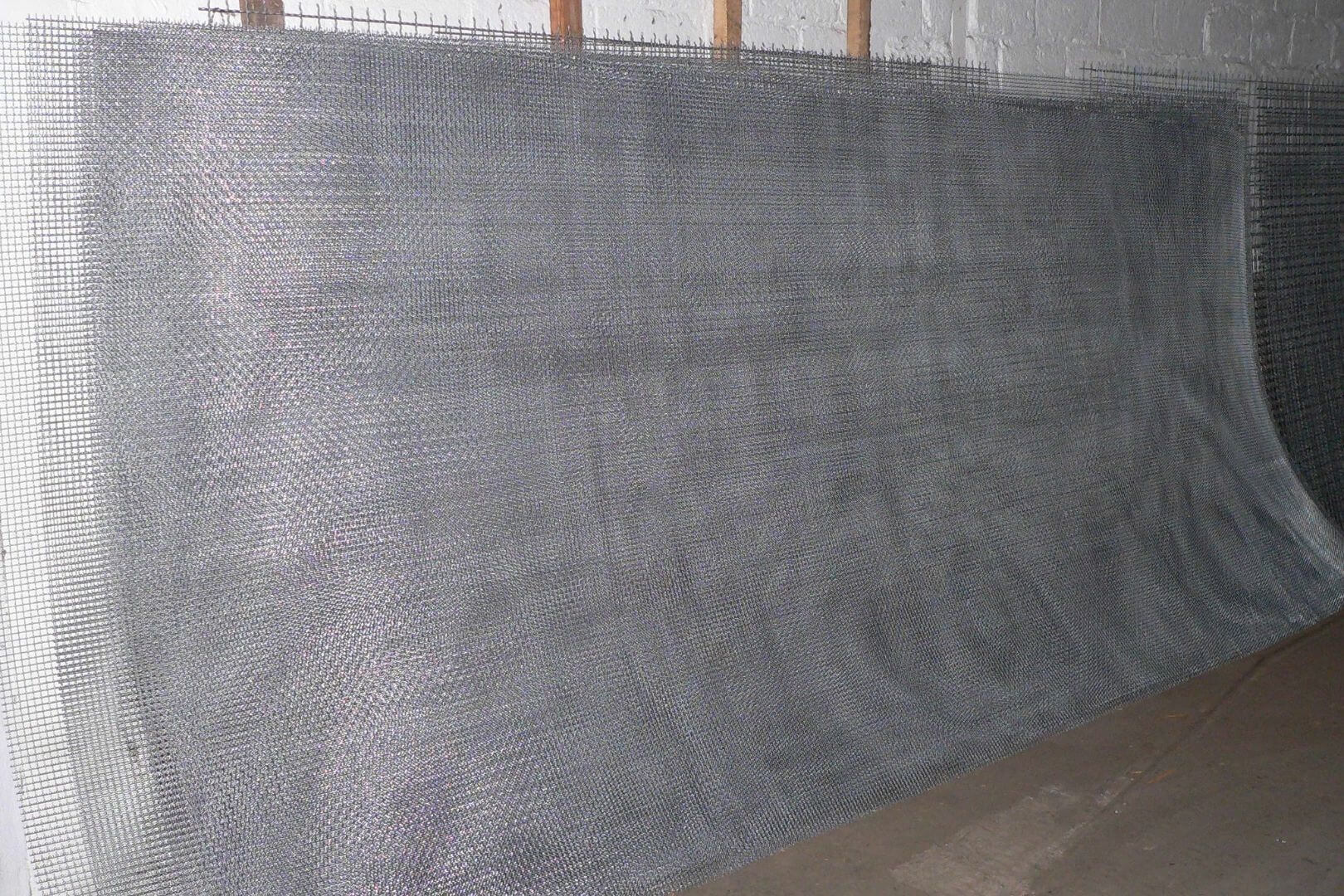
Omnimesh holds a wide range of standard panels in stock, allowing us to deliver quickly for industrial, architectural and safety applications.
In addition, we specialise in custom-made solutions: we produce crimped mesh panels with the required mesh opening, wire diameter and panel dimensions, with mesh openings available from 2 mm to 100 mm.
Standard dimensions of crimped mesh panels
The standard dimensions of crimped mesh panels are:
- 3500 × 2000 mm
- 2500 × 1250 mm
- 2000 × 1000 mm
For larger projects, we can produce crimped mesh panels up to 30 metres long and 3 metres wide. Ideal for screens, façade cladding, technical installations and safety panels.
Which material is most suitable for a crimped mesh panel?
The right material choice for crimped mesh panels strongly depends on the environment. In humid, salty or industrial environments, corrosion resistance is important.
Carbon steel, plain steel
Cost-effective for dry indoor applications. Without protection, it is sensitive to rust.
Sendzimir galvanised, pre-galvanised wire
The wire is galvanised before crimping and weaving. This provides a uniform zinc layer around each wire. Suitable for outdoor use, fencing and general protection. Less suitable for very aggressive or maritime environments because the zinc layer is thinner than with hot-dip galvanising.
Hot-dip galvanised after weaving
The complete crimped panel is immersed in a zinc bath. This creates a very thick, durable zinc layer over both the wires and the crossing points. Ideal for heavy outdoor exposure, agriculture, industry and environments with increased corrosion risks.
Stainless steel
RVS 304: universal choice with good corrosion resistance for indoor and slightly humid environments.
RVS 316: with molybdenum; the best choice for coastal areas, water treatment, the chemical industry and outdoor applications with high chloride exposure.
Aluminium
Lightweight, corrosion-free and ideal for decorative panels, interior applications and architectural accents where weight plays an important role. Less suitable for heavy load-bearing or safety panels.
When should you choose crimped mesh instead of welded mesh?
Both welded mesh and crimped mesh are used for protection, filtration and construction, but their behaviour under load differs. Welded mesh offers maximum rigidity and dimensional stability through fixed weld points, making it ideal for static applications. Crimped mesh excels in resilience and shock absorption thanks to mechanically locked crossing points.
Main differences:
Performance under load
- Crimped mesh: high resilience and impact resistance; absorbs shocks to some extent without deformation.
- Welded mesh: rigid construction with excellent load-bearing capacity, but weld points can be sensitive to extreme dynamic shocks.
Dimensional stability in dynamic processes
- Crimped mesh: remains stable under vibration, pressure peaks and pulsating media; perfect for industrial filtration.
- Welded mesh: maintains exact mesh opening under static load; less flexible with variable flow.
Durability in industrial applications
- Crimped mesh: the load is distributed evenly across the wires; highly durable under continuous dynamic conditions.
- Welded mesh: excellent for long-term static load; robust weld points when used correctly.
Typical applications
- Crimped mesh: heavy industrial filtration, hydraulic filters, process filters, wastewater treatment, compressed air systems.
- Welded mesh: machine guarding, walkway panels, fencing, static screens, platform constructions.
When should you choose crimped metal mesh or crimped panels instead of woven metal mesh?
Although they may look very similar at first glance, the key differences lie in their function, strength, and manufacturing process.
Woven wire mesh is a relatively flexible and formable mesh, primarily used for filtration, fine separation, and light screening applications.
Crimped wire mesh, on the other hand, is manufactured from pre-crimped wires that interlock to form a rigid and durable mesh. It is designed for applications requiring high strength and dimensional stability, such as screening, safety guards, architectural applications, and heavy-duty industrial use.
Main differences
Production method
- Woven mesh: wires are woven together like a textile, which provides flexibility.
- Crimped panels: wires are first crimped and then firmly locked into each other. As a result, the wires grip each other and form a robust, rigid panel.
Rigidity and strength
- Woven mesh remains bendable and deformable.
- Crimped panels are dimensionally stable, impact-resistant and suitable for mechanical loads.
Typical applications
- Woven mesh: filters, screens, ventilation, insect protection, light protection and decorative applications.
- Crimped panels: heavier filtration, safety panels, fall protection, heavy-duty protection panels and situations with high load-bearing capacity.
Finishing and delivery
- Woven mesh is usually supplied on rolls, with or without woven edges.
- Crimped panels are made to measure as rigid panels or large rolls, suitable for direct installation.