Welded mesh – welded wire panel
Fixed weld points for maximum stability, durability and reliability
- Precise mesh openings, square or rectangular, with controlled tolerances.
- Suitable for heavy, vibrating and dynamic loads in industrial processes.
- Available in stainless steel, galvanised steel and other alloys for maximum service life.
Welded mesh
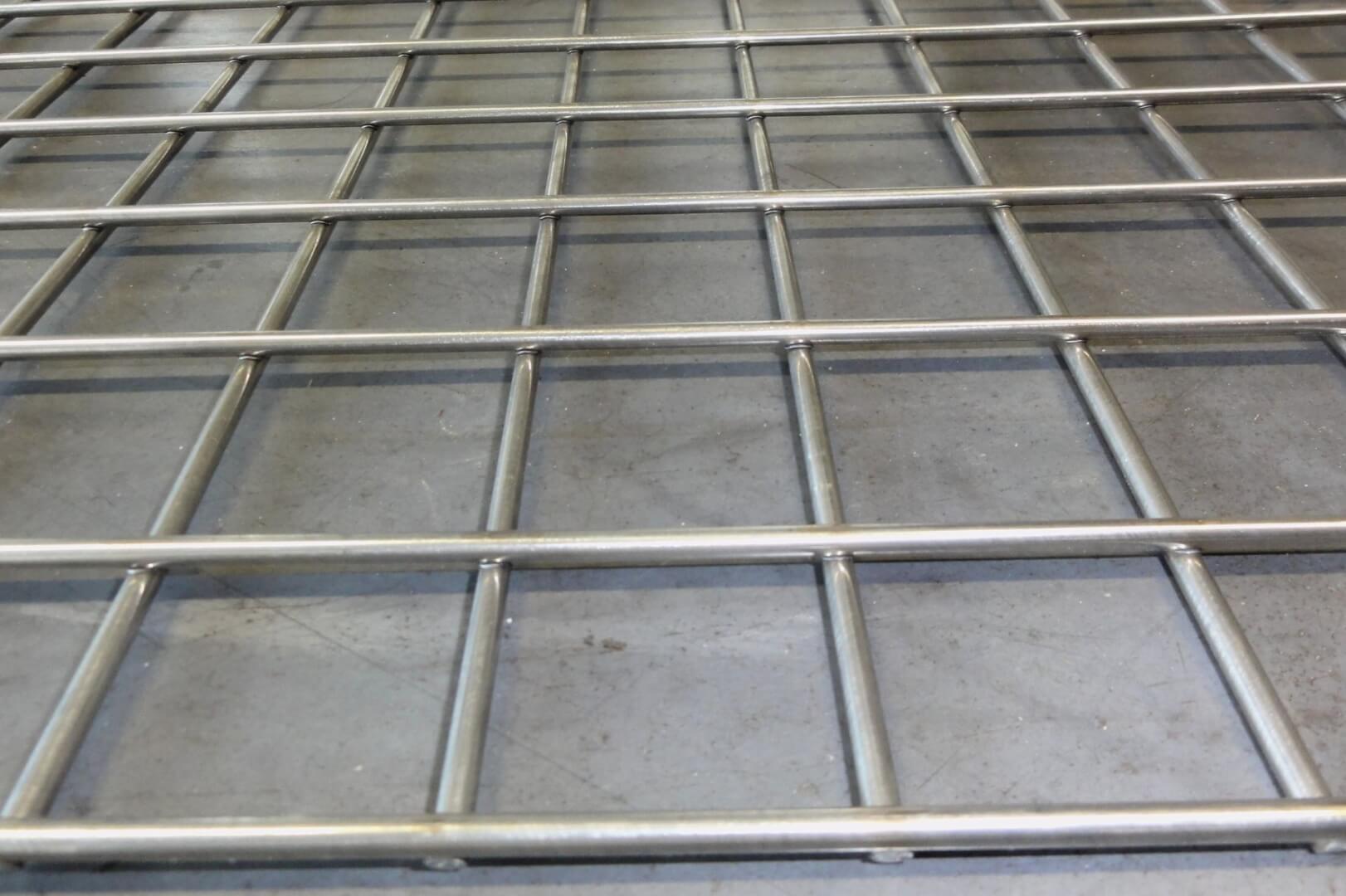
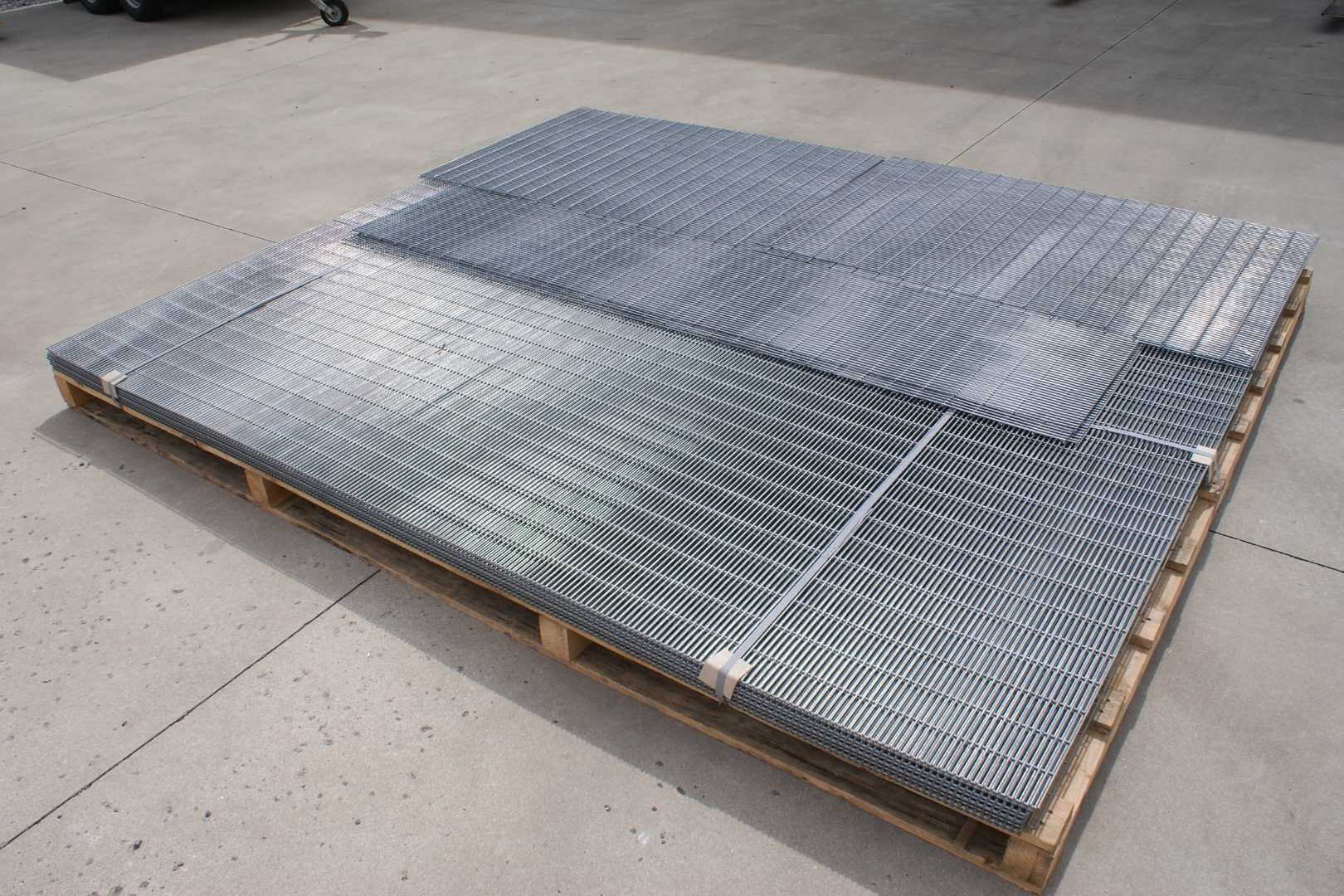
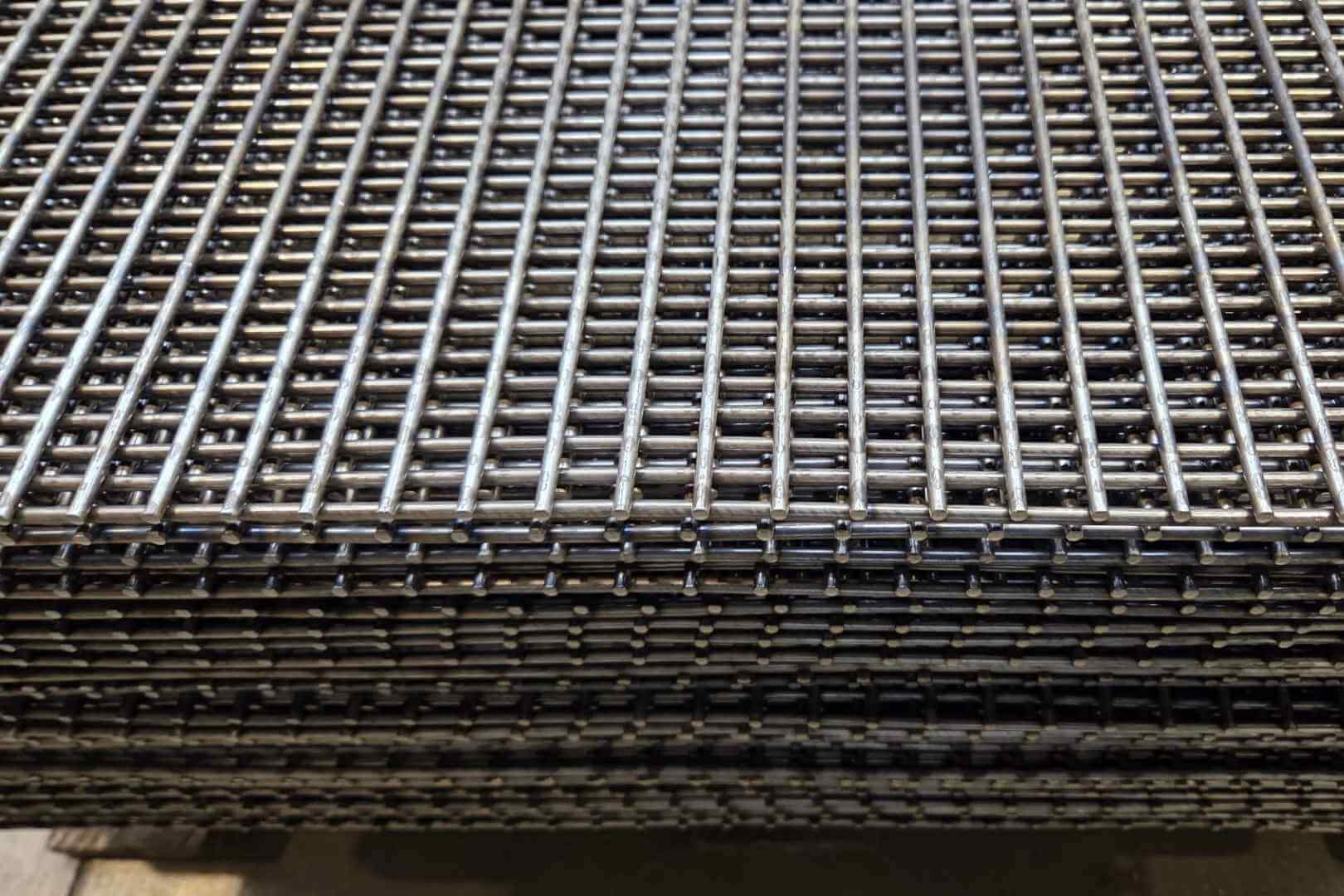
Welded wire panels are made from metal wires that are welded together at every crossing point. This creates a dimensionally stable grid structure that does not shift under load.
Thanks to their high stability, strength and durability, welded wire panels are suitable for industrial applications where a robust, precise and reliable metal panel is required.
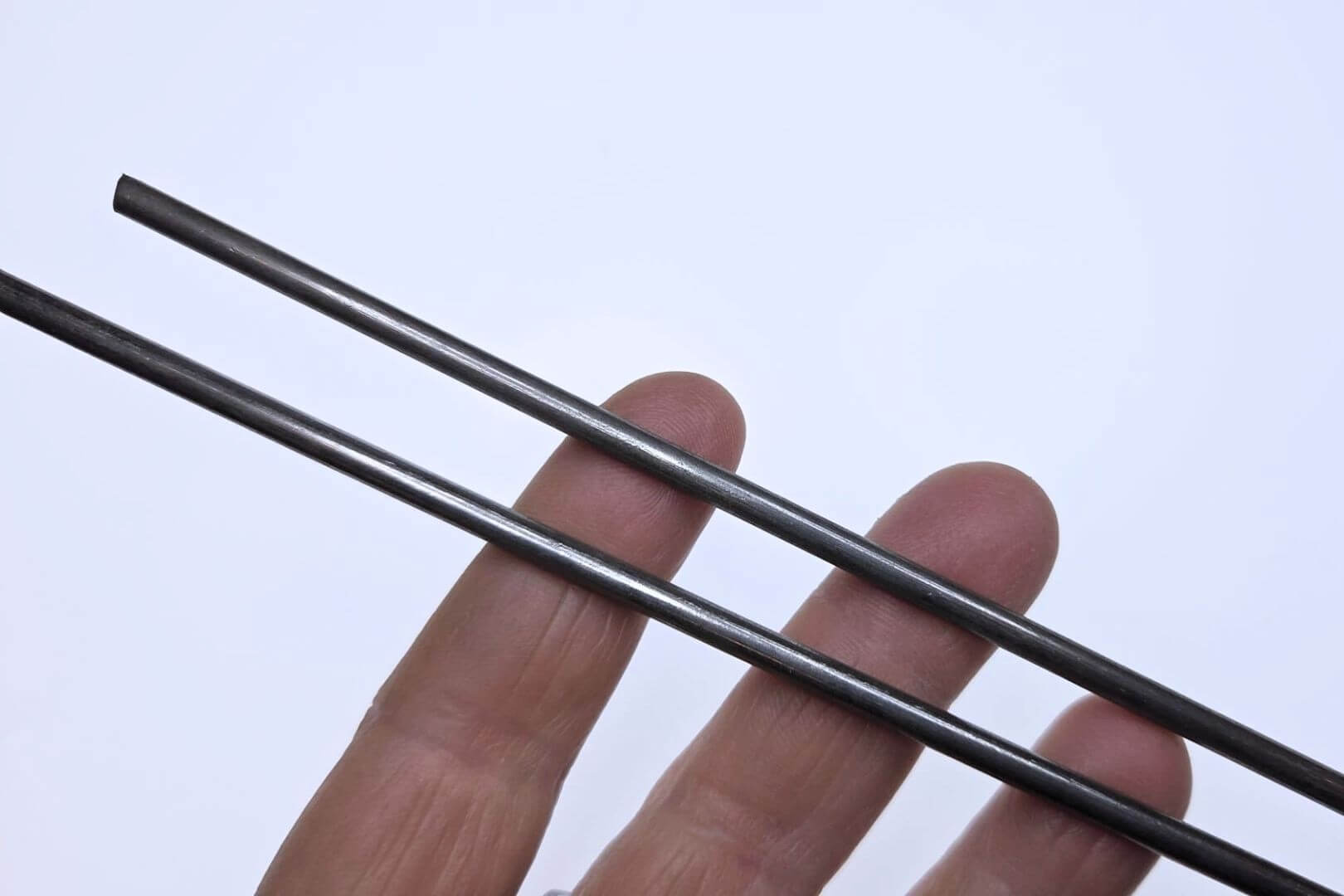
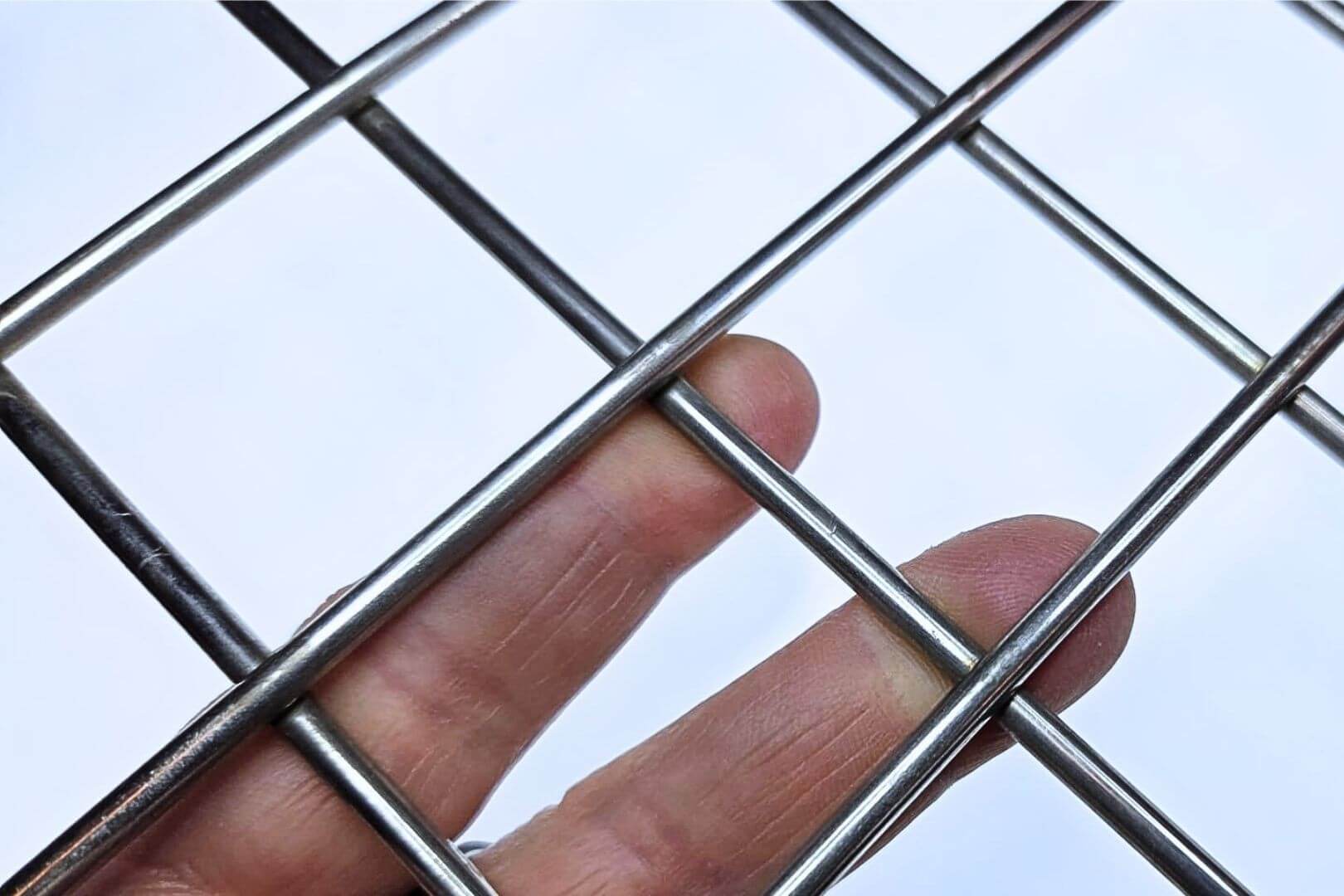
What is welded mesh or a welded wire panel?
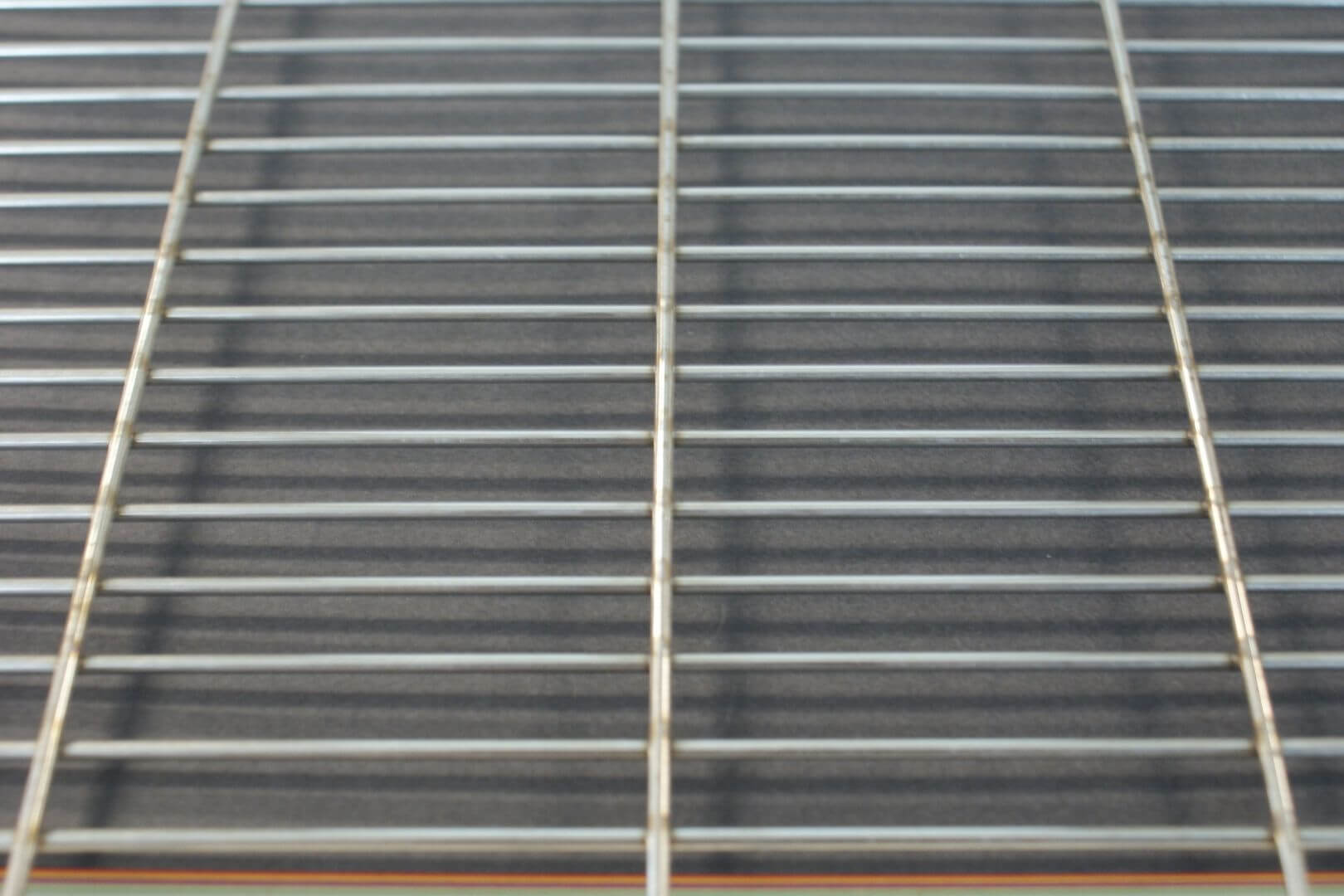
Welded mesh consists of longitudinal wires and cross wires placed at right angles to each other and joined at every intersection. This creates a clean grid with fixed mesh openings and an even distribution of load.
Because the wires cannot move freely, the panel remains dimensionally stable during installation, use and further processing. This makes welded wire panels suitable for applications where dimensional accuracy, strength and a neat finish are important.
gepuntlaste roosters geschikt voor toepassingen waar maatnauwkeurigheid, stevigheid en een nette afwerking belangrijk zijn.
What are welded wire panels used for?
Welded mesh is used in industry, construction, agriculture and architecture, especially where dimensional stability, safety and load-bearing capacity are important.
By matching mesh size, wire diameter and material, the panel can be adapted to the required function, environment and load.
Typical applications:
- Machine guarding and safety cages around production installations and robots
- Industrial partitions, fencing, perimeter protection and warehouse zones
- Filtration, screening and process protection in the food industry, water treatment and chemical installations
- Outdoor use in agriculture, stables, animal enclosures and coastal areas
- Balustrade and façade panels in architectural projects where safety and appearance come together
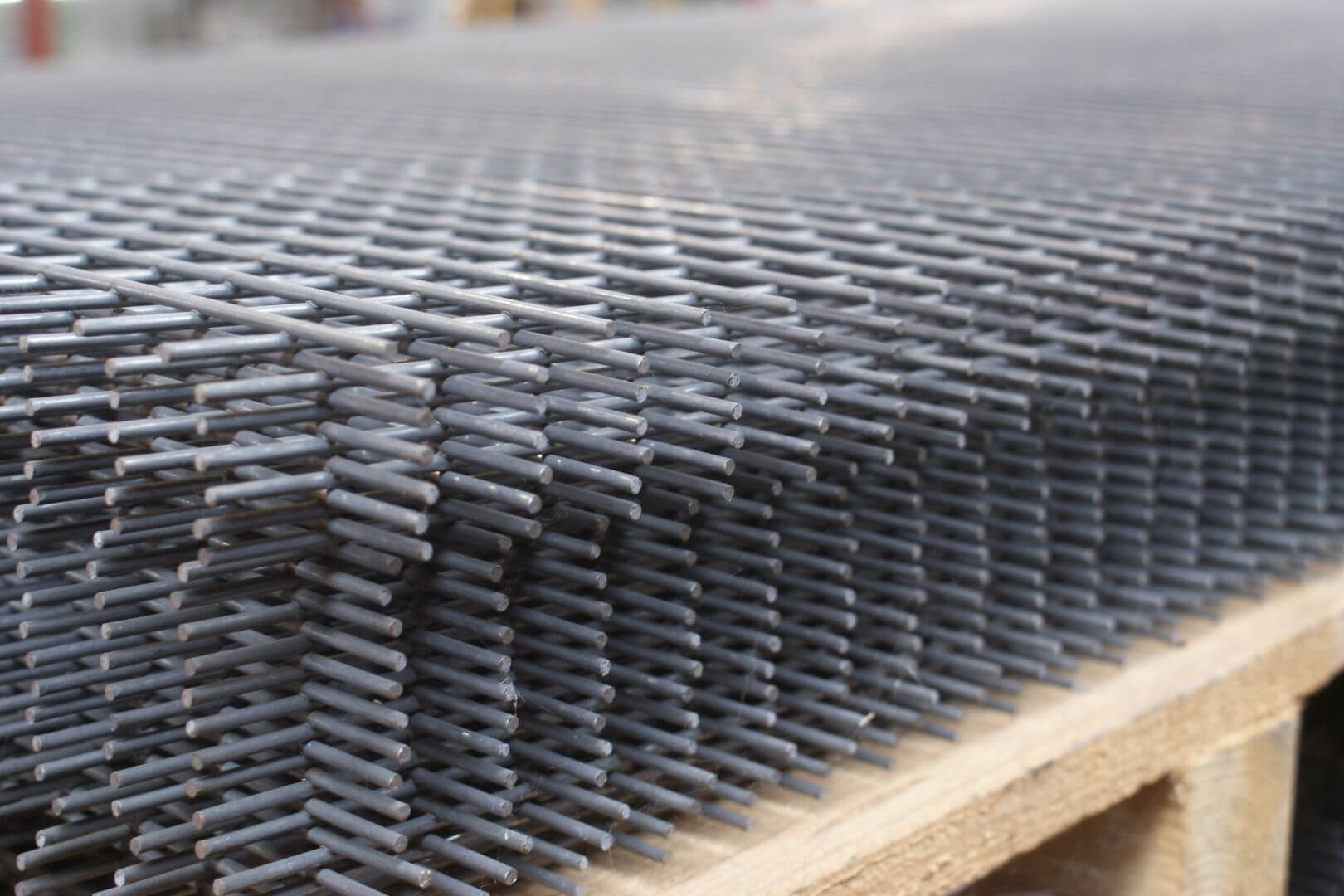
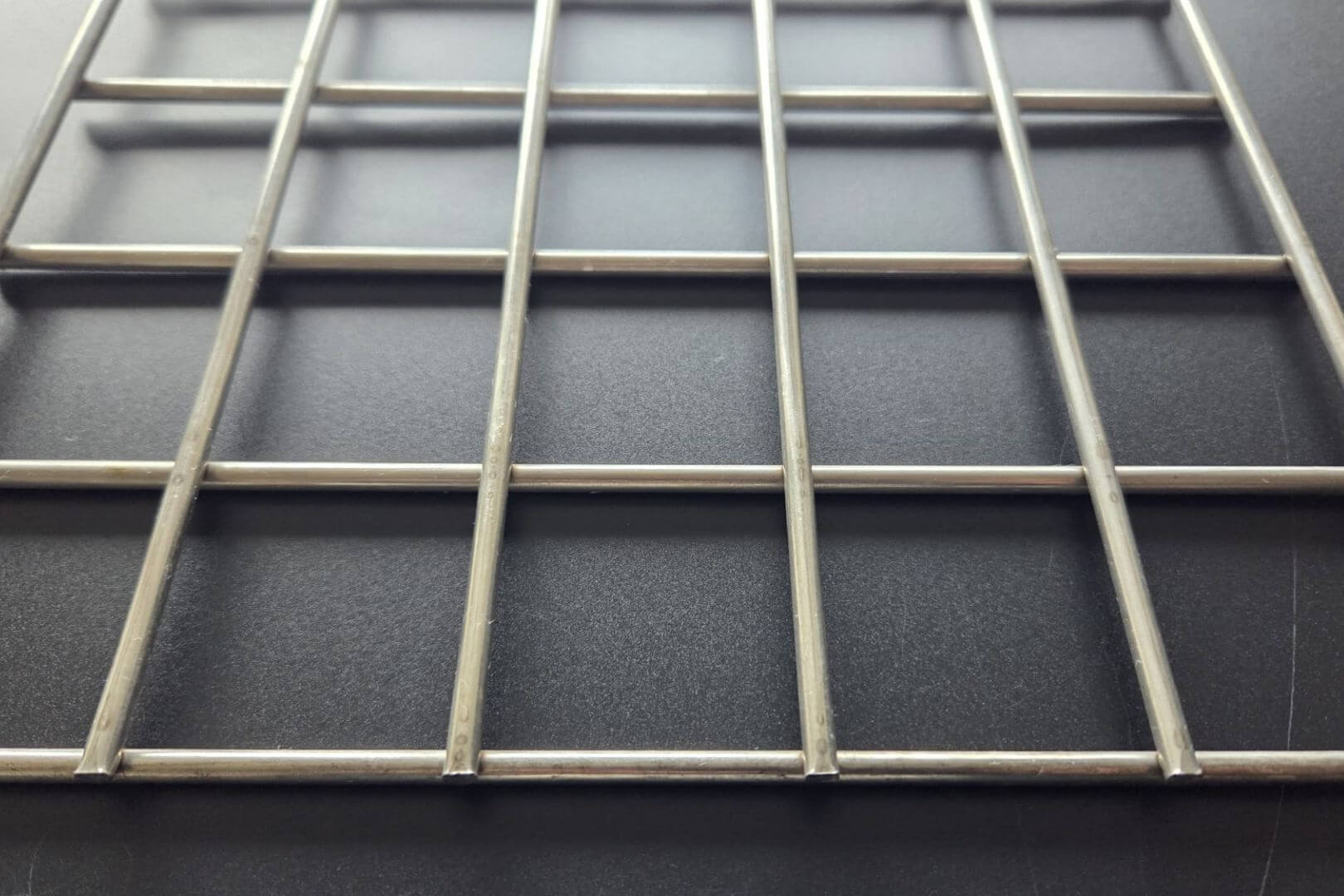
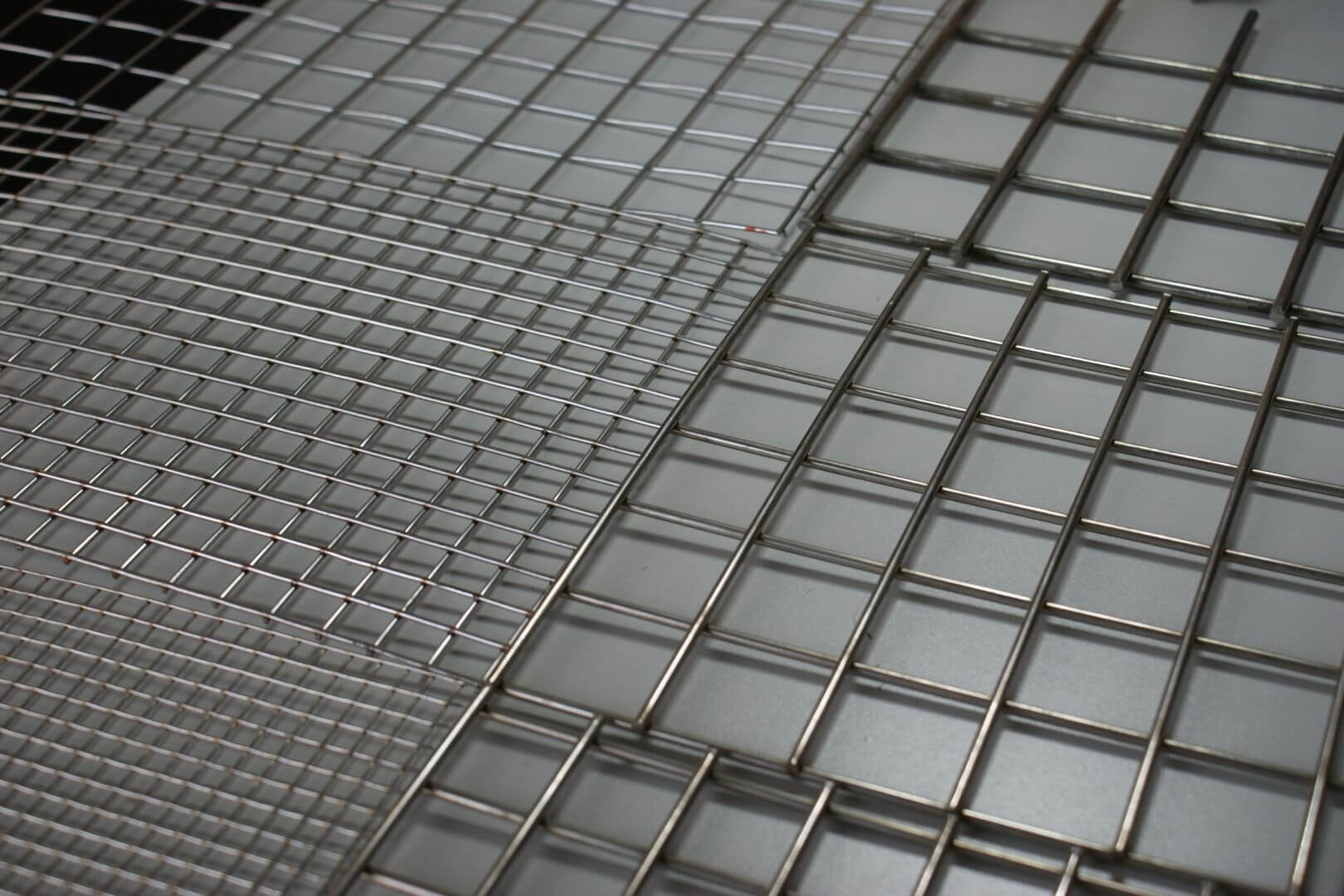
Choice of mesh size and wire diameter
The choice of mesh size and wire diameter directly determines the rigidity, safety, transparency and load-bearing capacity of welded mesh. By defining the function, environment and desired service life in advance, you avoid both overdimensioning and an execution that is too light.
Function and safety level
- For machine guarding and safety cages, choose mesh openings that help prevent climbing through, crawling through and unwanted contact with moving parts
- For partitions and fencing, the focus is on visibility, safety and resistance to vandalism or impact
- For load-bearing grids and supports, maximum rigidity and load capacity are the priority, with an adapted mesh size and sufficient wire diameter
Mesh size
- Smaller mesh sizes are used for filtration, pest protection, finger protection and fine separation
- Medium mesh sizes are suitable for industrial partitions, fencing, machine guarding and balustrade panels with good visibility
- Larger mesh openings are used for heavy load-bearing grids, coarse screening and applications where permeability is important
Wire diameter
- Thinner wire diameters are suitable for light protection, ventilation openings and applications without heavy impact or load
- Thicker wire diameters increase impact resistance, load-bearing capacity and durability, especially for industrial platforms, machine guarding and transport zones
Which dimensions are available for welded mesh?
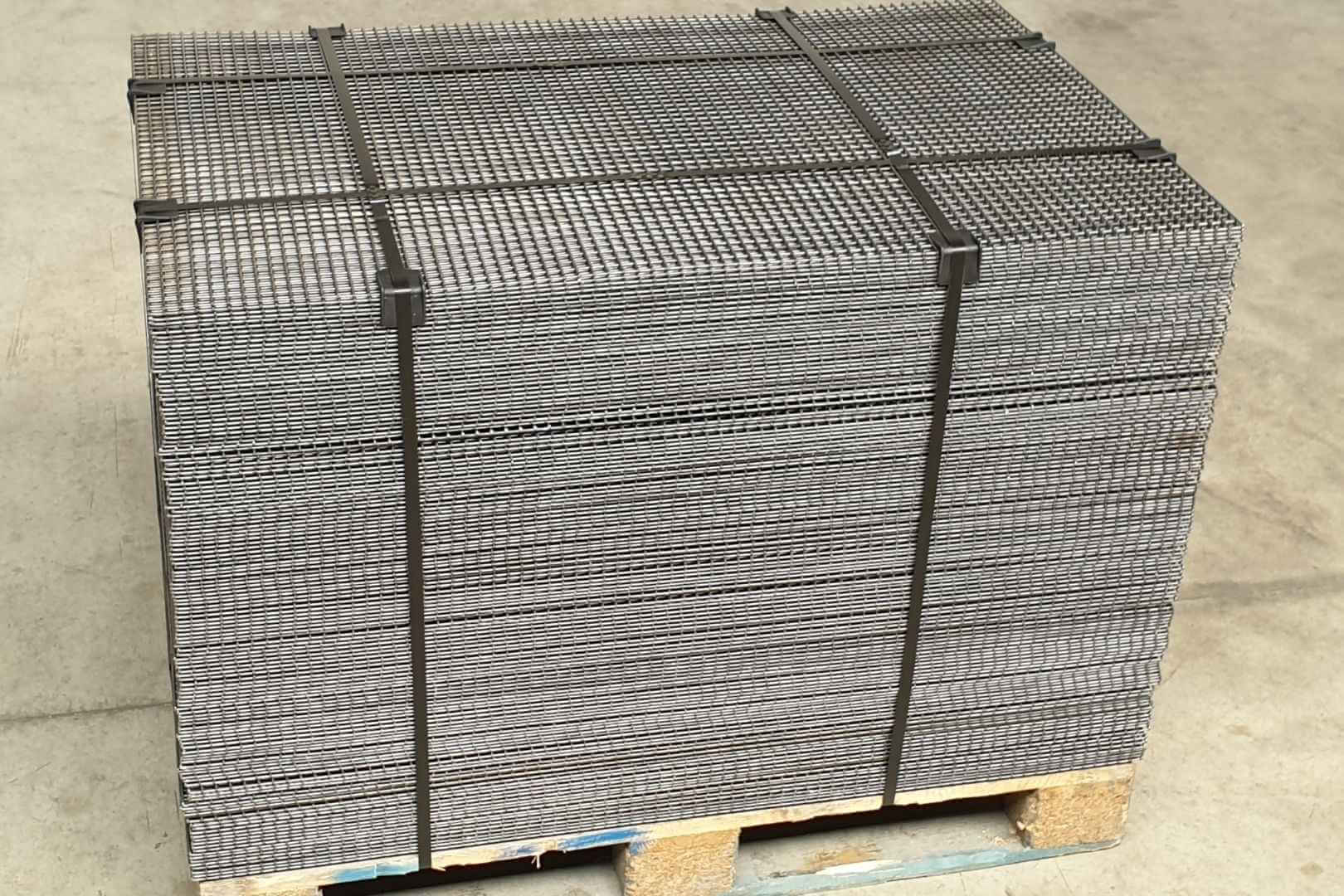
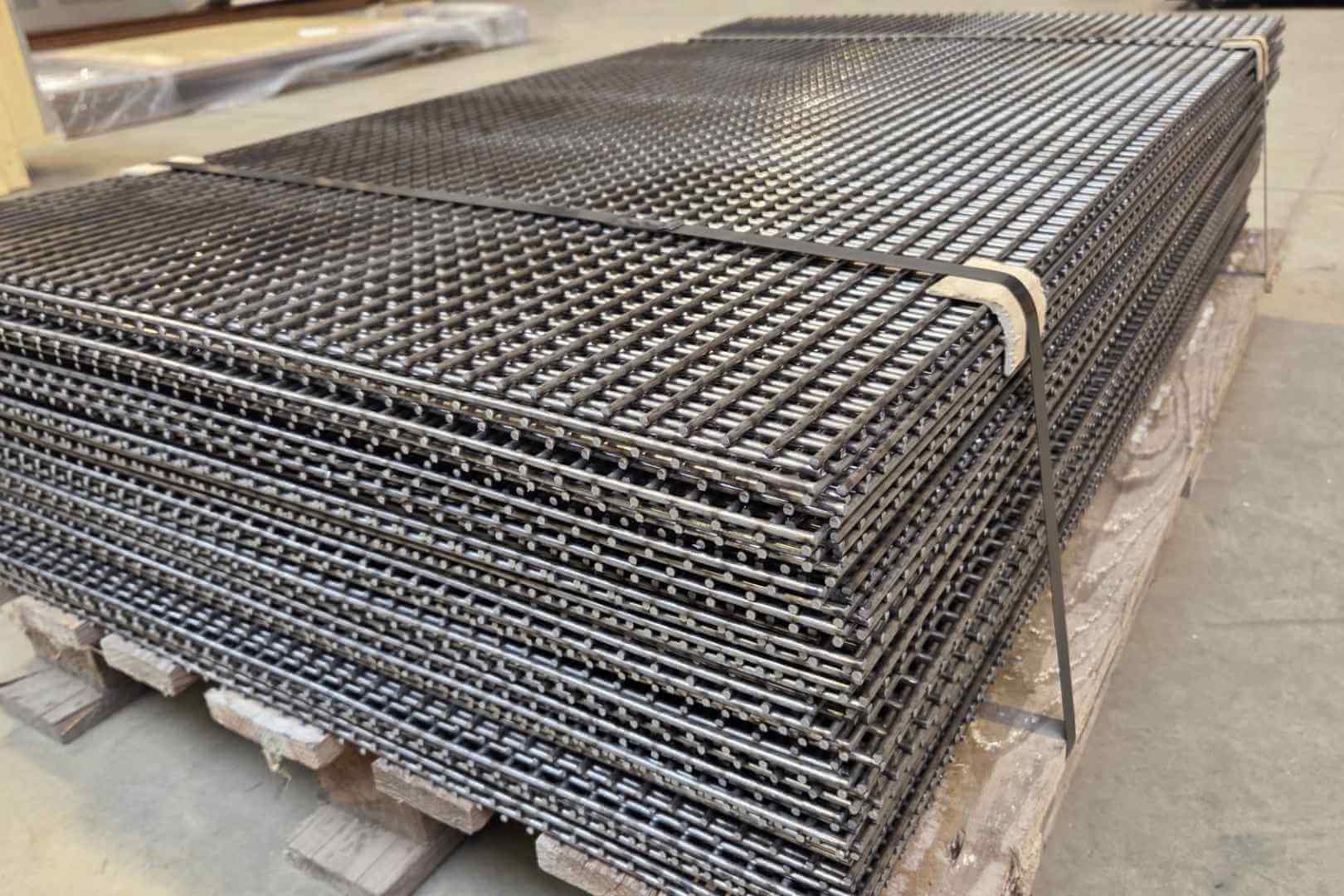
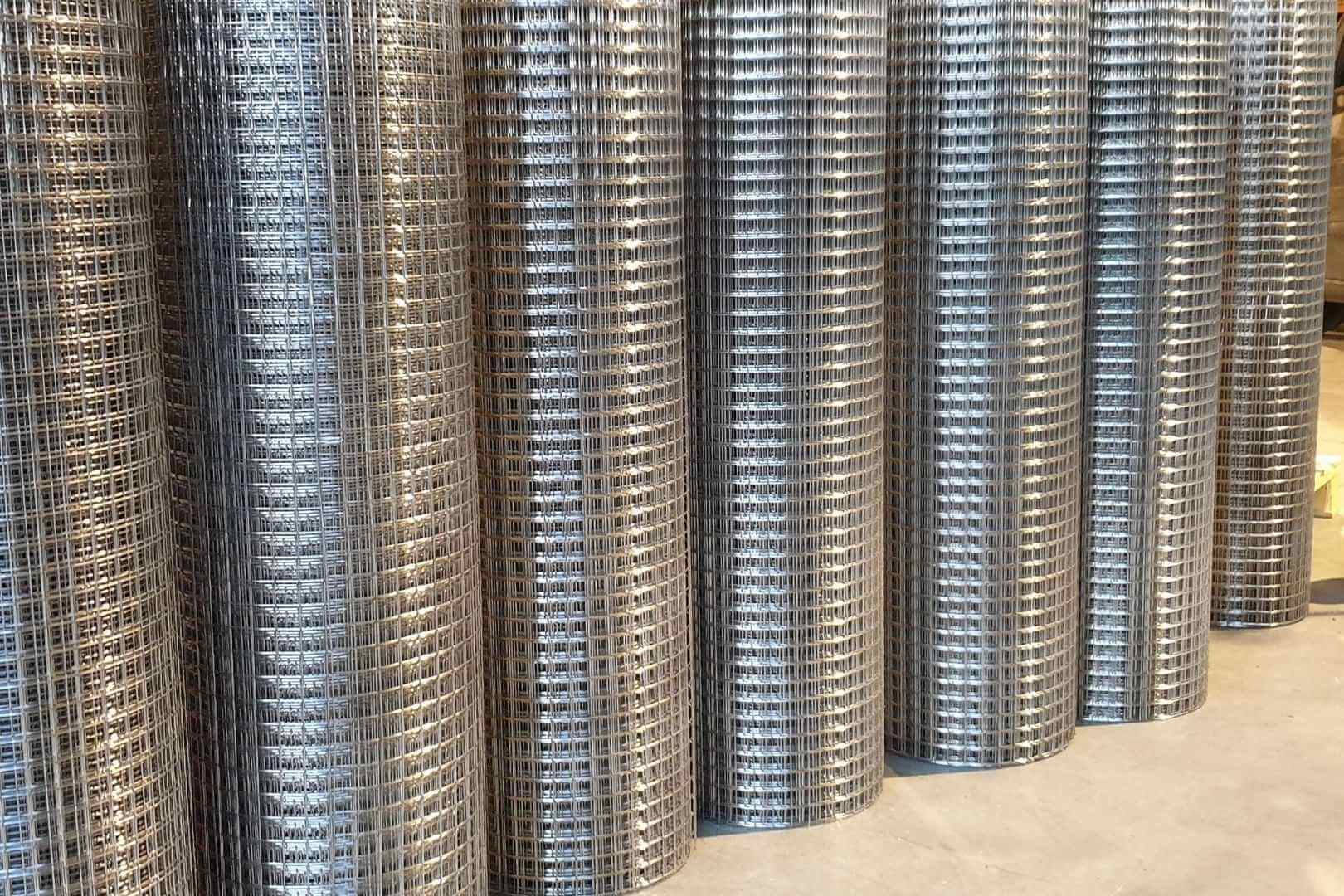
Welded wire panels are available as standard panels, on rolls or made to measure.
Standard dimensions of welded wire panels:
- 3000 × 2000 mm
- 3000 × 1500 mm
- 2500 × 1250 mm
- 2000 × 1000 mm
For custom-made versions, the panel can vary in mesh opening, wire diameter, material and edge finish.
For special requests, we provide technical advice on mesh size, material choice and fixing, so that you receive the right welded panel.
Which material should you choose for your welded wire panel?
Welded mesh is available in various materials, each with specific advantages for indoor, outdoor and industrial conditions:
Carbon steel / plain steel
Suitable for dry indoor areas, temporary constructions or applications that will be coated or painted afterwards. Less corrosion-resistant without additional protection.Sendzimir galvanised, pre-galvanised wire
An economical choice for standard outdoor fencing and partitions. The thin zinc layer is sufficient for non-aggressive garden, construction and industrial applications.Hot-dip galvanised after welding
Complete corrosion protection, including the weld points. Ideal for agriculture, maritime zones, wet production environments and high salt or moisture exposure.Stainless steel, RVS 304 / RVS 316
RVS 304: for indoor applications and slightly humid industrial environments. Not suitable for salt or aggressive chemicals.
RVS 316: extra resistant to salts and chemicals, for water treatment, chemicals and offshore applications.
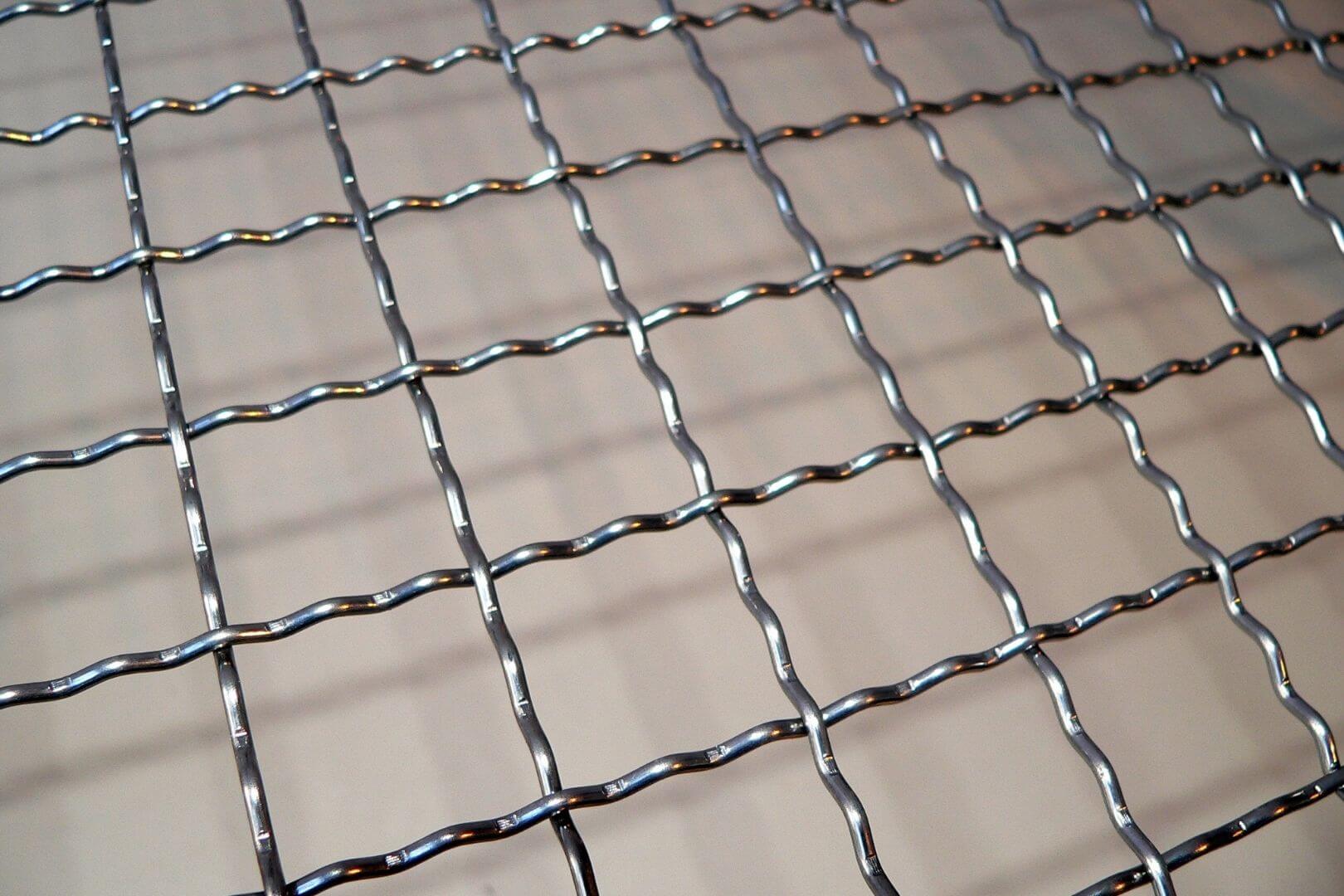
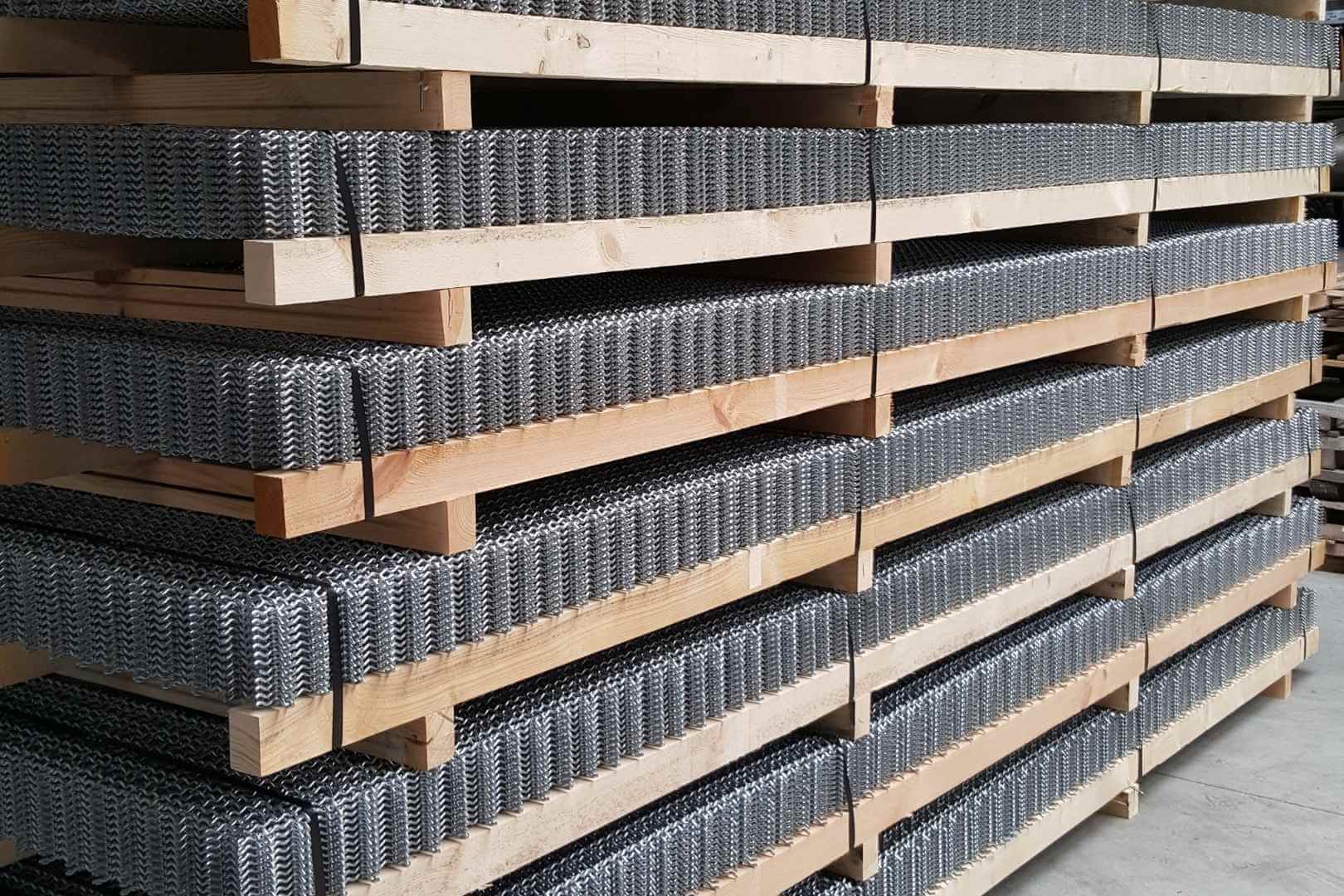
When should you choose welded mesh instead of crimped wire mesh?
Both welded mesh and crimped wire mesh are used for protection, filtration and construction, but their behaviour under load is fundamentally different. Welded mesh offers maximum rigidity and dimensional stability through fixed weld points, making it ideal for static applications. Crimped wire mesh excels in resilience and shock absorption thanks to mechanically locked crossing points.
Main differences:
Performance under load
Crimped wire mesh: high resilience and impact resistance; absorbs shocks without deformation.
Welded mesh: rigid construction with excellent load-bearing capacity, but weld points can be sensitive to extreme dynamic impacts.
Dimensional stability in dynamic processes
Crimped wire mesh: remains stable under vibration, pressure peaks and pulsating media; perfect for industrial filtration.
Welded mesh: maintains exact mesh size under static load; less flexible with variable flow.
Durability in industrial applications
Crimped wire mesh: the load is distributed evenly across the wires; highly durable under continuous dynamic conditions.
Welded mesh: excellent for long-term static load; robust weld points when used correctly.
Crimped wire mesh: heavy industrial filtration, hydraulic filters, process filters, wastewater treatment, compressed air systems.
Welded mesh: machine guarding, walkway grids, fencing, static screens, platform constructions.