
Woven filter mesh
Made from metal wires woven together according to a fixed weave pattern.
- Precise mesh openings for filtration, separation and protection
- Suitable for technical, industrial and architectural applications
- Available in stainless steel, galvanised steel and other metal alloys
- Available on rolls, as panels or fully made to measure
Woven filter mesh
Woven filter mesh is made from metal wires woven together according to a fixed weave pattern. Depending on the mesh opening, wire diameter and weave structure, this creates an open mesh for screening, ventilation or protection, or a fine filter mesh for precise particle separation.
Woven filter mesh is made from metal wires woven together according to a fixed weave pattern. Depending on the mesh opening, wire diameter and weave structure, this creates an open mesh for screening, ventilation or protection, or a fine filter mesh for precise particle separation.

Types of woven filter mesh
Wij leveren verschillende soorten geweven metaalgaas, elk met een eigen weefstructuur, doorlaatbaarheid en technische toepassing. De keuze van het weefsel bepaalt hoe open, sterk, flexibel of filterend het gaas is.
The three most commonly used versions are plain weave, twill weave and Dutch weave. Plain weave is mainly chosen for general screening, ventilation and protection applications. Twill weave is suitable when a finer or stronger weave is required. Dutch weave is used for precise filtration and applications where filtration fineness, pressure resistance and stable flow are important.
Thanks to these variants, woven metal mesh can be adapted to the mesh opening, wire diameter, filtration fineness, permeability, material choice and mechanical load.

Use plain weave when:
- A regular square mesh opening is required
- Good permeability is important
- The mesh is used for screening, ventilation or protection
- A simple and stable mesh structure is sufficient
- The mesh must be easy to cut, fold or process
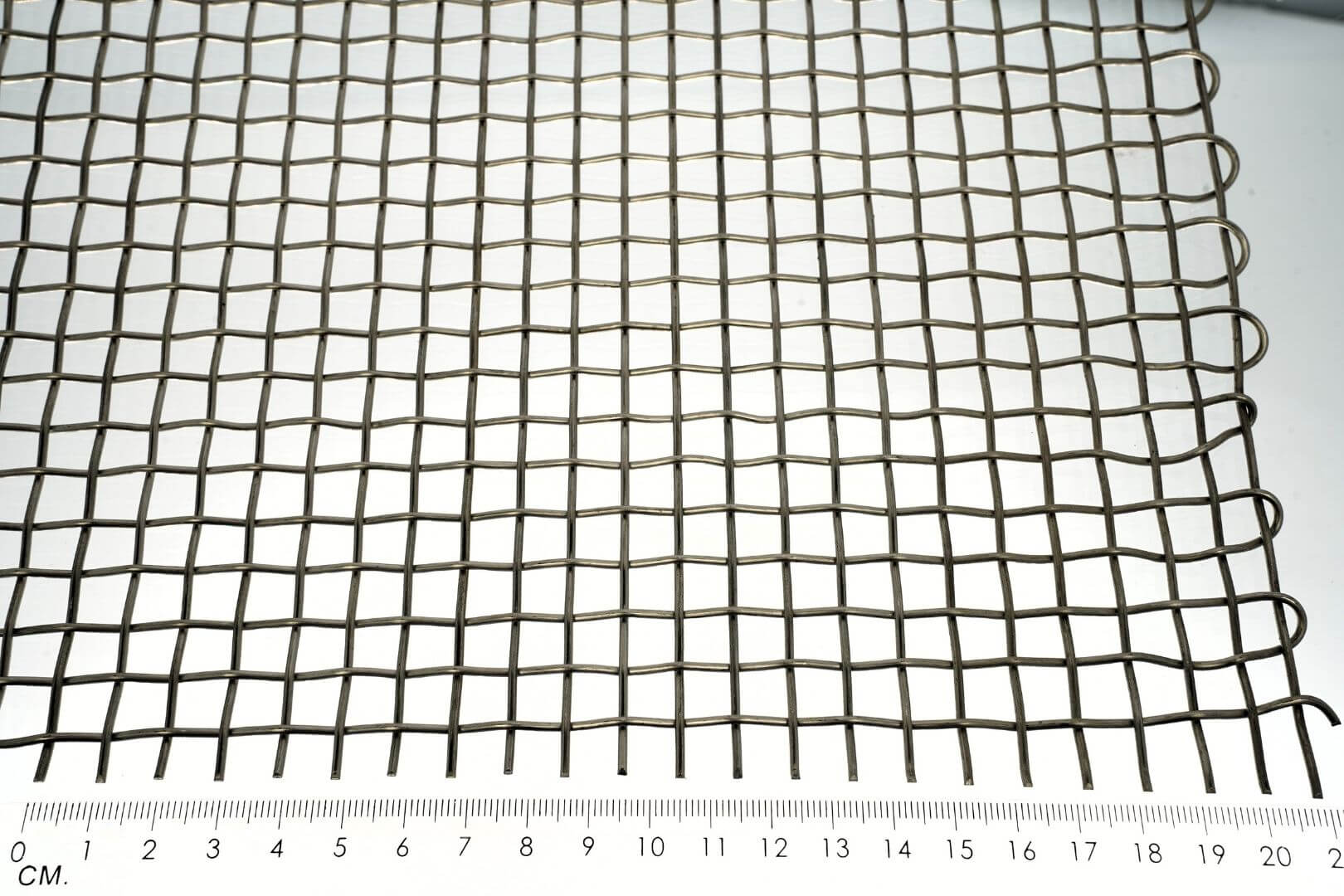
Plain weave woven metal mesh
In plain weave, each wire alternately passes over and under the crossing wire. This creates a regular square mesh structure with good open area. It is the most commonly used and most versatile version of woven metal mesh.

Use twill weave when:
- A finer mesh opening is required than with plain weave
- The mesh needs to be woven more densely or more strongly
- Filtration must be combined with mechanical stability
- The mesh is exposed to higher loads or pressure
- A better combination of fineness, strength and permeability is required
Twill weave woven metal mesh
In twill weave, the wires usually pass over several crossing wires and then under several wires. This creates a denser and more flexible weave than plain weave. Twill weave makes it possible to use finer meshes or thicker wires without making the mesh too difficult to weave.

Use Dutch weave when:
- Precise filtration is important
- Fine particles need to be separated from liquids or process media
- A strong and compact filter structure is required
- The mesh must withstand pressure, flow or process loads
- Stable filtration over a longer period is required
Dutch weave wire mesh for fine filtration
Dutch weave is a densely woven filter fabric in which the wires are positioned very closely together. Unlike a regular square mesh, this weave creates a fine, controlled filter opening. Dutch weave is therefore particularly suitable for precise filtration of liquids, oil, water, plastic compounds, powders and process media.
With this type of mesh, the focus is less on free open area and more on filtration fineness, pressure resistance and constant separation.
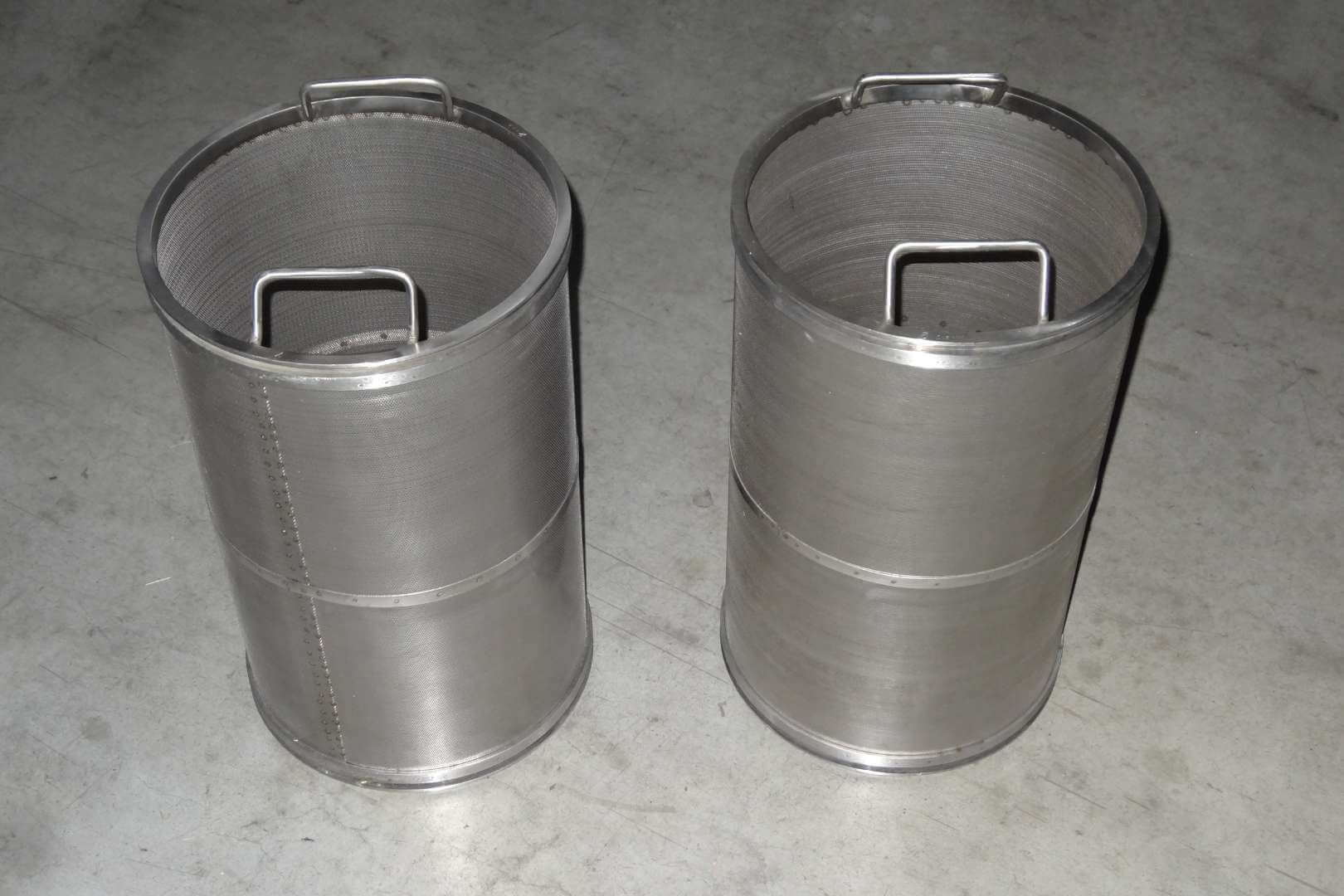
Filter mesh for covering metal filter elements
Woven filter mesh is used to cover or line metal filter elements. The mesh retains unwanted particles, while liquids, air, powders or process media can flow through the element.
The filter mesh can be applied to filter baskets, filter strainers, filter cartridges, filter cylinders, screen rings and filter frames. The metal support provides strength and dimensional stability; the woven mesh determines the filtration fineness.
Typical applications:
- Covering filter baskets and filter strainers
- Re-covering screen frames and filter frames
- Building filter cartridges and filter cylinders
- Repairing or replacing damaged filter mesh
- Filtration of water, oil, air, powders and process media

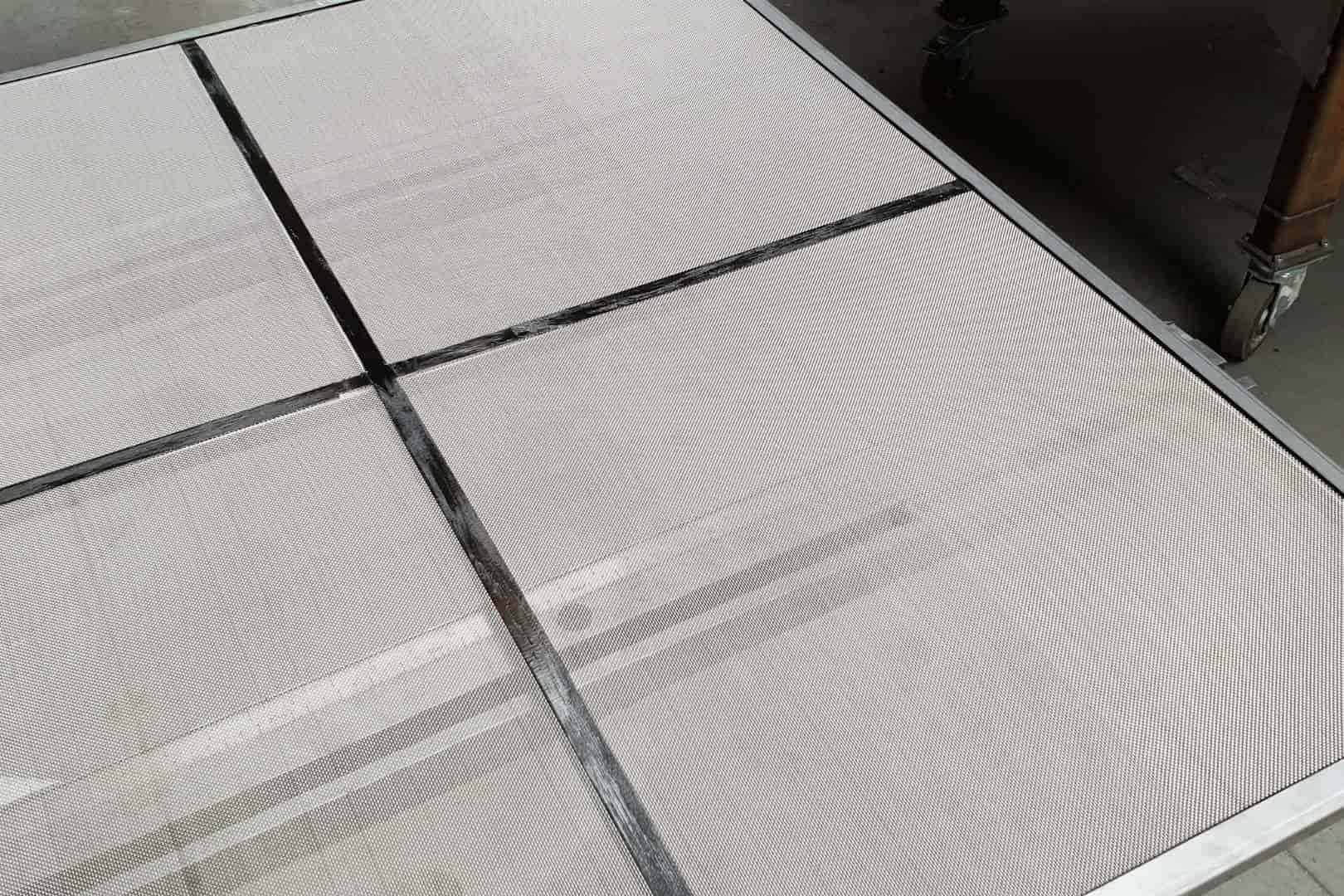
Filter mesh for screen tensioning
Filter mesh is used for tensioning screens, screen frames and sieve frames. The mesh provides controlled separation of materials, while the frame provides the required tension, stability and dimensional strength.
Screen tensioning is used for screening, sorting, classifying or dewatering powders, granulates, grains and other process materials. The choice of the right filter mesh depends on the required mesh opening, wire diameter, permeability, wear resistance and mechanical load.
Typical applications:
- Tensioning screen frames and sieve frames
- Screening and sorting powders, grains and granulates
- Classification of dry or wet process materials
- Dewatering and separation in production processes
- Replacing or repairing damaged filter mesh

Large stock of filter mesh
As a manufacturer, we hold a large stock of filter mesh in different mesh openings, wire diameters, materials and weave structures. This allows us to respond quickly to standard versions, custom-made solutions and technical applications.

