
Professional screen tensioning and re-tensioning for industrial screens
Fast and technically correct re-tensioning of industrial screen frames, screen rings and filter frames with new screen mesh or filter mesh.
- 24-hour screen tensioning service for industrial screens and screen frames
- In-house production of filter mesh and large material stock
- Correct screen tension and accurate filtration grade
- Technical advice adapted to your screening process
Industrial screen tensioning
Screen tensioning is the professional replacement of worn or damaged screen mesh on an existing screen frame, screen ring or filter frame. The frame is kept, while the screen surface is renewed with the correct mesh opening, wire diameter, tension and filtration grade.
This gives your industrial screen reliable performance again for filtration, separation, classification and control screening.
At Omnimesh, we focus on technically correct screen tensioning for filtration, separation, classification and control screening. Correct tension across the full screen surface is essential for reliable operation, constant throughput and a long service life.

Screen tensioning for fast repair and less downtime
Industrial screens are often critical components in a production process. When screen mesh tears, comes loose, becomes clogged or loses its tension, this can lead to product loss, downtime, incorrect separation or quality problems.
By re-tensioning the existing screen frame, the screen can often be put back into service quickly.
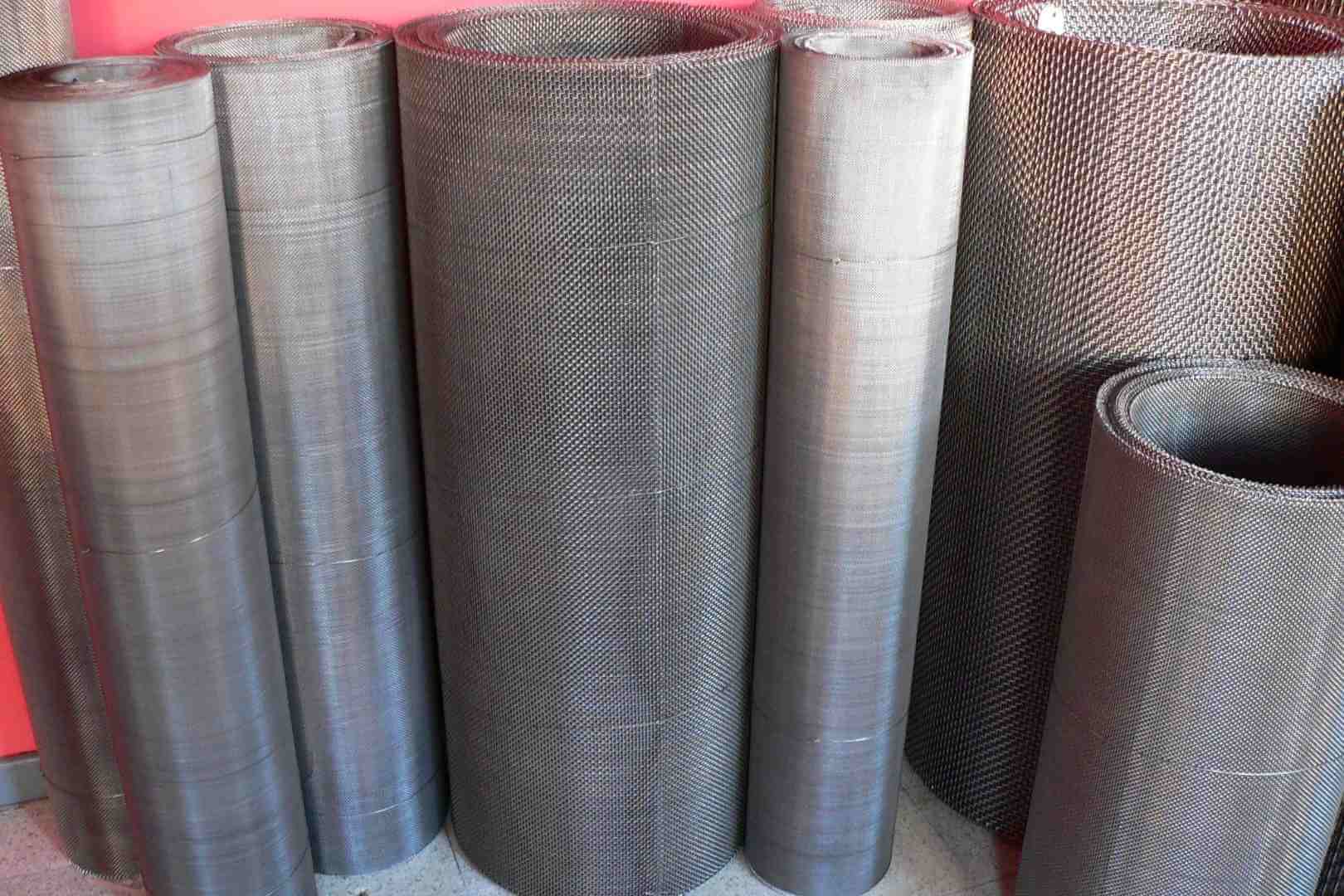
Because Omnimesh is a manufacturer of metal screen mesh and filter mesh, we have a large stock of mesh openings, wire diameters and materials.
This allows us to respond quickly in many cases and even offer a 24-hour screen tensioning service.
Your screen ring re-tensioned within 24 hours
We understand that a damaged screen can cause production downtime. That is why Omnimesh offers an accelerated 24-hour screen tensioning service for urgent re-tensioning jobs.
This service is possible when:
- the correct screen mesh is in stock
- the frame is technically reusable
- the screen arrives at our workshop in time
- no complex frame repair is required
Thanks to our stock of metal screen mesh and filter mesh, we can re-tension very quickly in many cases. This limits the impact on your production process and allows your installation to restart sooner.
Which screens and screen decks do we tension and re-tension?
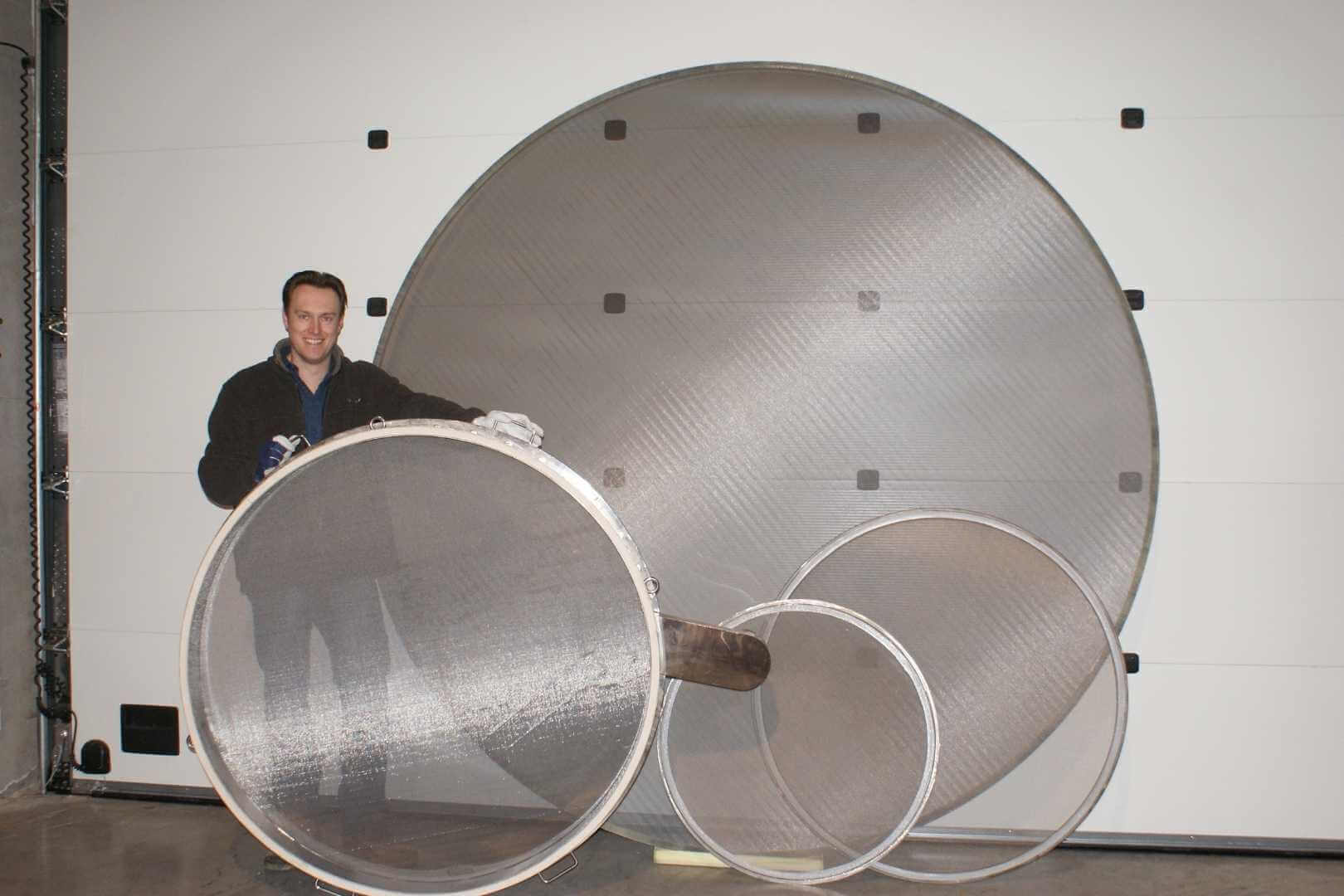
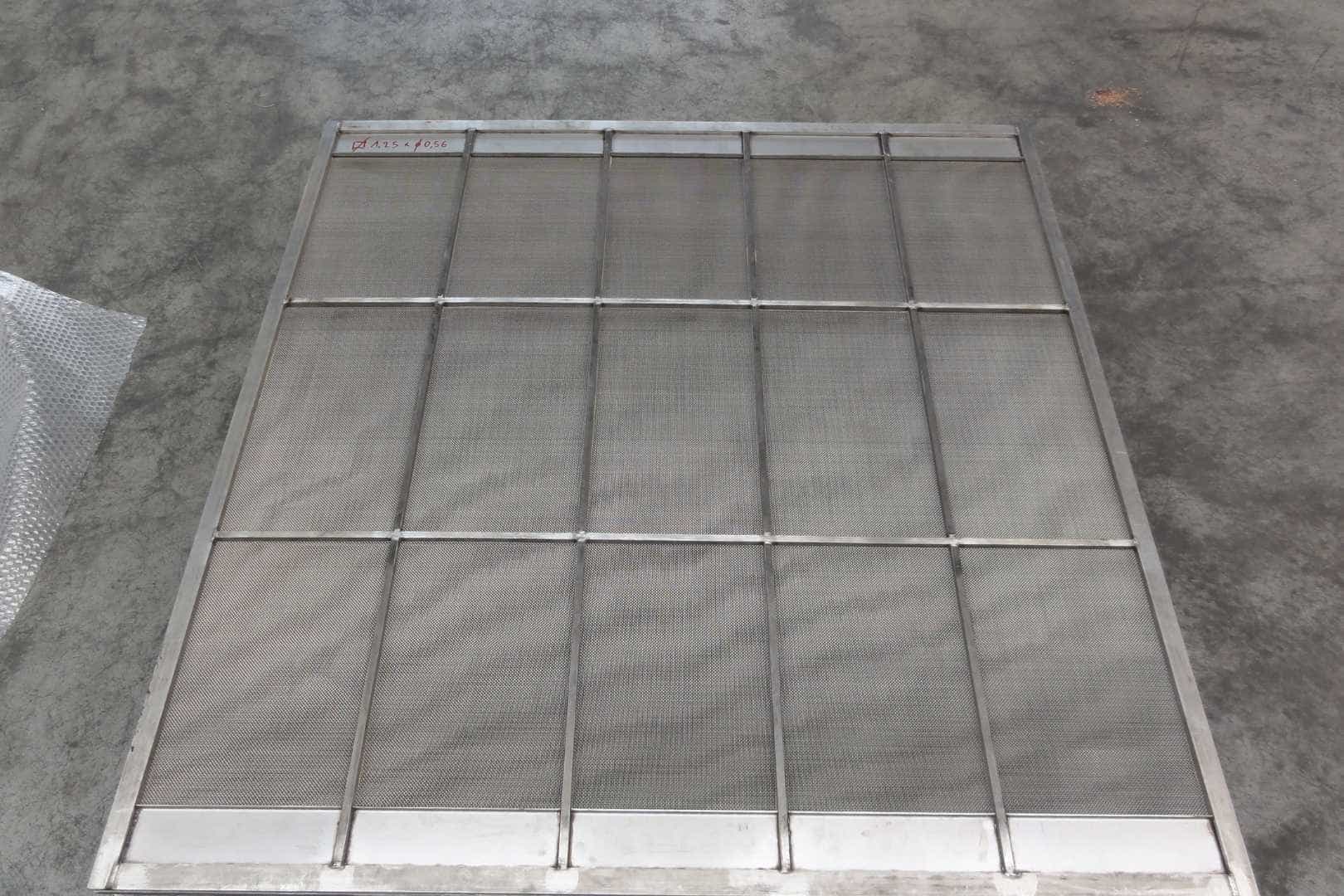
Omnimesh has the technical knowledge, experience and infrastructure to re-tension all common industrial screens correctly, regardless of the brand, type or age of the installation, with diameters up to 3000 mm.
Common applications:
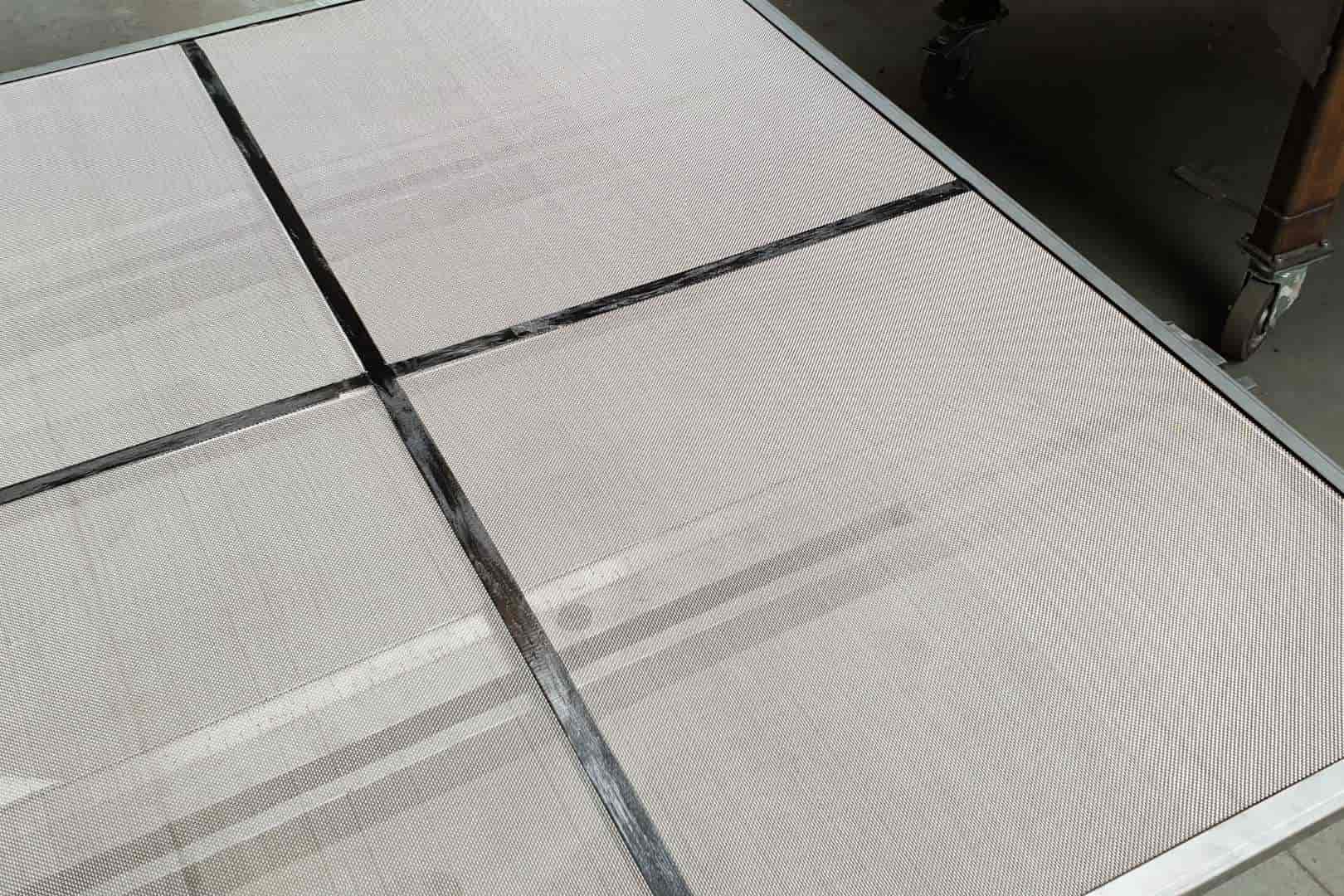
- screen decks and vibrating screens
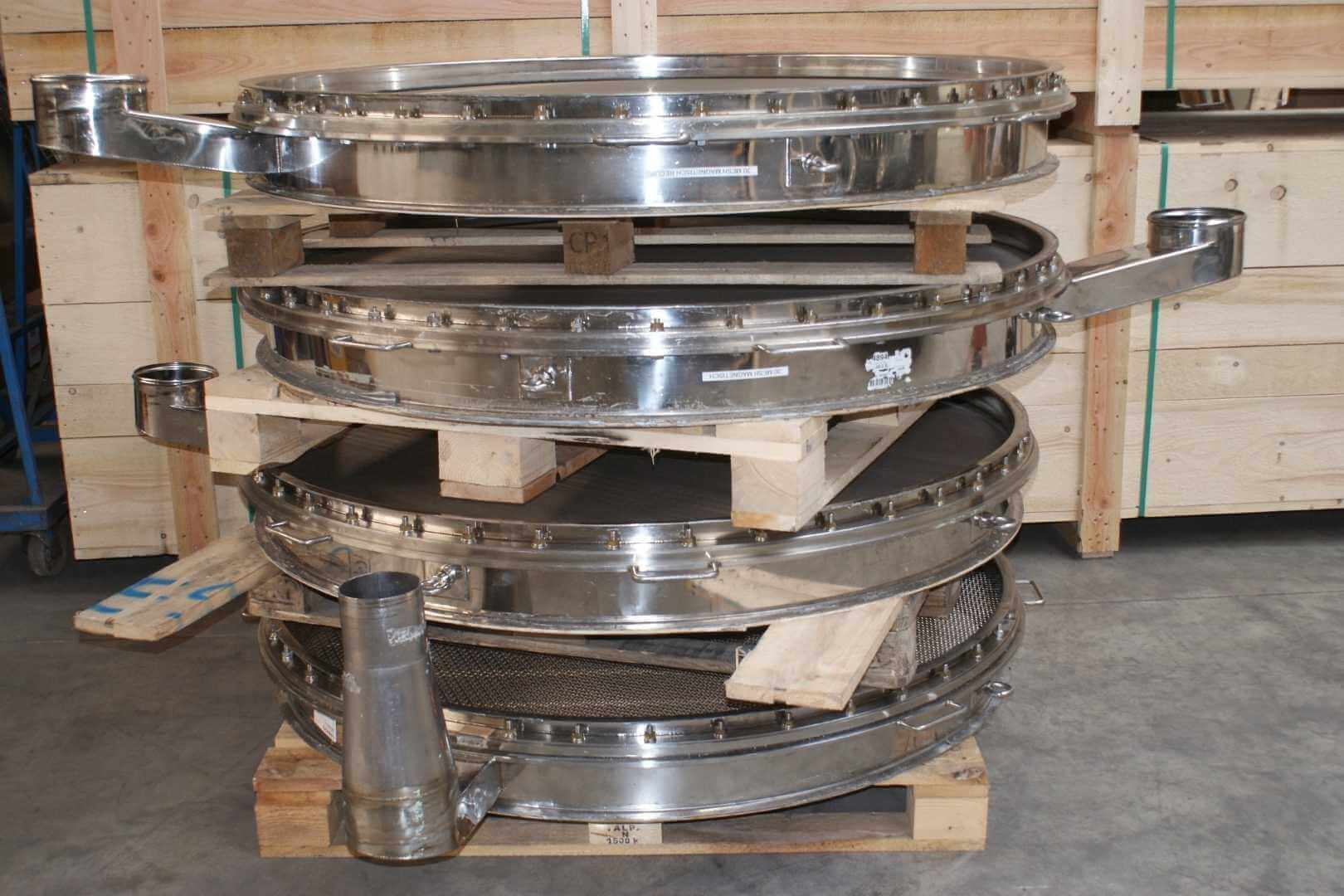
- screen rings and round screens
- shaker screens and flat screens
- ultrasonic screens
- screen frames for process and production separation
Our screen tensioning service focuses on precise assembly, uniform tension and reliable operation in your process.

Repair of industrial metal filter elements
Not every filter or screen problem can be solved with re-tensioning alone.
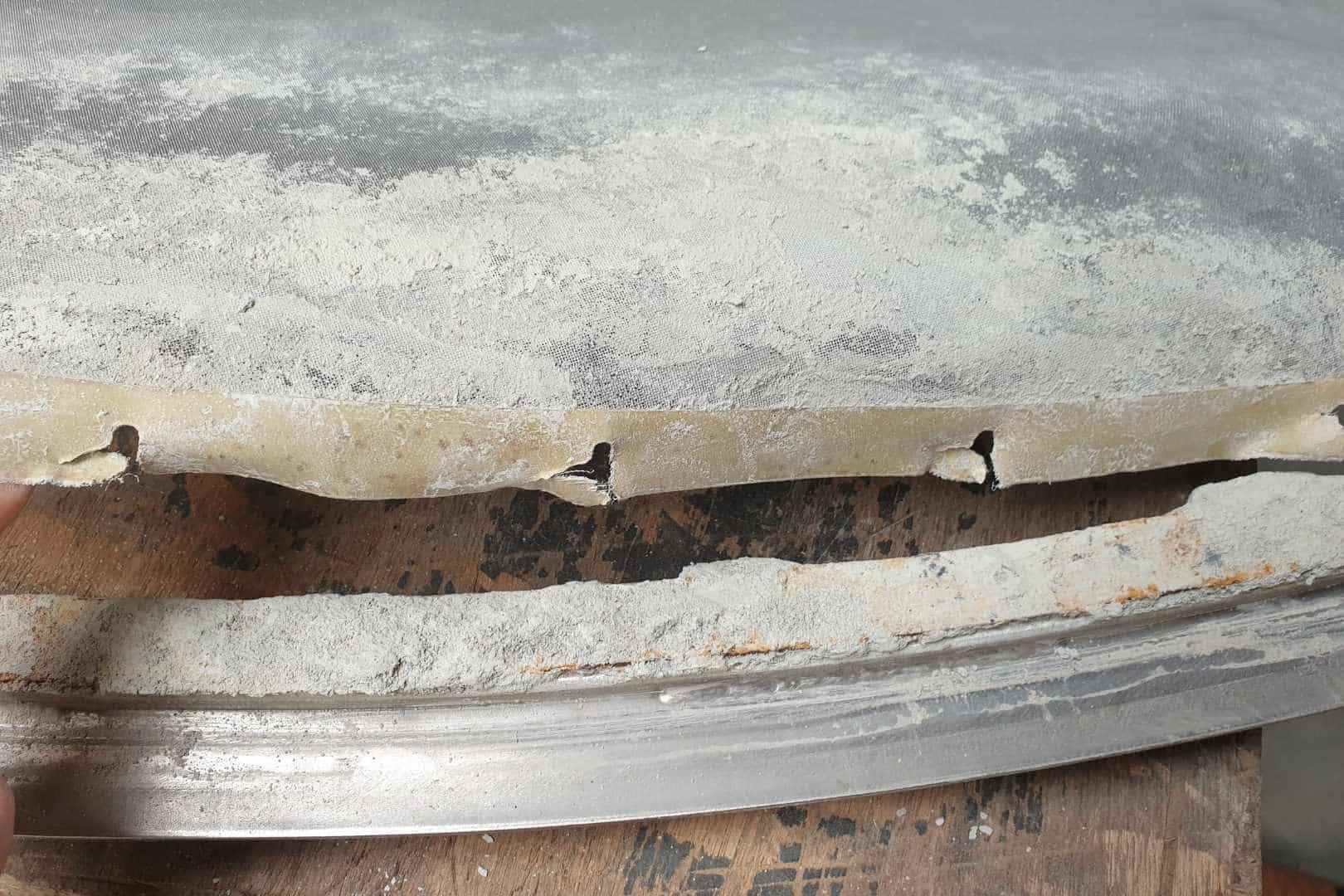
When the filter frame is damaged, the element is structurally deformed or there is corrosion, broken welds or complex wear, screen tensioning alone is not sufficient.
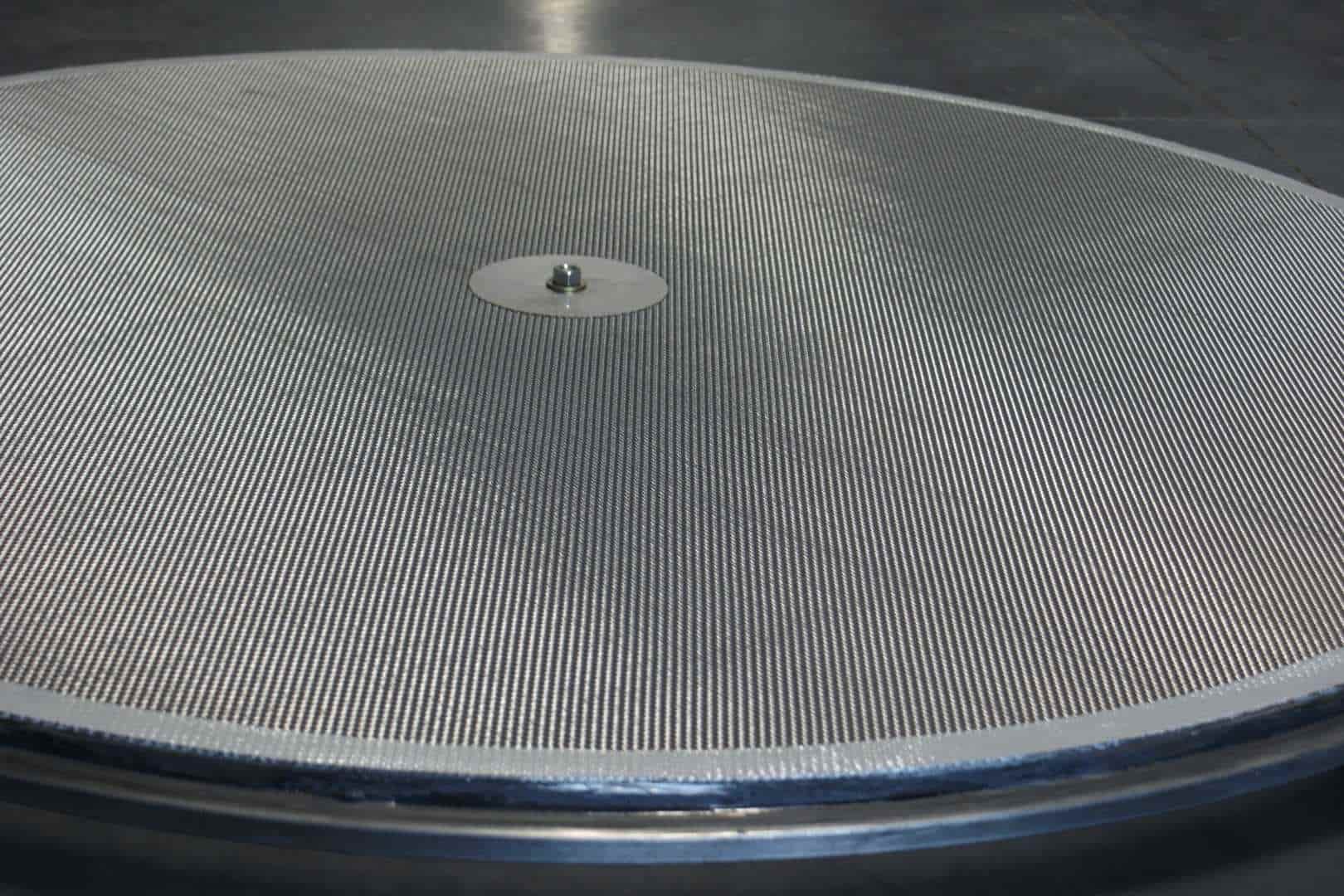
In these cases, Omnimesh offers a repair service for industrial metal filter elements, aimed at making your filter durable and reliable again in the production process.
When do we re-tension a screen ring or screen frame?
We re-tension a screen ring or screen frame when the screen mesh is worn, damaged, deformed or loose, but the frame itself can still be reused.
In that case, the old mesh is removed and replaced with new screen mesh or filter mesh. The existing frame is reused, which is often more economical and faster than producing a completely new screen frame.
Re-tensioning is useful when:
- the screen mesh is torn or damaged
- the screen tension has been lost
- the mesh is dirty, clogged or worn
- the filtration grade is no longer correct
- the process requires a different mesh opening
- the frame is still strong and dimensionally stable
- downtime must be kept as short as possible


Which problems can we solve with screen tensioning or re-tensioning?
Industrial screens are continuously exposed to vibration, wear, mechanical load, product build-up and cleaning. As a result, the screen mesh can lose its function over time.
With correct re-tensioning, we solve problems such as:
- torn or damaged screen mesh
- loose screen cloth
- uneven or lost screen tension
- wear caused by abrasive products
- clogging or contamination of the screen surface
- insufficient separation quality
- incorrect or outdated filtration grade
- product loss due to damaged meshes
- quality problems due to incorrect throughput
- changed screen specifications after a process change
A properly re-tensioned screen frame once again ensures reliable separation, correct throughput and stable operation within your production process.
How does the re-tensioning process of an industrial screen frame or screen ring work?
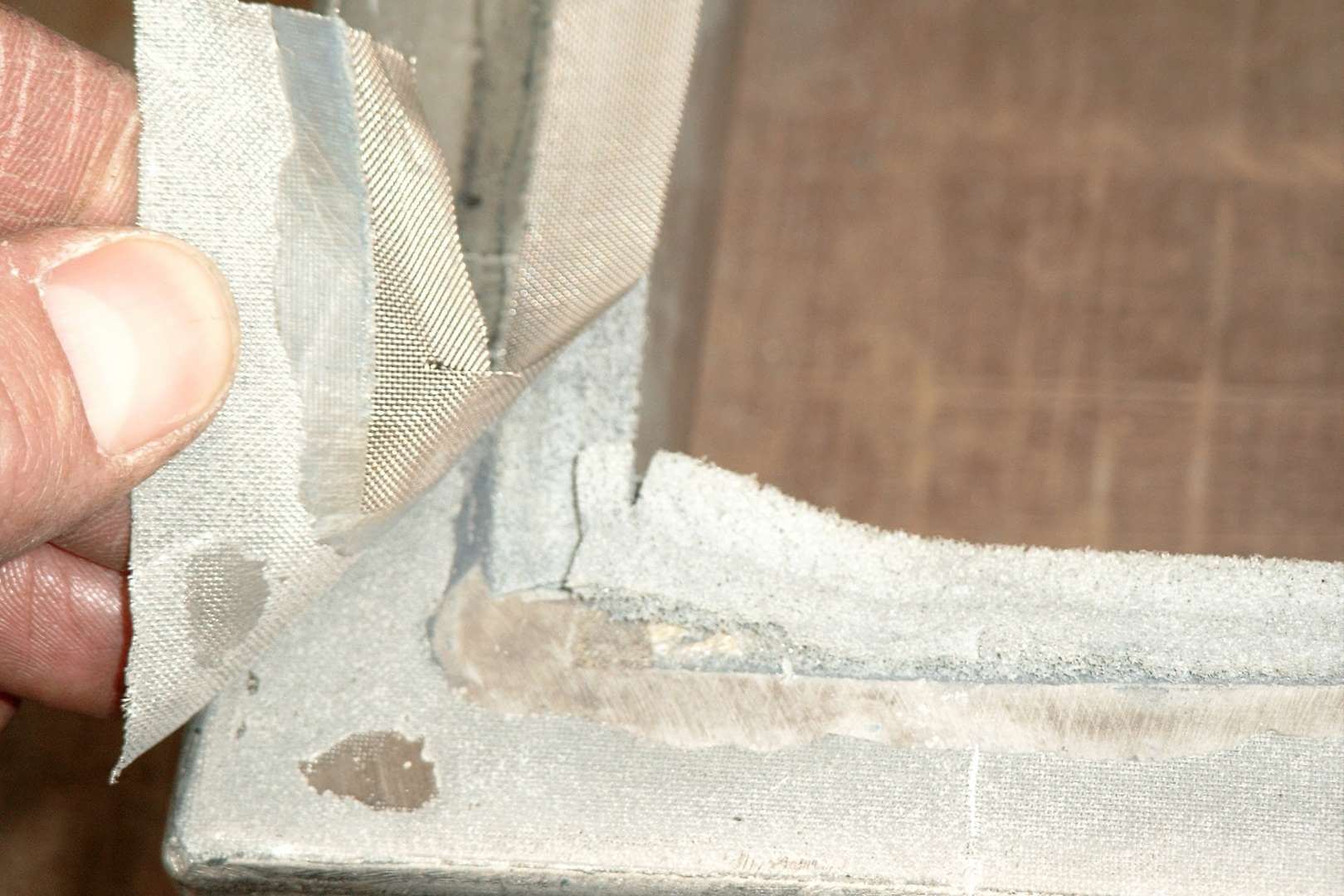
Removing the existing screen mesh
The old, damaged or contaminated screen mesh is removed. We take into account the frame, the glued or welded connections and the existing edge finish.
Cleaning and technical inspection of the frame
The screen frame or screen ring is cleaned and checked for wear, deformation, corrosion, weld cracks or structural damage. When the frame is too badly damaged, we assess whether repair or replacement is required.
Selection of the correct screen mesh
Based on your application, we choose the correct mesh type, material, mesh opening, wire diameter and filtration grade. We take into account the product, the load, the required throughput and the process conditions.
Correct alignment and tensioning
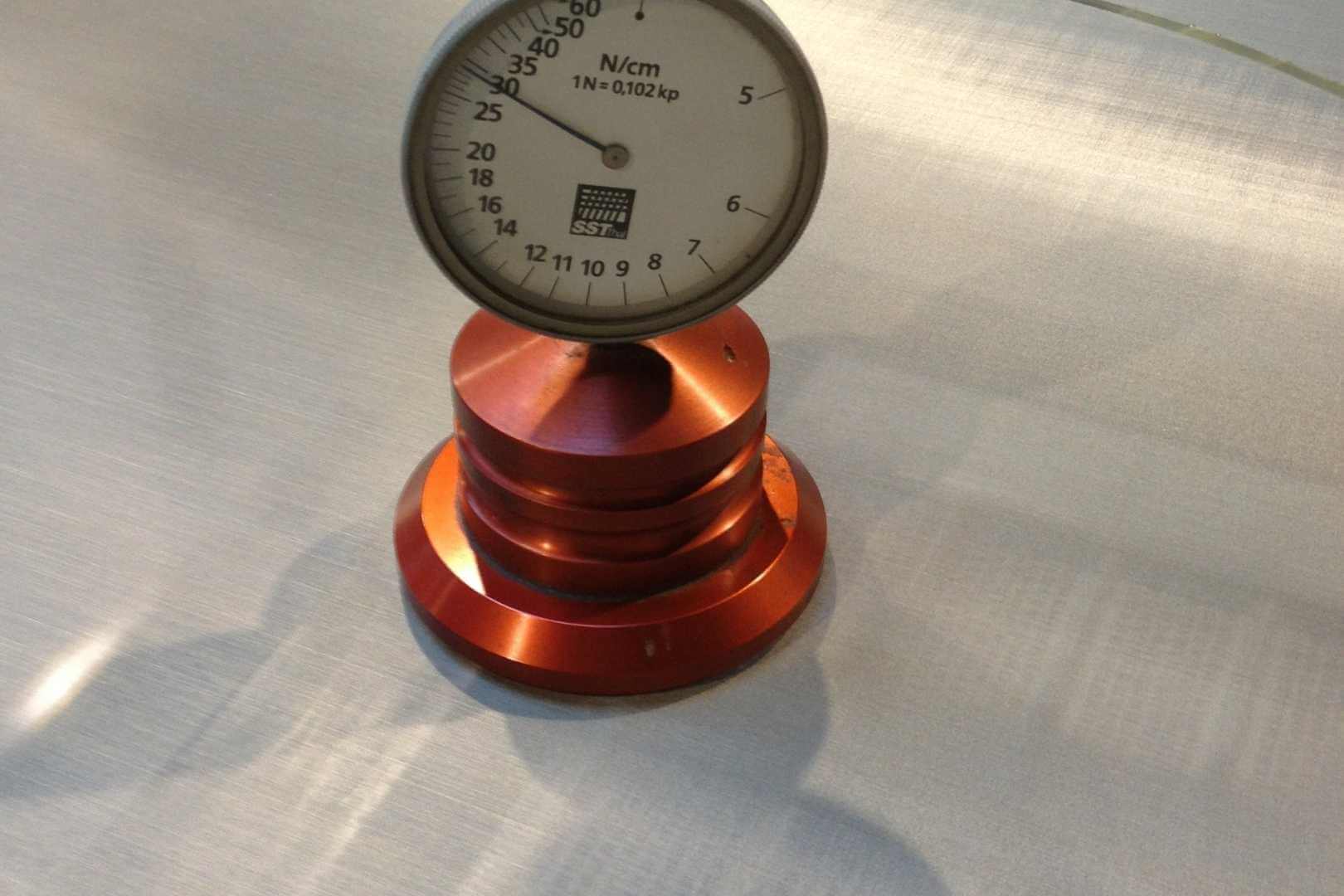
The new mesh is precisely aligned and uniformly tensioned. Correct tension is important to avoid deflection, premature wear, poor separation or loosening of the mesh.
Fixing and edge sealing
Depending on the frame and the application, the mesh is glued, clamped, welded, soldered or mechanically fixed. The edge finish must be able to withstand vibration, cleaning and process load.
Final inspection
After re-tensioning, we check the screen frame for tension, stability, adhesion and functionality. This ensures that the re-tensioned screen element can be used reliably again.
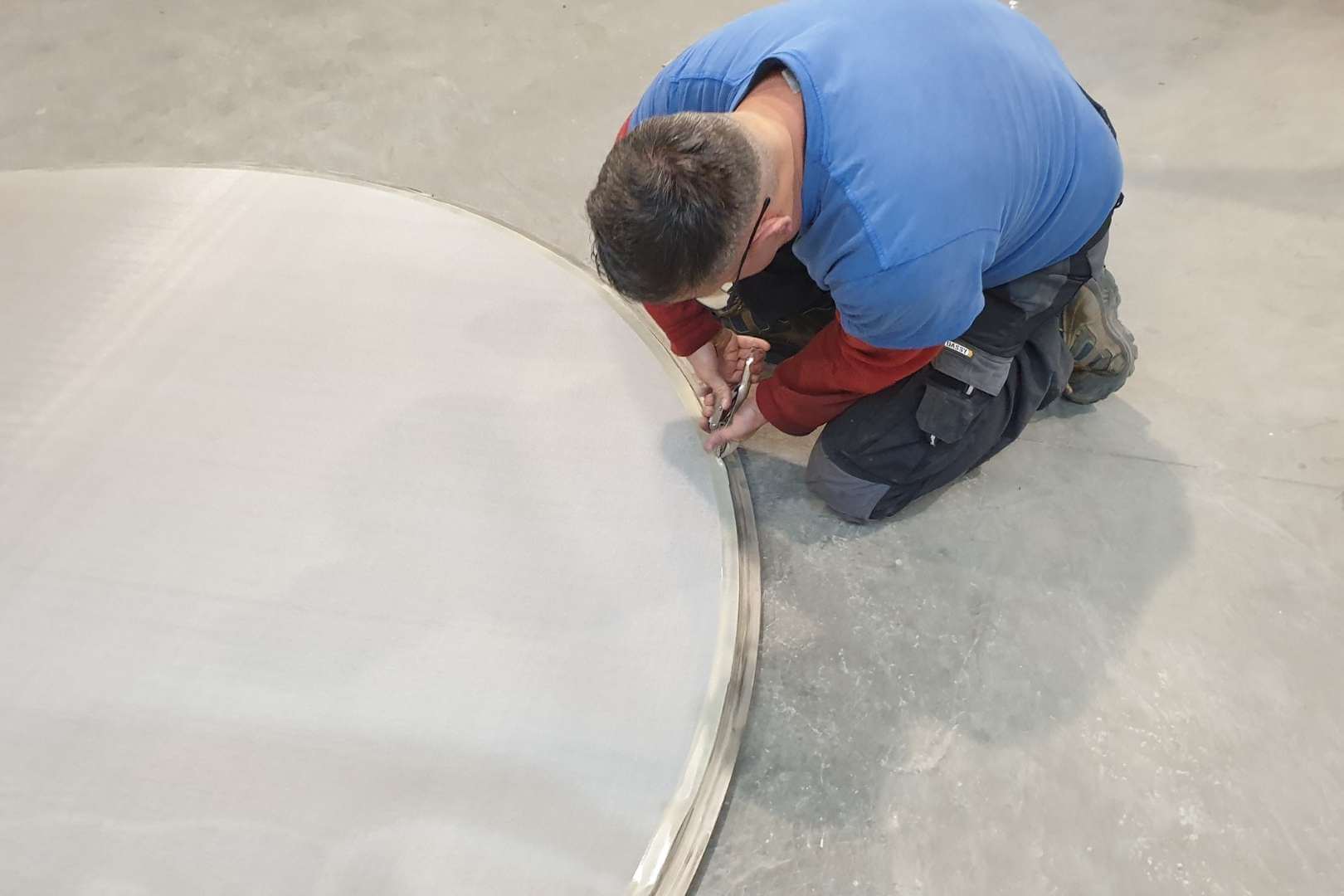

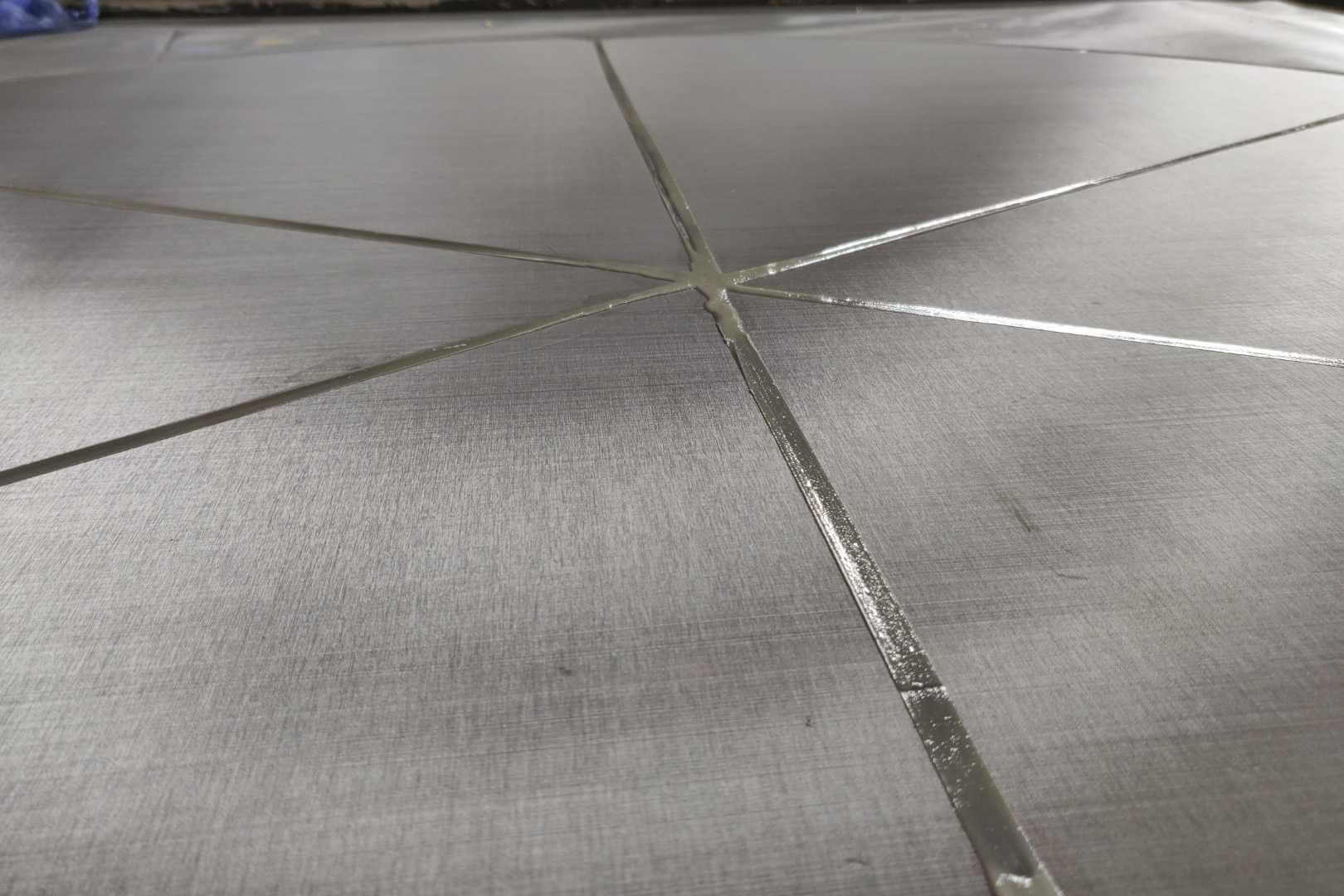
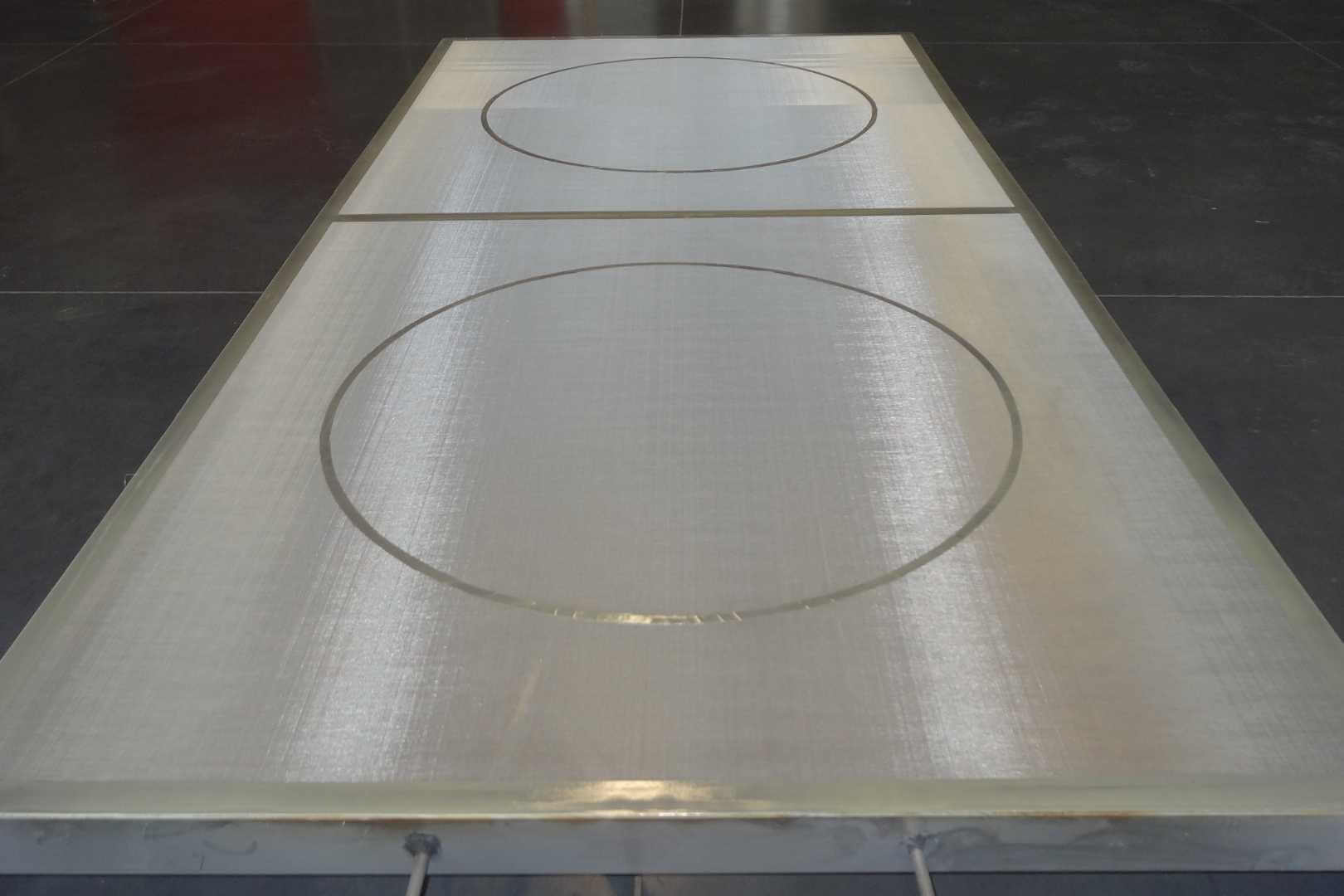
New screen frames and screen rings made to measure
In addition to re-tensioning, Omnimesh also supplies new screen frames and screen rings, fully adapted to the original version or made to measure for your application.
Possibilities:
- round, rectangular and square frames
- compatible with all brands and types of screening machines
- dimensions up to 3000 mm
- materials: steel, stainless steel 304/316 and aluminium
New frames are supplied with correctly tensioned screen mesh, ready for immediate use.
Materials for screen tensioning
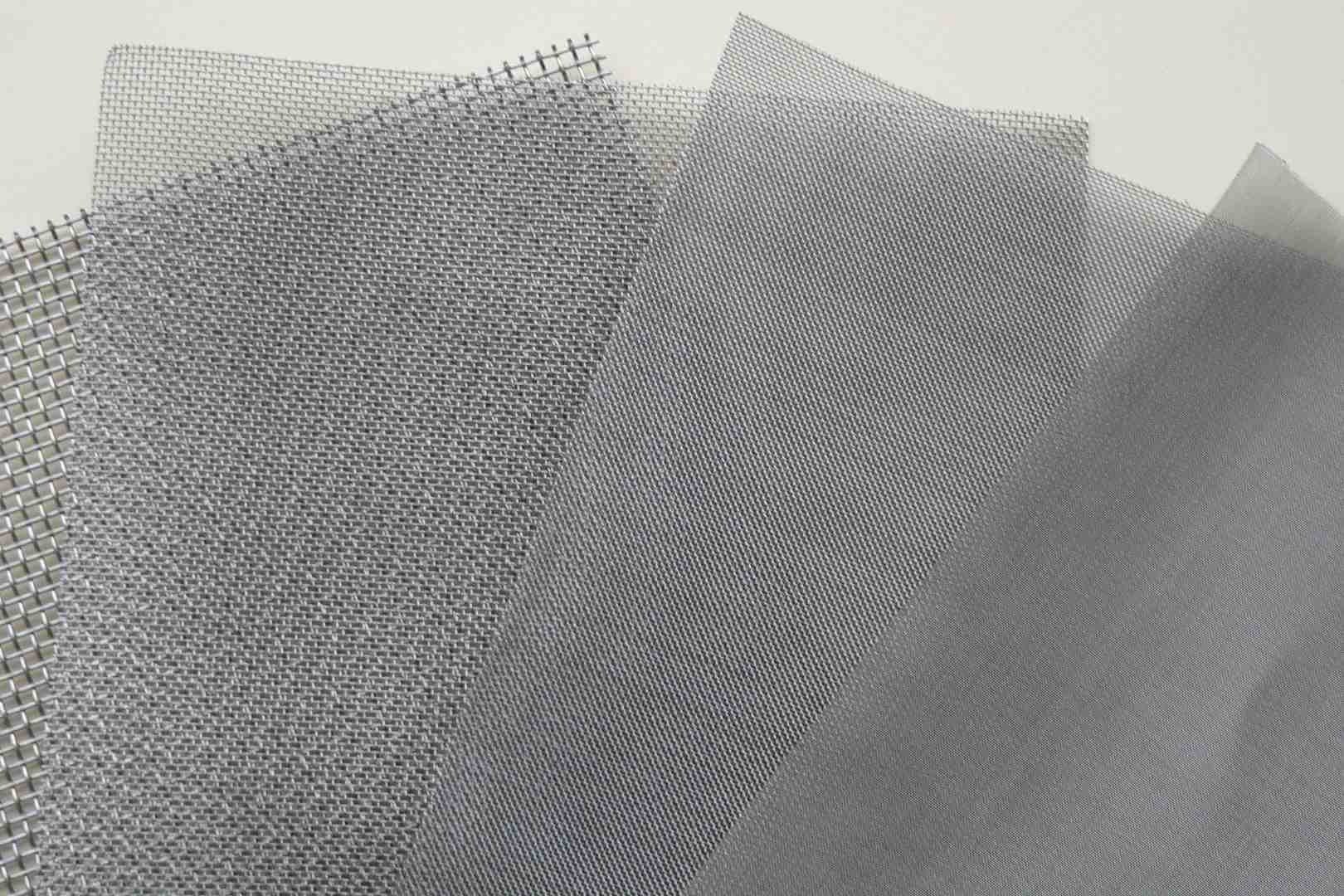
As a manufacturer of metal mesh, we have a large stock of woven metal mesh, screen mesh and filter mesh. This allows us to quickly choose the right combination of material, mesh opening and wire diameter.
We work exclusively with metal mesh types.
Commonly used materials:
- stainless steel 304 for general industrial applications
- stainless steel 316 and 316L for corrosion-sensitive environments
- spring steel for high resilience and mechanical load
- galvanised steel for specific technical applications
- special alloys on request, such as Monel, Hastelloy or Inconel
The material choice depends on the medium, the environment, the temperature, the load, the cleaning method and the desired service life.
Mesh types for screen tensioning
Depending on the application, we re-tension screen frames with different types of screen mesh and filter mesh.
Possible mesh types:
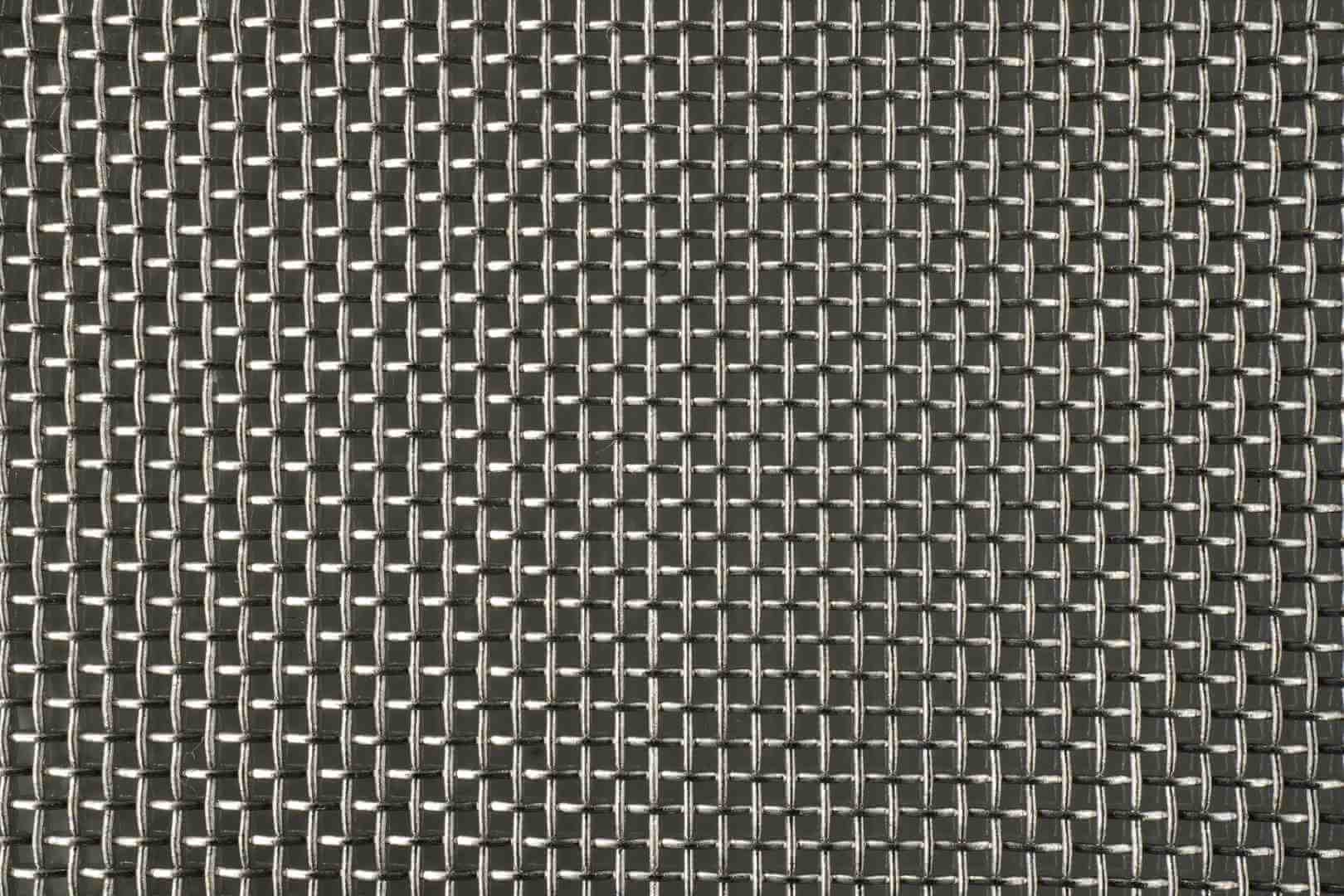
- plain woven mesh
- plain weave
- twilled weave
- Dutch weave
- welded mesh
- crimped mesh
- fine filter mesh
- coarser screen mesh
- multi-layer filter construction
- perforated plate or support material where required
The choice of the right mesh is adapted to the product to be screened, the required filtration grade, the throughput, the load and the operation of the screening machine.
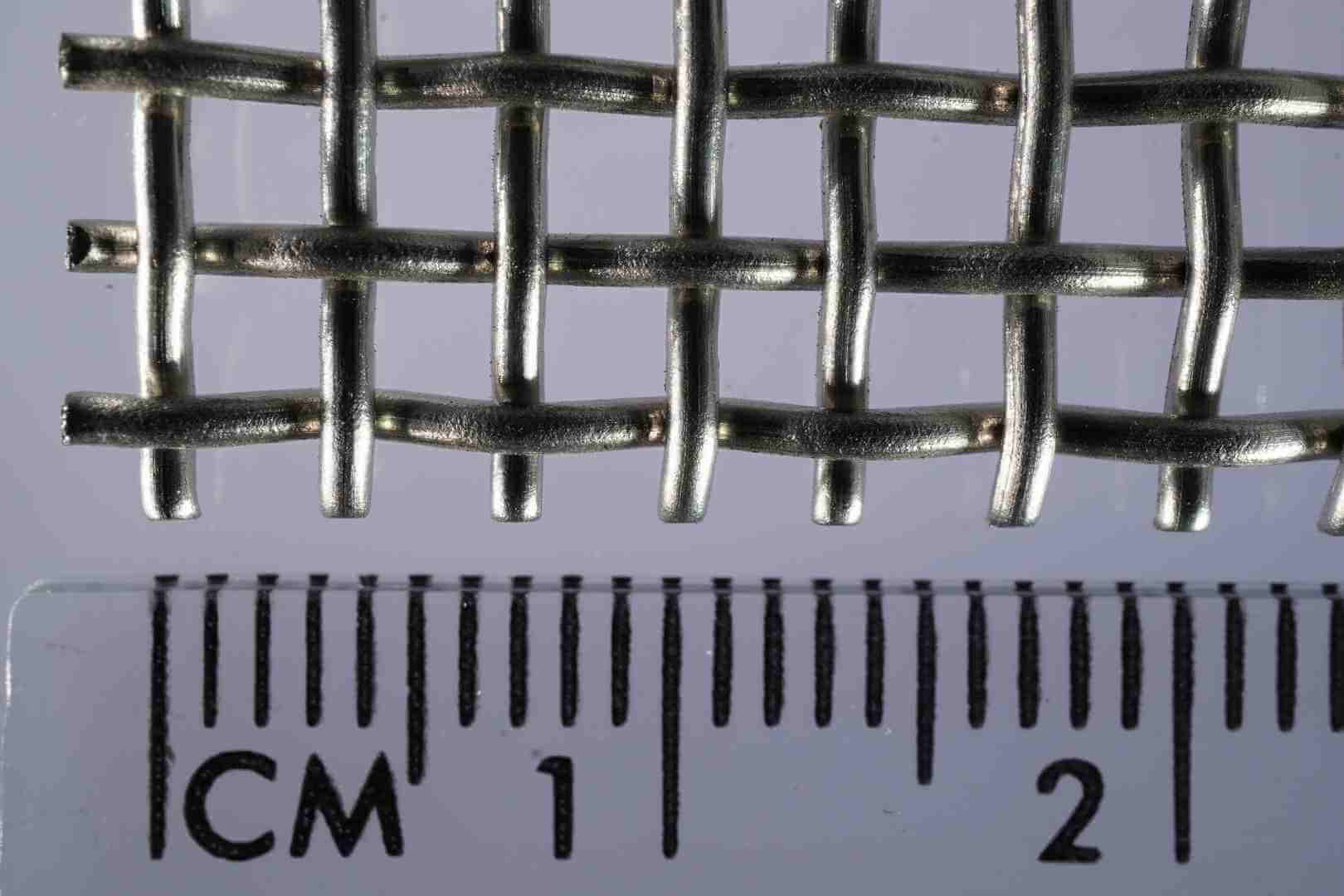
Price and cost of screen tensioning
The price of screen tensioning or re-tensioning depends on several technical and practical factors. Each industrial screen frame or screen ring has different requirements in terms of tension, filtration grade, dimensions and material choice.
The cost is determined by, among other things:
- type of screen frame or screen ring
- dimensions and shape
- selected screen mesh or filter mesh
- material, mesh opening and wire diameter
- required tension and tolerances
- condition of the existing frame
- possible cleaning or repair
- glueing, welding or clamping technique
- required delivery time
- possible 24-hour screen tensioning service
Compared with a completely new screen frame, re-tensioning is often significantly more economical. At the same time, you receive a renewed screen surface with the correct throughput, separation quality and operational reliability.
When should you choose re-tensioning instead of a new screen frame?
Re-tensioning is the right choice when the frame is still usable, but the screen mesh no longer meets the requirements. You keep the existing frame and only renew the active screen surface.
Choose re-tensioning when:
- the frame is still strong and dimensionally stable
- only the mesh is worn or damaged
- you want to limit downtime
- you want to save costs compared with a new frame
- the screen must achieve the same filtration grade again
- you want to resume production quickly
Choose a new frame when:
- the frame is deformed
- there is serious corrosion
- welds or edges are too badly damaged
- the frame no longer clamps or fits correctly
- the application has changed technically
- a completely new design is required