Architectural Expanded Metal
- Natural ventilation while maintaining light and visibility.
- Suitable for façade cladding, sun shading and balustrades.
- Available in various patterns and RAL-colours.
On this page:
Expanded metal is a durable and aesthetic façade material that stands out for its strength, ventilation and design freedom. It is used for façade cladding, sun shading and decorative applications, both in new-build projects and renovations. Expanded metal gives your project a unique visual identity.
Possibilities of expanded metal for façade cladding
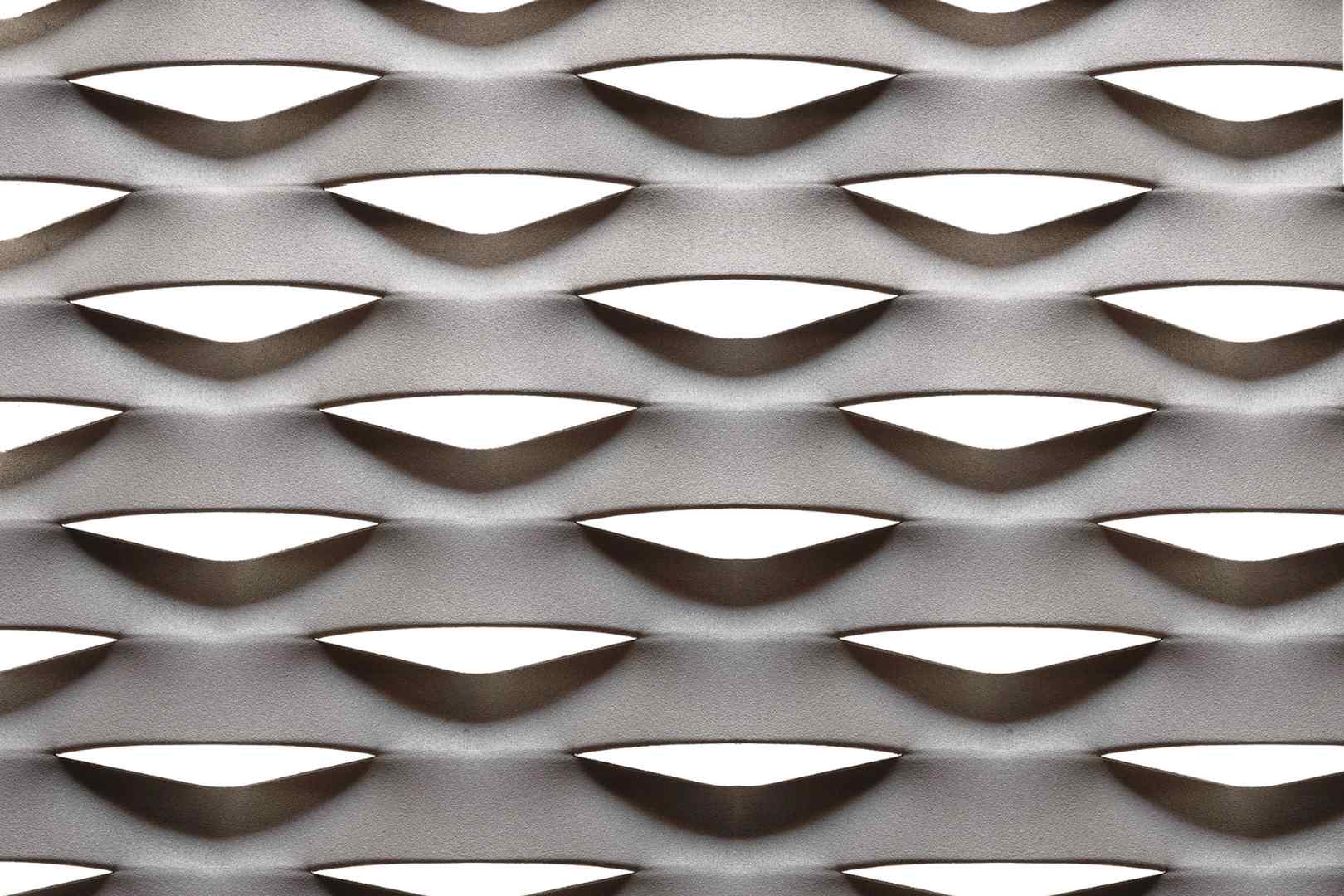
Expanded metal is produced by slitting a metal sheet at strategic points and then stretching it into an open, grid-like structure. Thanks to this production process, the result is a material that is strong, lightweight and visually refined, without material loss.
At Omnimesh, we offer a carefully selected range of expanded metal for façade cladding, with a frontal open area between 16% and 55%. This openness influences the amount of light, air and visibility through the façade and plays an important role in ventilation, sun shading and visual dynamics.
Our panels are available in various patterns, from fine and discreet to large and expressive, so that every architectural design can be supported. For the finish, many options are possible: the expanded metal can be powder coated in any RAL colour, but also in exclusive shades such as bronze, brass, copper or gold. This coating not only increases the aesthetic value, but also protects the material against corrosion and weathering.
Thanks to the combination of technical performance and aesthetic versatility, expanded metal from Omnimesh is a smart choice for architects and building owners looking for a façade that is durable, contemporary and distinctive.
Types of architectural expanded metal
Frontal open area up to 20%

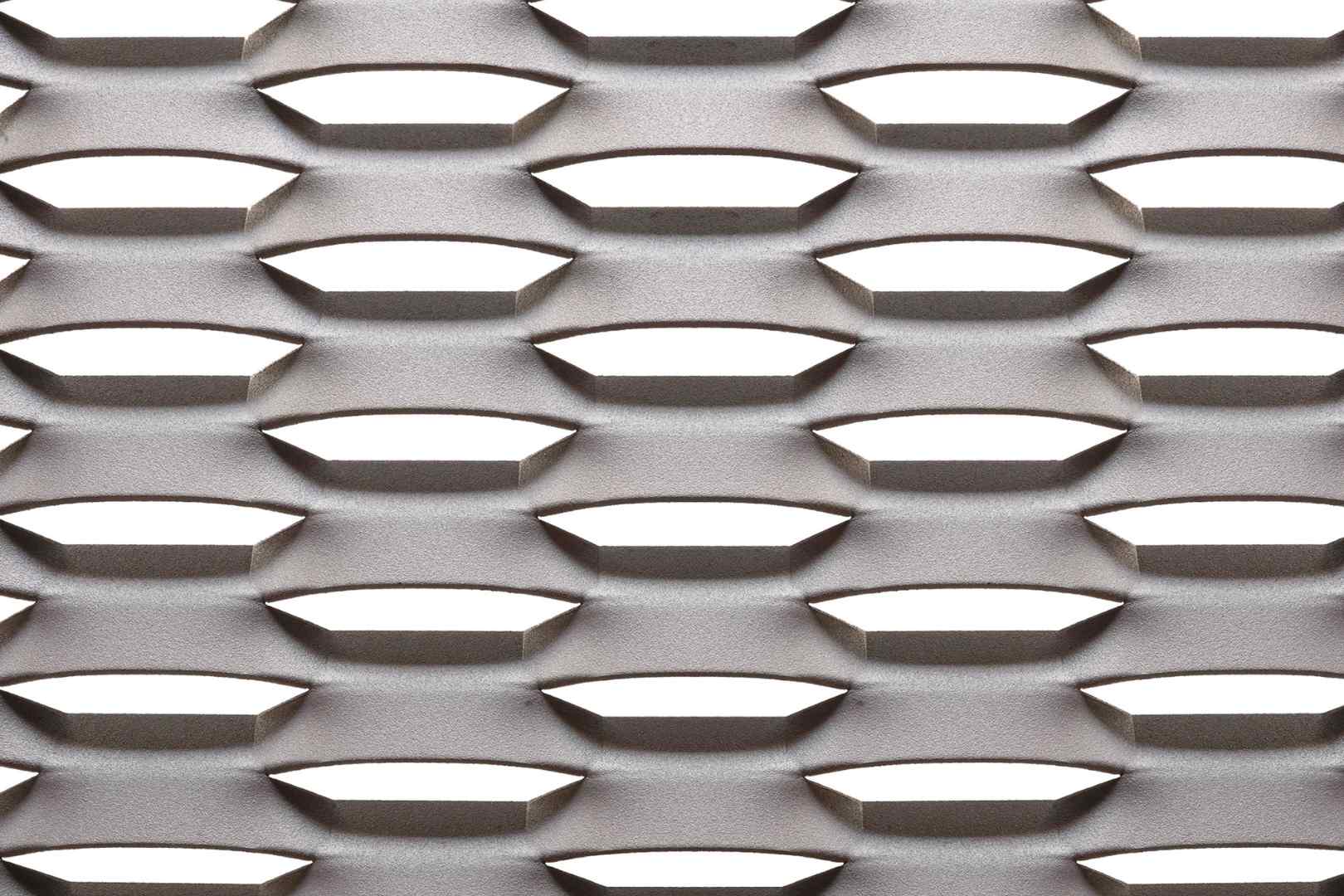
Forta
Frontal passage 16 %
LD= 110mm KD=52mm
Strand width= 24mm
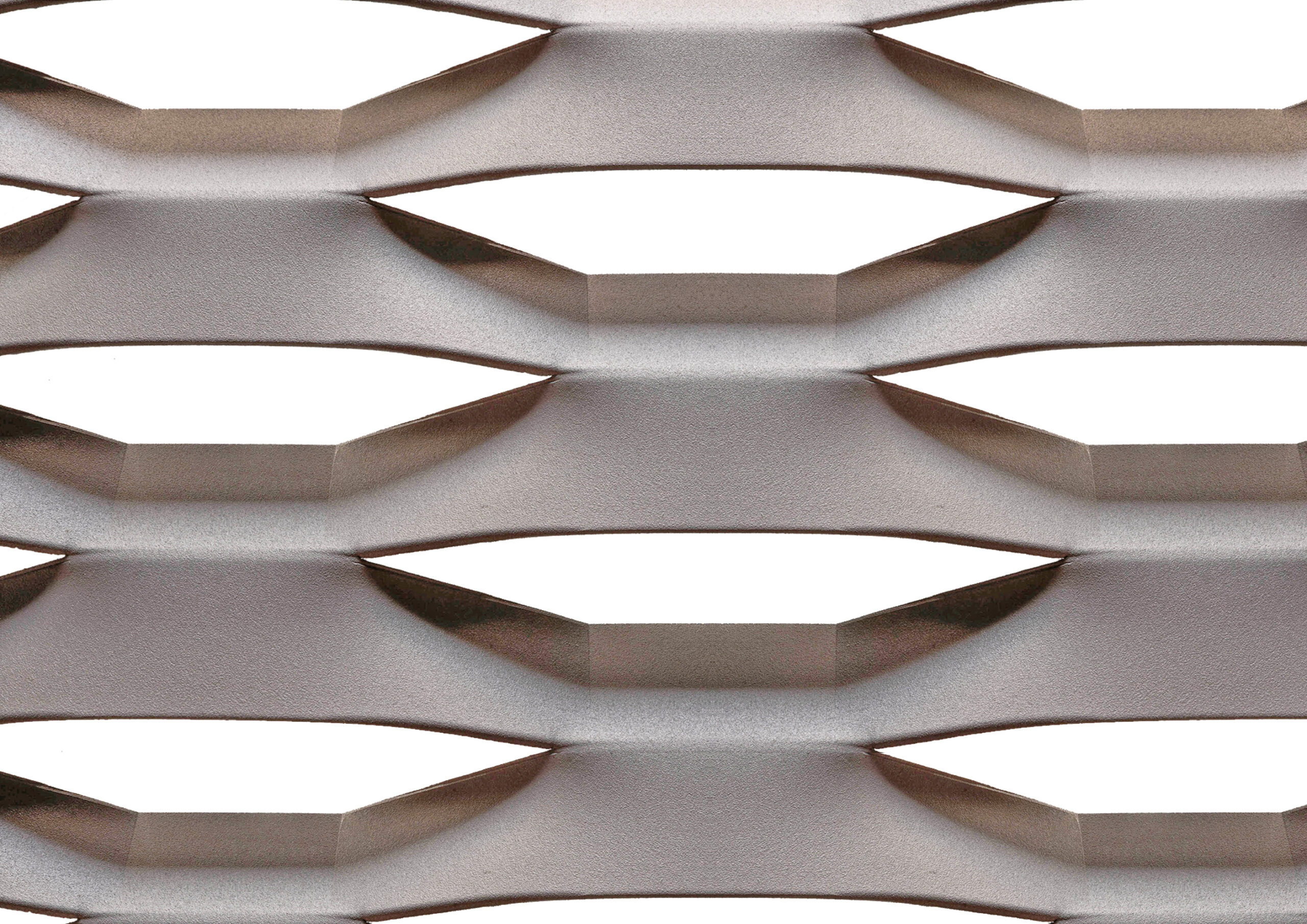
Stala
Frontal passage 16 %
LD= 100mm KD=35mm
Stand width= 15mm
Frontal open area up to 40%

Lisso
Frontal passage 28 %
LD= 200mm KD=80mm
Strand width= 33mm
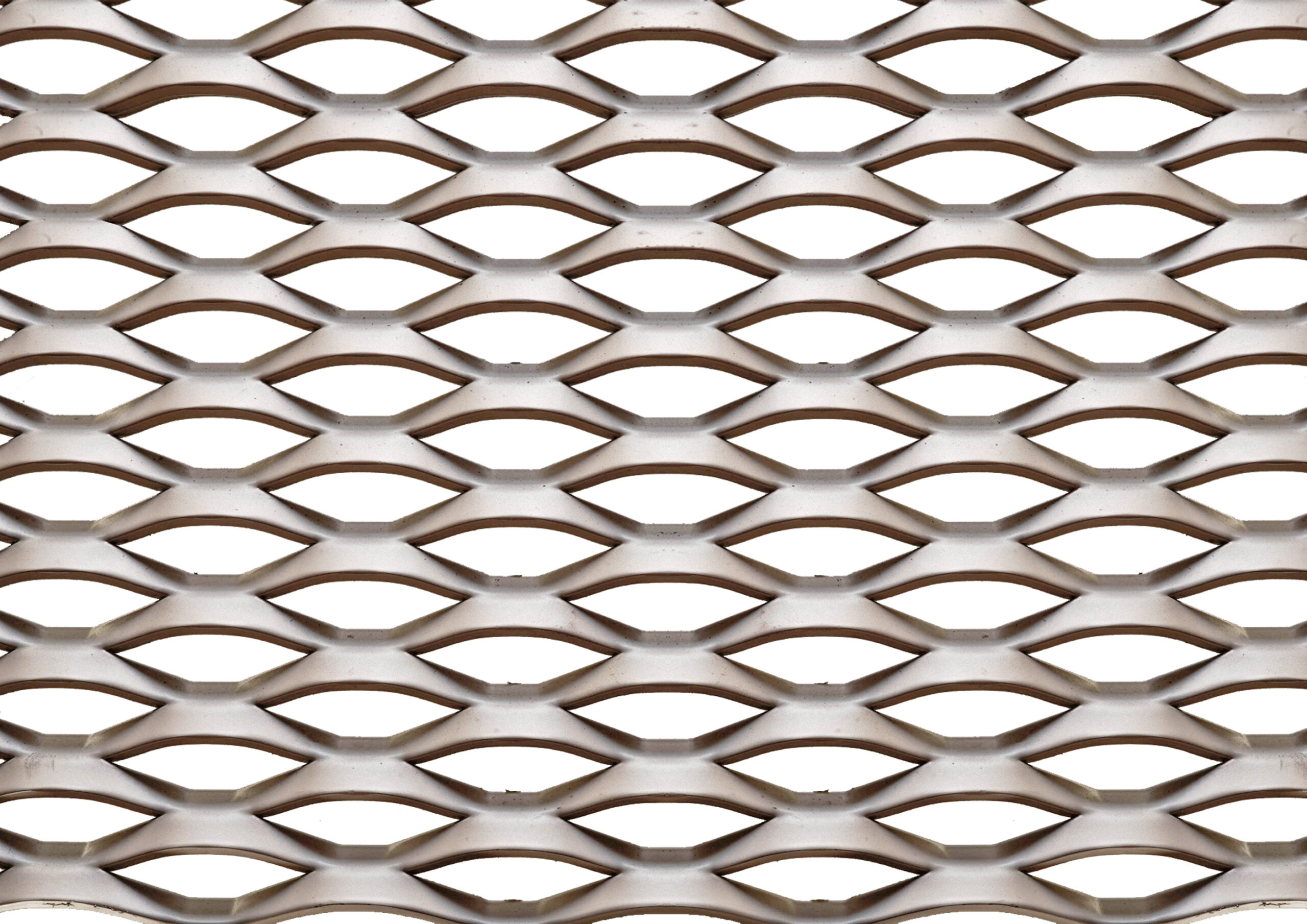
Marlo
Frontal passage 32 %
LD= 62mm KD=26mm
Strand width= 9mm
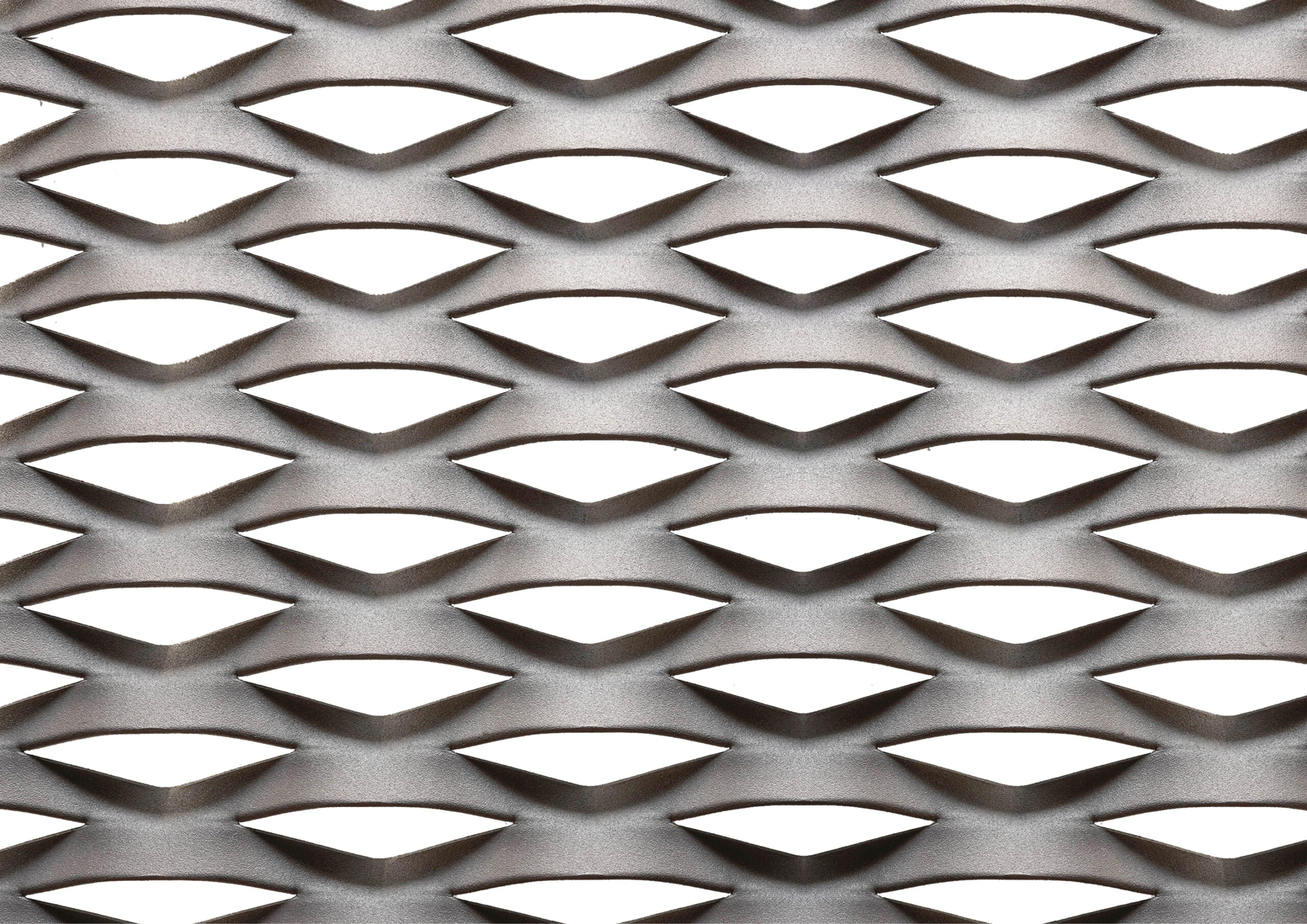
Mezzo
Frontal passage 23 %
LD= 90mm KD=33mm
Strand width= 13mm
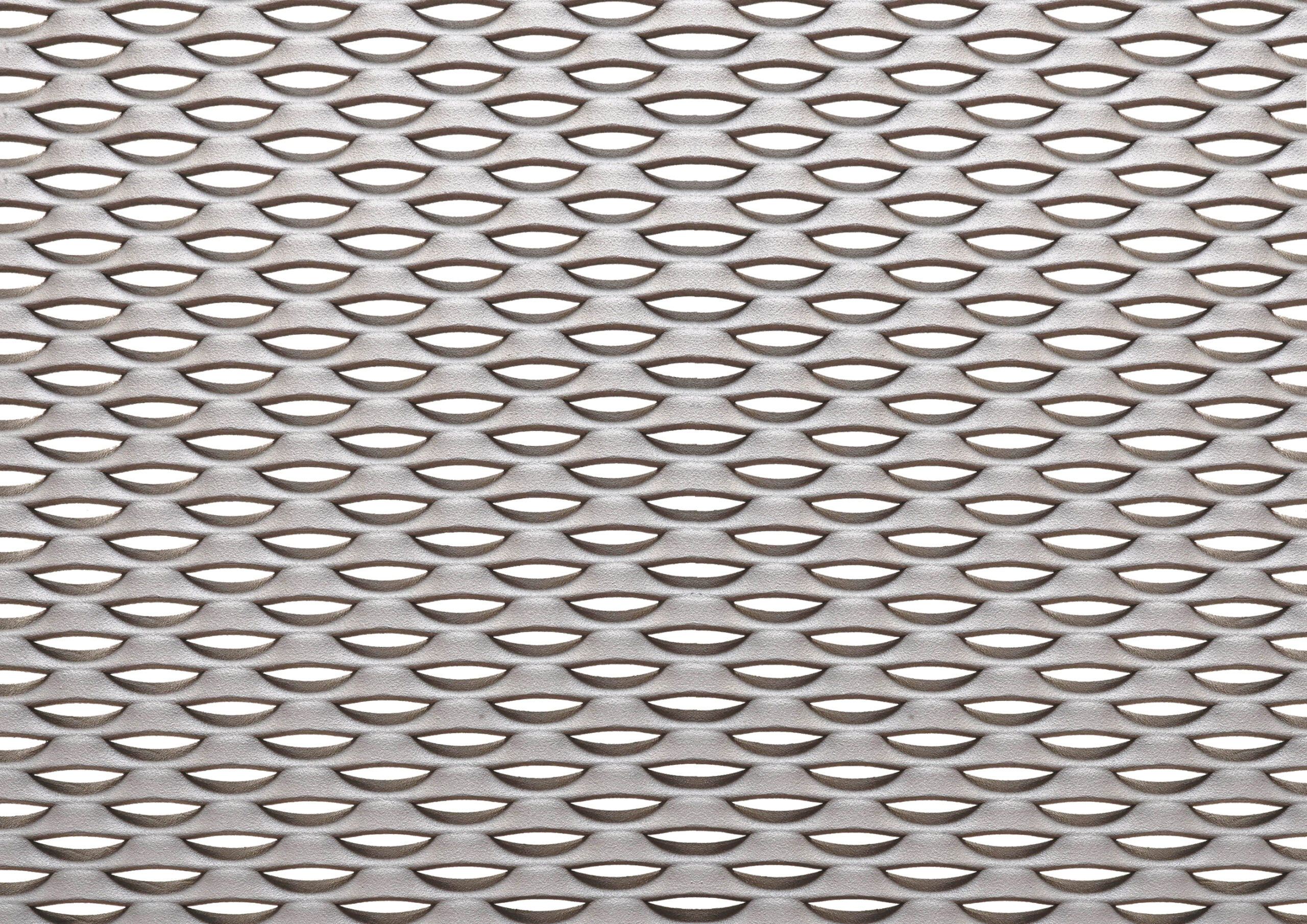
Nallo
Frontal passage 20 %
LD= 30mm KD=14.5mm
Strand width= 6mm
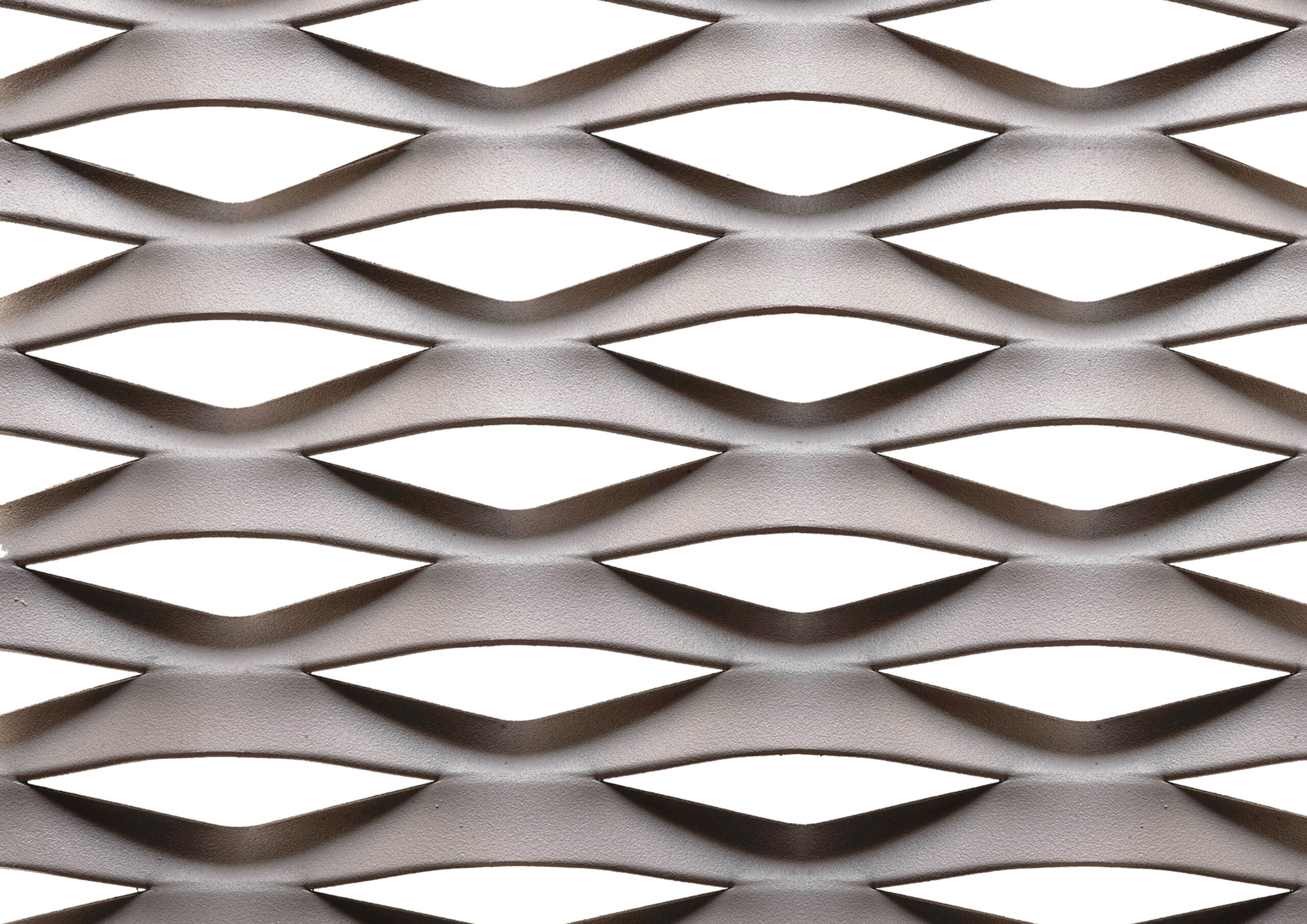
Nivo
Frontal passage 25 %
LD= 115mm KD=48mm
Strand width= 20mm
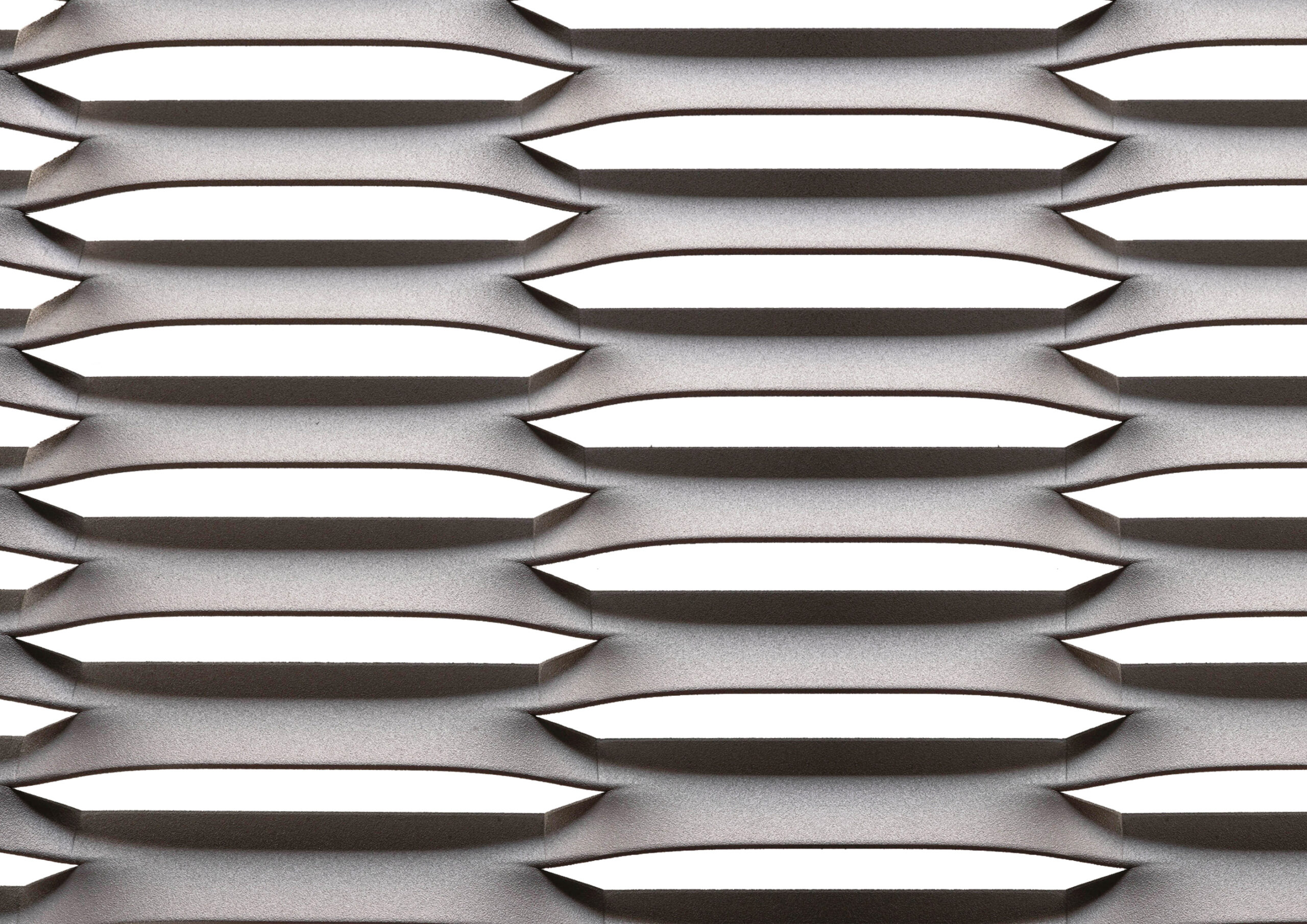
Parmo
Frontal passage 26 %
LD= 225mm KD=35mm
Strand width= 15mm
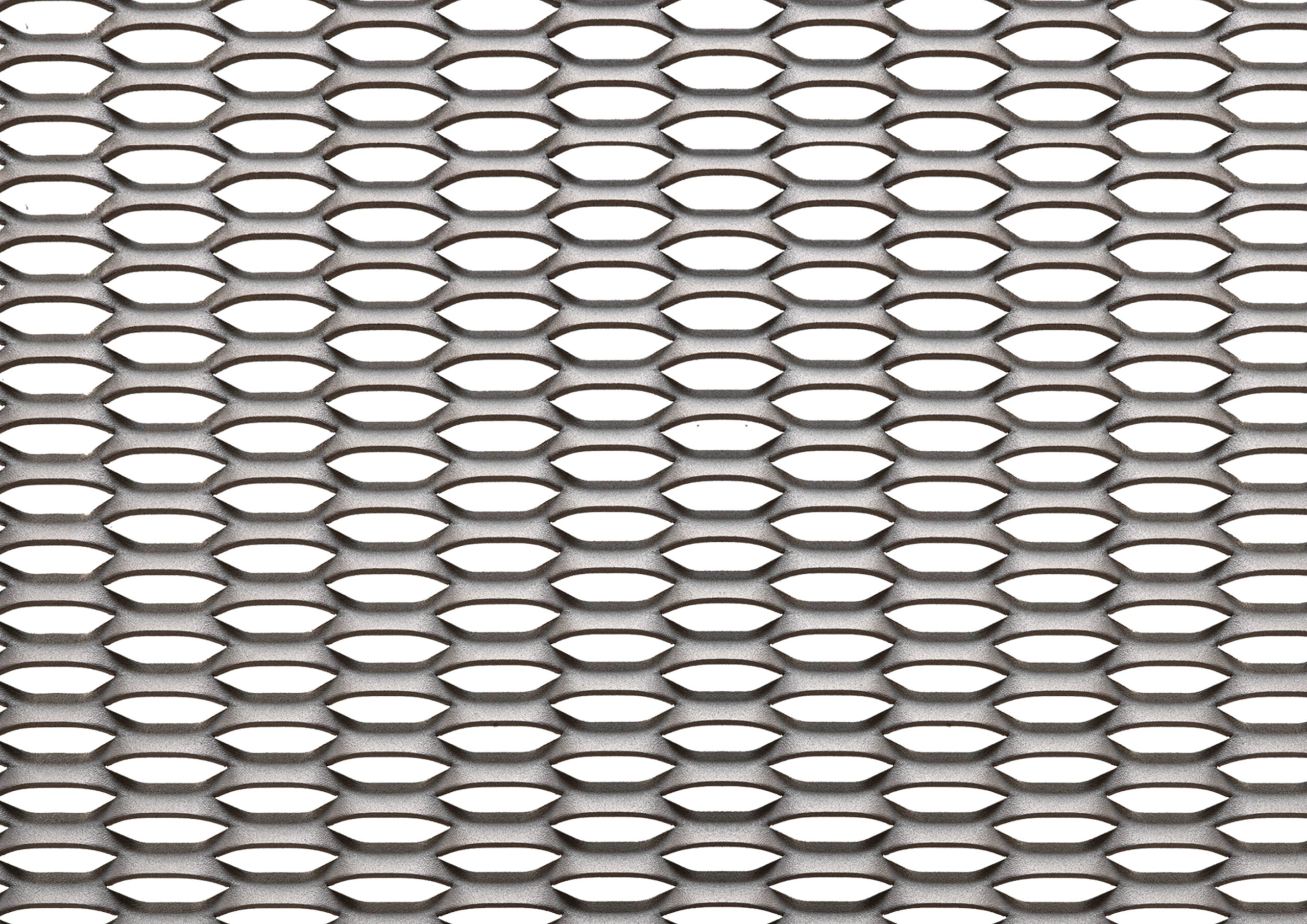
Pinto
Frontal passage 34 %
LD= 45mm KD=13.5mm
Strand width= 5mm
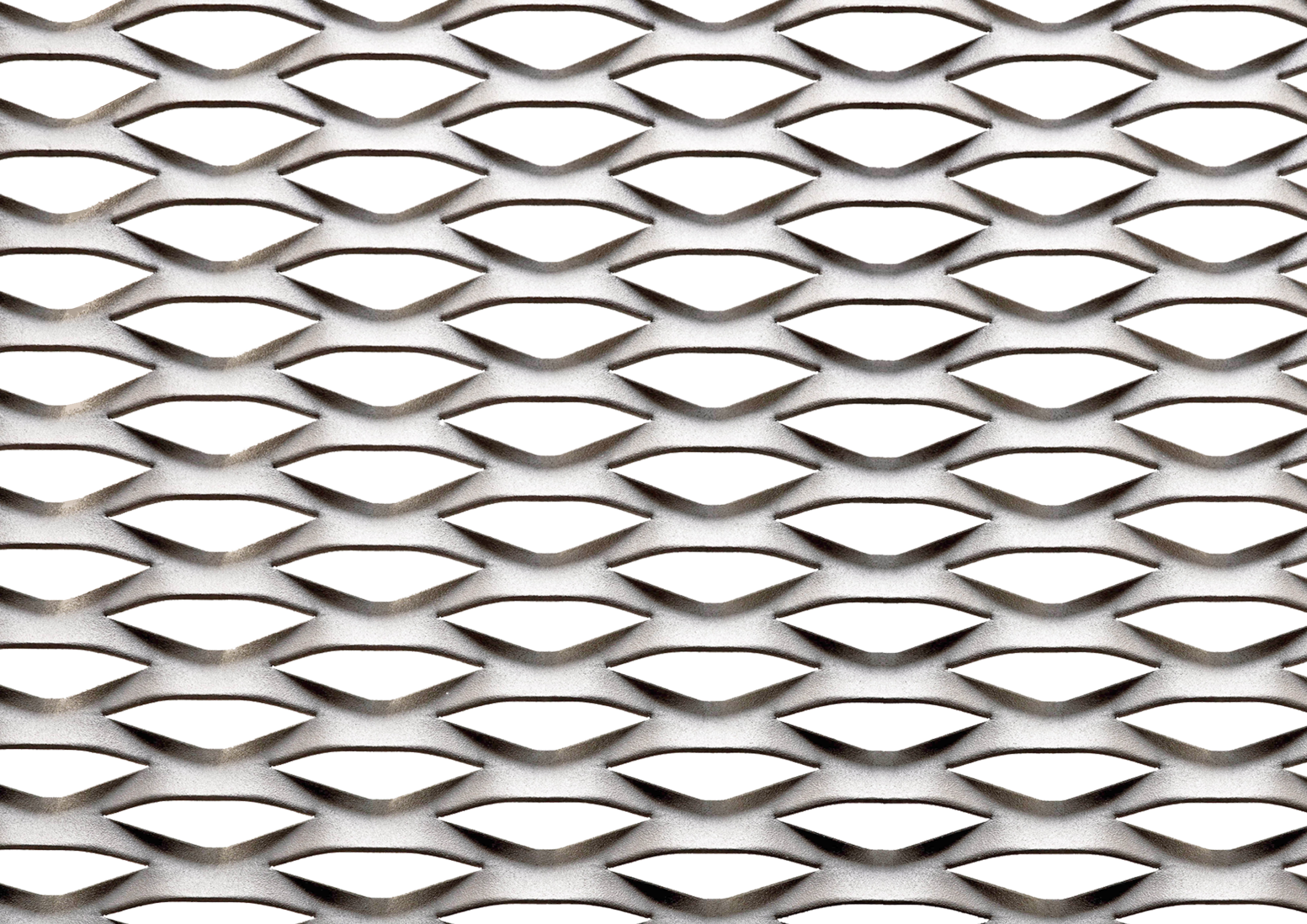
Tallo
Frontal passage 35 %
LD= 62mm KD=23mm
Strand width= 8mm
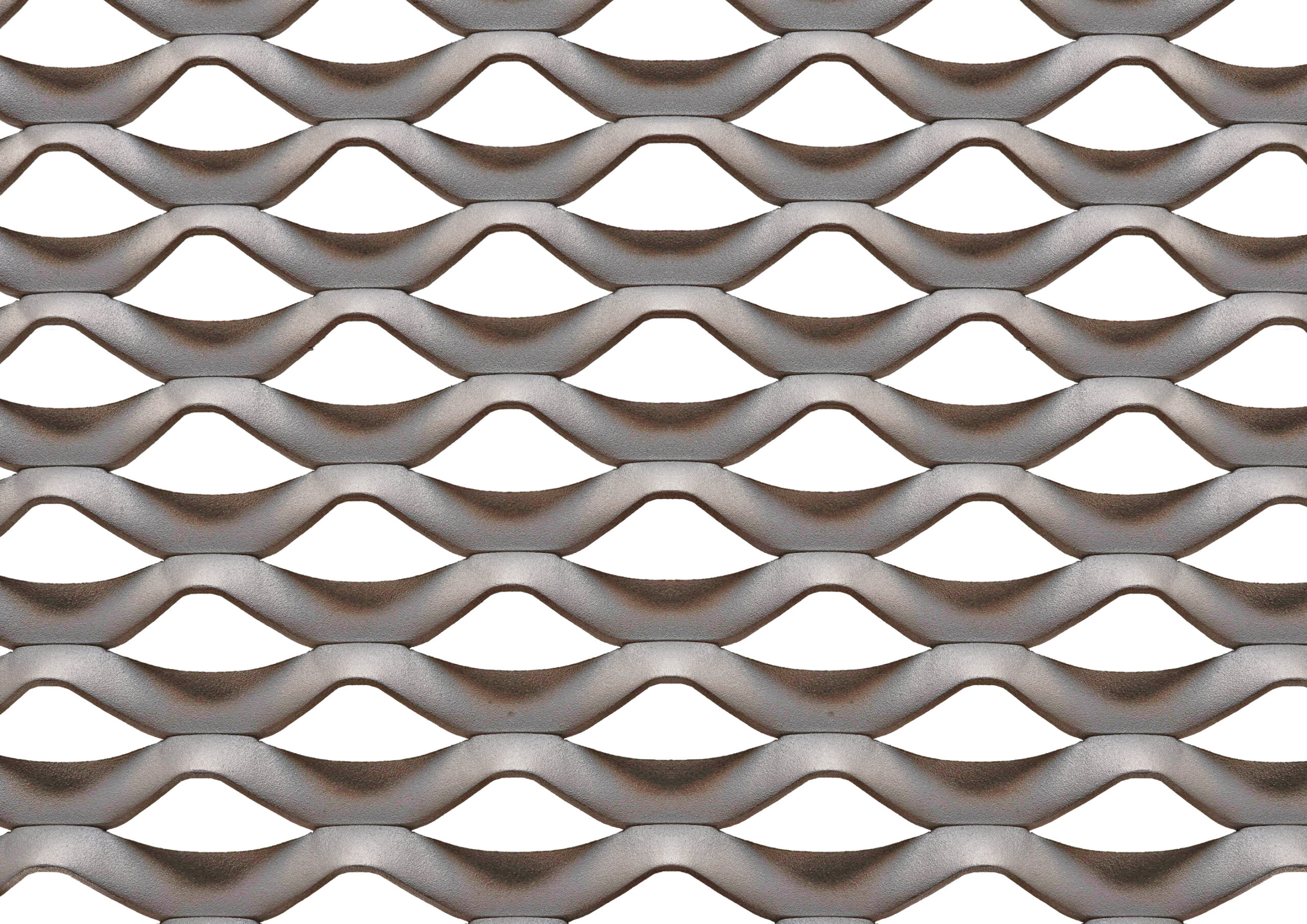
Tempo
Frontal passage 25 %
LD= 60mm KD=40mm
Strand width= 15mm
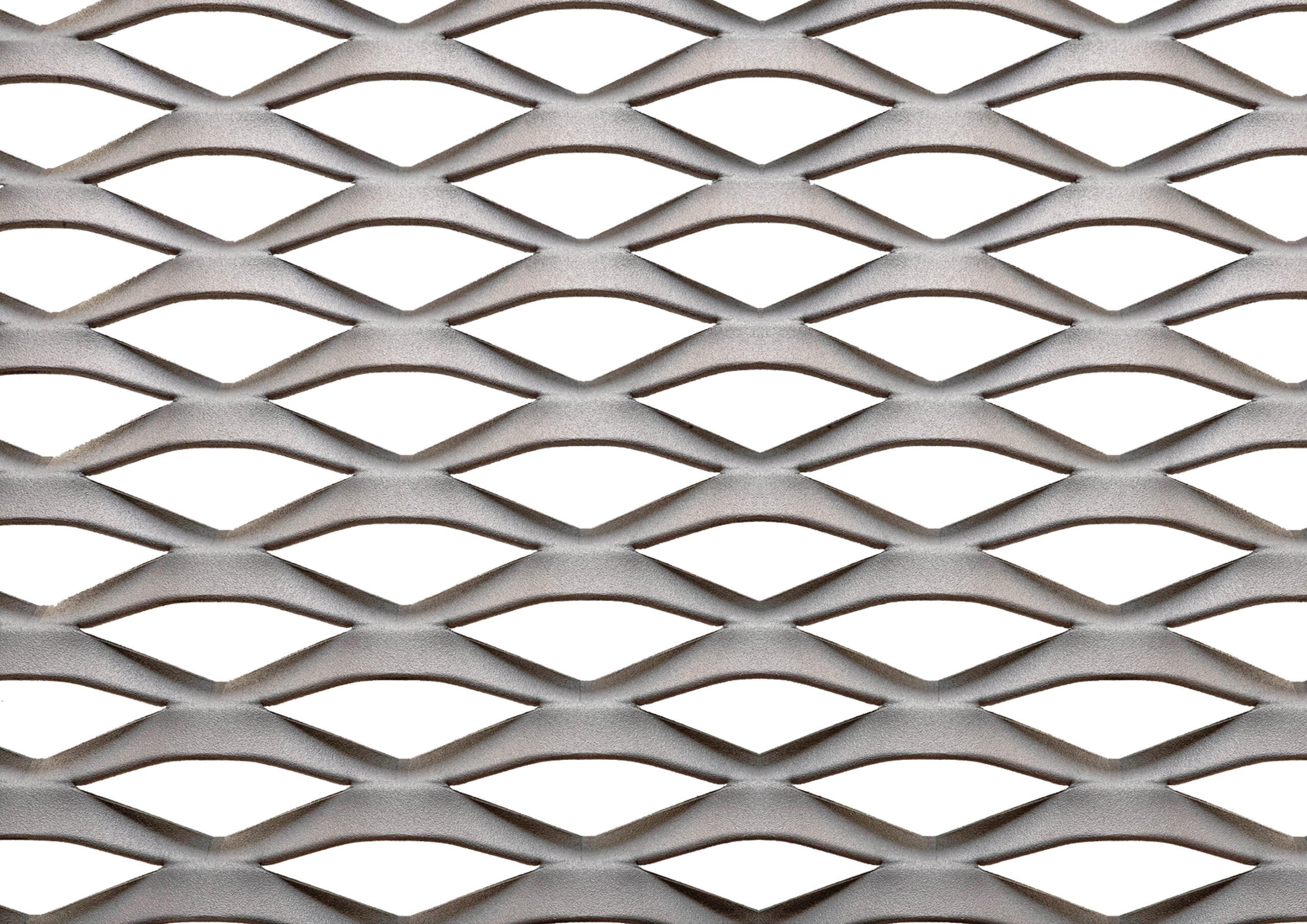
Frontal open area greater than 40%

Lumi
Frontal passage 40 %
LD= 76mm KD=35mm
Strand width= 11mm
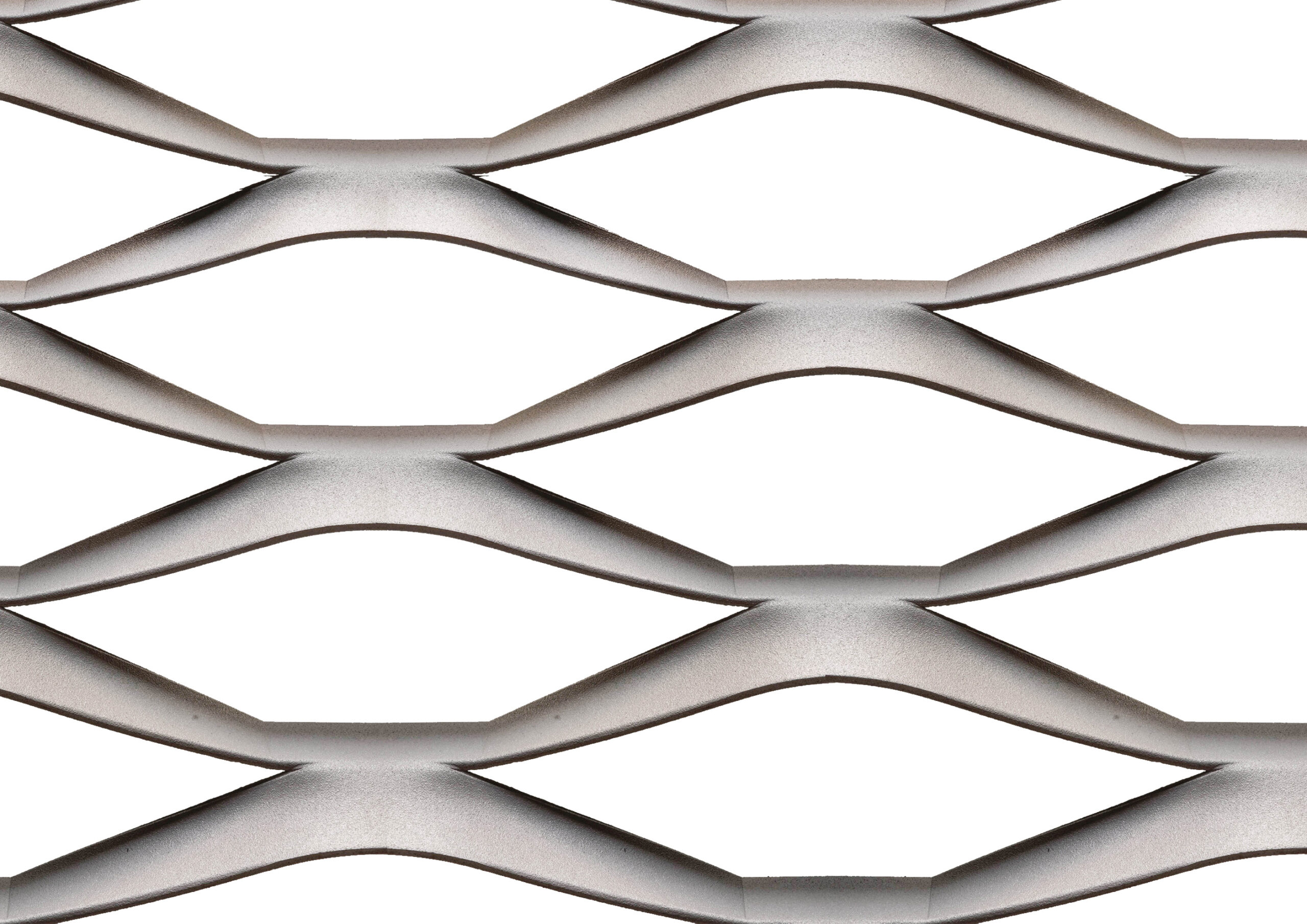
Maxi
Frontal passage 55 %
LD= 200mm KD=70mm
Strand width= 20.6mm
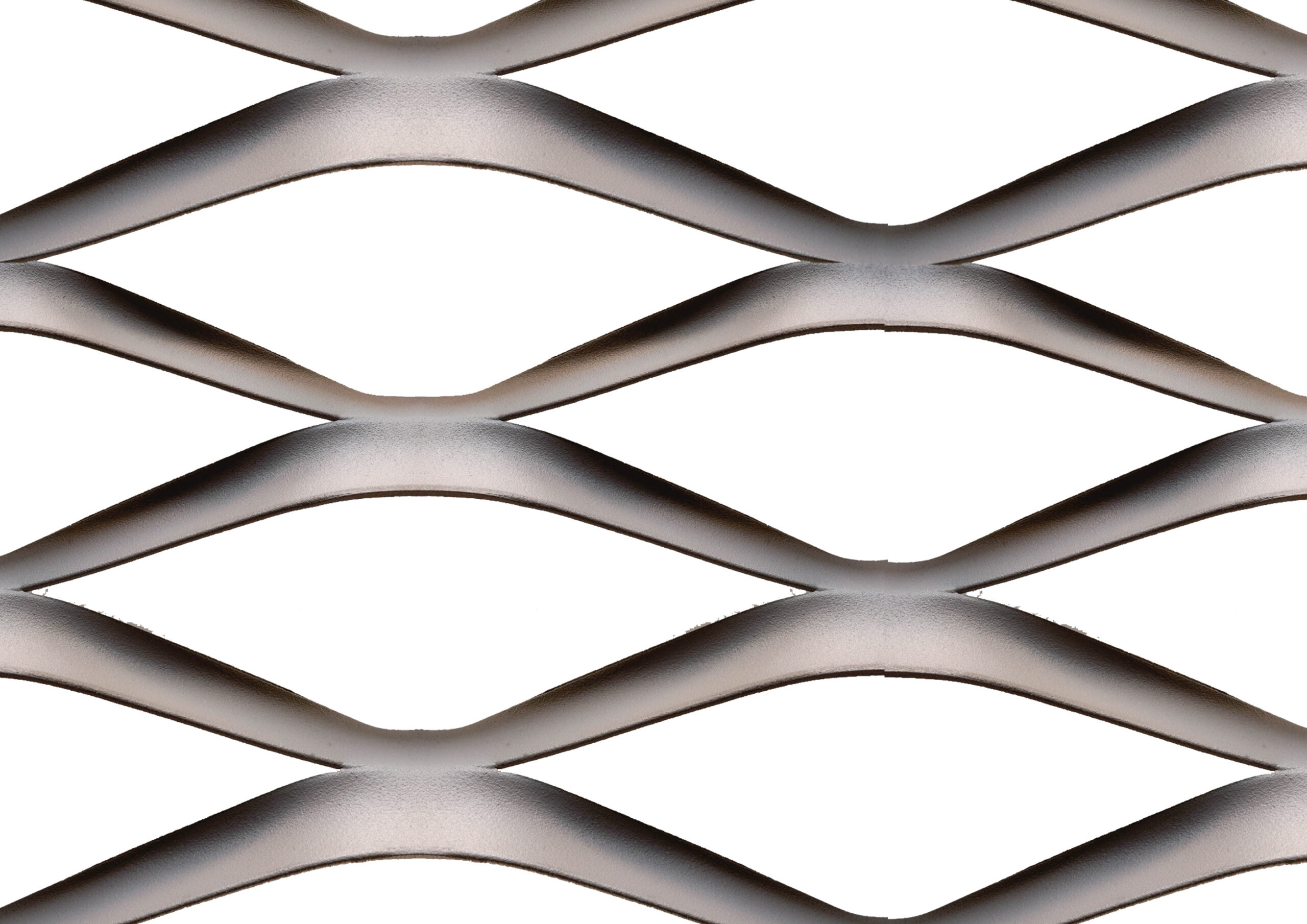
Plenti
Frontal passage 49 %
LD= 200mm KD=80mm
Strand width= 24mm
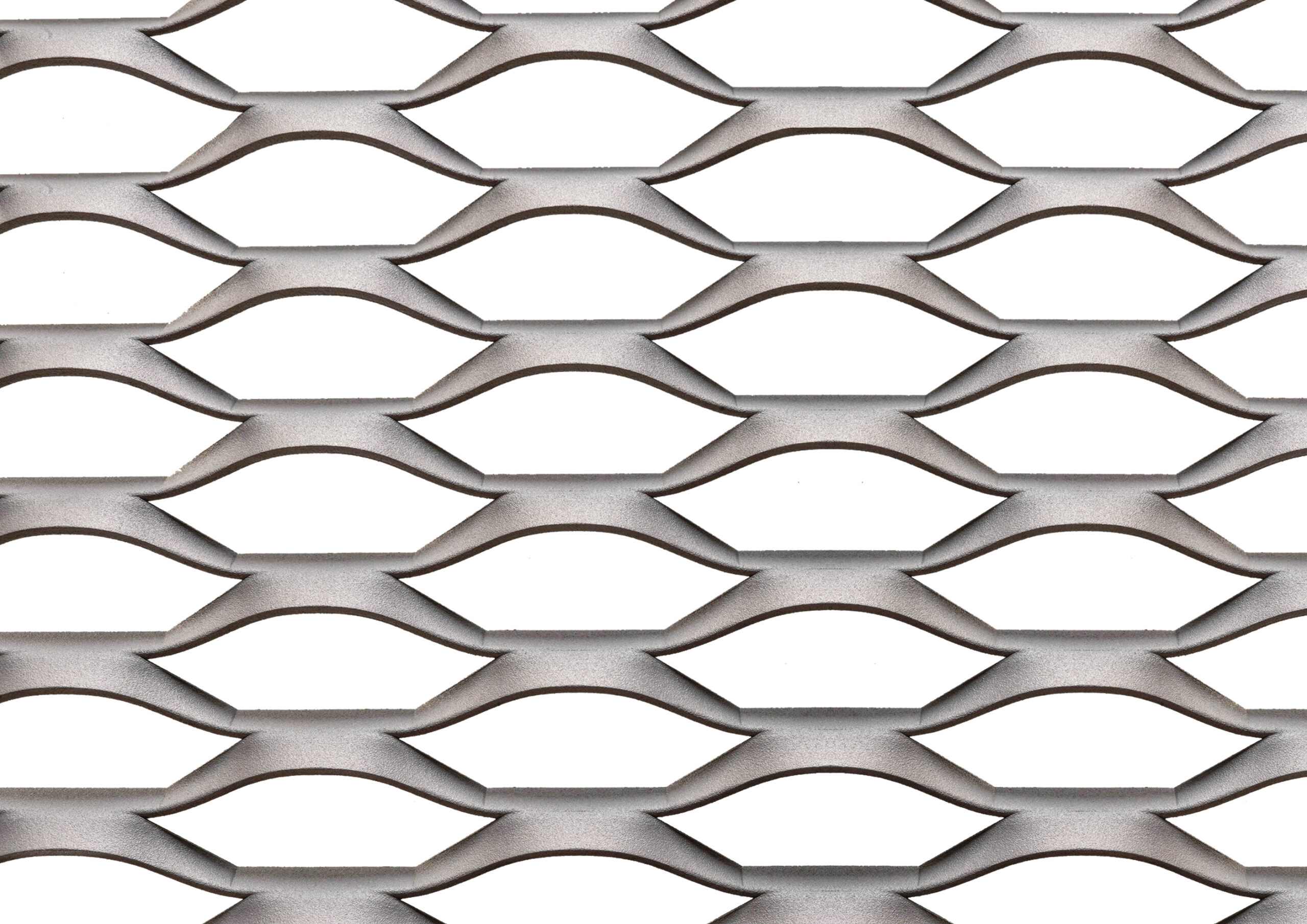
Romi
Frontal passage 52 %
LD= 100mm KD=34mm
Strand width= 10mm

Visi
Frontal passage 55 %
LD= 225mm KD=24mm
Strand width= 7.5mm
Advantages of expanded metal for façade cladding
Sun shading while maintaining daylight
The angled strands of expanded metal create a natural shading effect. They reduce direct solar radiation, limit heat build-up behind the façade and still allow sufficient daylight to enter. This makes expanded metal particularly suitable as fixed sun shading for façades, car parks and technical zones.
Strong, lightweight and suitable for large panels
Expanded metal is cut and stretched from one sheet. This creates a strong open structure without welds or loose connections. The material combines low weight with high rigidity, making larger façade panels and spans possible.
Ventilation and open passage
The open mesh structure allows air to circulate freely. This makes expanded metal suitable for ventilated façades, car parks, technical installations and zones where airflow is important. At the same time, the façade remains protected and visually well finished.
Privacy without completely closing off the façade
Expanded metal creates a semi-transparent façade skin. From the outside, direct views are limited, while from the inside, visibility, light and spatial openness are retained. By choosing the mesh direction and open area, the balance between privacy, transparency and appearance can be precisely adjusted.